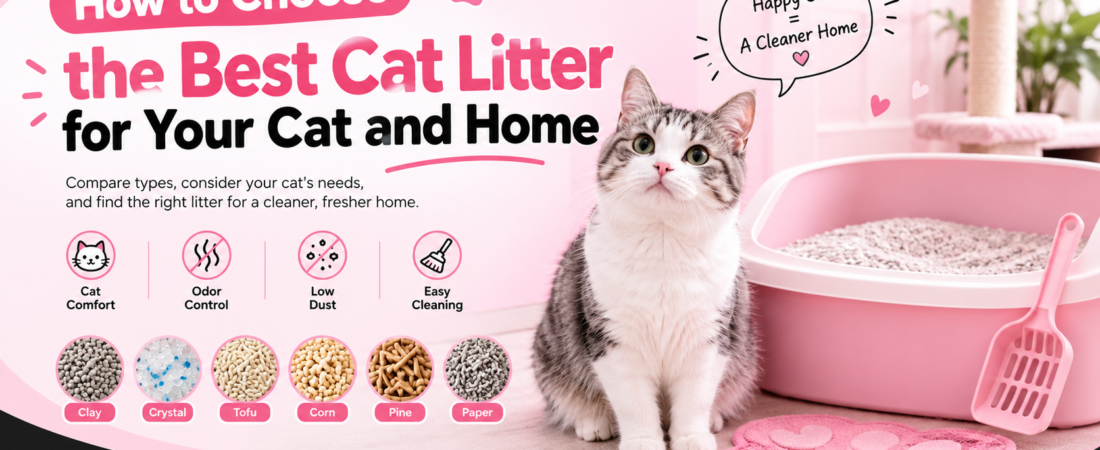
Choosing cat litter sounds simple until you walk into a pet store or browse online and see dozens of options: clay, clumping, crystal, tofu, corn, pine, paper, scented, unscented, lightweight, flushable, and more.
The best cat litter is not necessarily the most expensive one or the one with the most impressive marketing claims.
What matters most is whether your cat will actually use it comfortably, whether it controls odor effectively, and whether it works well for your household.
In this guide, we’ll explain the main types of cat litter, what to consider before buying, and how to find an option that works for both you and your cat.
What Makes a Good Cat Litter?
A good cat litter should do three basic things well:
- Encourage your cat to use the litter box
- Control moisture and unpleasant odors
- Make cleaning reasonably easy
But there is another factor that is often overlooked: your cat’s preference.
You may prefer a particular litter because it produces less dust or makes cleaning easier. Your cat may completely disagree.
Cats can be surprisingly sensitive to changes in texture, scent, and cleanliness. A litter that seems perfect to you may be rejected by your cat.
That is why choosing cat litter is partly about finding a balance between cat comfort and owner convenience.
The Main Types of Cat Litter
There is no single type of litter that is ideal for every cat.
Here are the most common options.
1. Clumping Clay Litter
Clumping clay is one of the most popular types of cat litter.
When exposed to moisture, the litter forms clumps that can be removed from the box without replacing all of the remaining litter.
This makes daily cleaning relatively convenient.
Clumping clay litter can also provide strong odor control, depending on the formula.
However, some clay litters can produce noticeable dust, and certain cats or owners may prefer a lower-dust alternative.
If you’re interested in comparing different options, see our Best Clumping Cat Litter guide.
2. Non-Clumping Clay Litter
Non-clumping clay absorbs moisture but does not form the same type of solid clumps.
It can be inexpensive and simple, but cleaning may require replacing litter more frequently.
For households that prioritize easy daily scooping, clumping litter is often more convenient.
3. Crystal Cat Litter
Crystal litter is typically made from silica gel crystals that absorb moisture.
One potential advantage is that crystals can absorb a significant amount of liquid while helping control odors.
Crystal litter can also look and feel very different from clay.
Some cats accept it immediately, while others may dislike the texture.
If you’re considering this type, read our Crystal Cat Litter Guide before making a decision.
4. Natural Cat Litter
Natural litter can be made from materials such as corn, walnut, wheat, wood, tofu, or paper.
These products have become increasingly popular among cat owners who want alternatives to traditional clay litter.
However, “natural” does not automatically mean better.
Different natural litters can vary considerably in odor control, tracking, dust, absorption, and clumping performance.
Instead of choosing a product simply because it says “natural,” consider how it performs in the areas that matter to you.
Scented vs. Unscented Cat Litter
A strong fragrance may make the litter box smell better to you, but that doesn’t necessarily mean your cat will like it.
Cats have a much stronger sense of smell than humans, and some cats may avoid heavily scented litter.
For this reason, unscented litter is often a sensible starting point, especially if you’re introducing a new litter to a cat that is sensitive to changes.
If odor control is your main concern, it is better to address the underlying source of the smell through regular scooping and proper litter-box maintenance rather than relying entirely on fragrance.
How Often Should You Scoop the Litter Box?
One of the easiest ways to improve litter-box odor is simply to clean it more frequently.
For most households, scooping at least once a day is a reasonable starting point.
Homes with multiple cats may need more frequent cleaning.
A dirty litter box can discourage cats from using it and may contribute to inappropriate elimination outside the box.
For a more complete cleaning routine, see How Often Should You Change Cat Litter?
How Much Litter Should You Put in the Box?
There is no universal depth that works for every cat.
Many cats prefer enough litter to dig and cover their waste comfortably, but an excessively deep layer can make some boxes difficult to use.
Start with the manufacturer’s recommendations and observe your cat’s behavior.
If your cat frequently digs all the way to the bottom of the box, you may need to adjust the amount.
The goal is to provide enough litter for normal digging without making the box unnecessarily difficult to maintain.
How to Reduce Litter Tracking
Litter tracking happens when small pieces of litter stick to your cat’s paws and are carried around the house.
Some types of litter naturally track more than others.
To reduce tracking, consider:
- Using a litter mat outside the box
- Choosing a litter with larger or heavier particles
- Keeping the box in an easy-to-clean location
- Regularly vacuuming around the litter area
- Using a litter box with an appropriate entrance and design
However, don’t choose a litter solely because it claims to be “low tracking.”
Your cat’s acceptance of the litter should remain the priority.
What About Dust?
Dust can be a major concern for some cat owners.
Clay litter in particular can vary considerably in how dusty it becomes during pouring and scooping.
If dust is a concern, look for products specifically designed to minimize dust and pay attention to real-world user experiences.
You can also pour litter slowly and avoid dropping a full bag directly into the box, which can create unnecessary airborne particles.
If your cat develops persistent coughing, breathing problems, or other concerning symptoms, don’t assume the litter is the only possible cause. Talk with a veterinarian.
How Many Litter Boxes Do You Need?
The number of litter boxes can have a major impact on litter-box success.
A commonly recommended starting point is:
one litter box per cat, plus one additional box.
For example, a household with two cats may benefit from three litter boxes.
This isn’t an absolute rule for every home, but it can reduce competition and give cats more options.
Placement matters too.
Avoid putting all litter boxes in one small area if possible. Multiple locations can give cats alternatives and reduce the chance that one cat blocks access to another.
How to Introduce a New Cat Litter
If your cat already uses a particular litter successfully, switching suddenly may not be the best approach.
Instead, consider introducing the new litter gradually.
You can start by mixing a small amount of the new litter with the old litter and gradually increase the proportion over time.
Watch your cat’s behavior throughout the process.
If your cat suddenly stops using the box, don’t assume that the problem is simply stubbornness. Cats may avoid a litter box because of changes in litter, box location, cleanliness, stress, or an underlying medical issue.
Can You Mix Different Types of Cat Litter?
You can mix some types of litter, but the result isn’t always predictable.
Different litters can have different absorption rates, textures, and clumping characteristics.
If you’re experimenting with a new litter, it is often easier to test it in a separate litter box rather than immediately replacing the litter your cat already accepts.
This gives you useful information about your cat’s preference without disrupting the existing setup.
How to Choose Cat Litter for Multiple Cats
Multi-cat households often have more demanding litter-box requirements.
You’ll want to consider:
- Odor control
- Clumping performance
- Dust
- Tracking
- Cost
- How frequently the boxes need to be cleaned
- Whether all cats accept the same litter
A litter that works perfectly for one cat may become inconvenient when several cats are using the same type.
If you’re dealing with several litter boxes, our Best Cat Litter for Multiple Cats guide can help you compare your options.
Common Cat Litter Mistakes
Choosing Based Only on Price
Cheap litter may appear economical, but if it requires more frequent replacement, the overall cost may not actually be lower.
Choosing Strongly Scented Litter to Hide Odors
Fragrance can mask odors temporarily but does not replace regular cleaning.
Changing Litter Too Quickly
A sudden change can cause some cats to reject the litter box.
Ignoring the Litter Box Itself
Sometimes the problem isn’t the litter.
The box may be too small, difficult to access, poorly positioned, or not cleaned often enough.
Assuming Every Cat Likes the Same Texture
Cats have individual preferences.
What works for one cat may not work for another.
Final Thoughts
The best cat litter is the one that your cat consistently accepts while giving you a manageable cleaning routine.
Start by considering the basics: texture, odor control, dust, tracking, clumping, and your cat’s individual preferences.
If you’re changing litter, make the transition gradually whenever possible and pay attention to how your cat responds.
And remember that litter-box problems are not always behavioral. If your cat suddenly stops using the litter box, urinates unusually often, strains, cries while urinating, or shows other concerning changes, contact your veterinarian rather than simply changing litter.
For more recommendations and product comparisons, explore our Cat Litter section and read our latest Cat Litter Reviews.