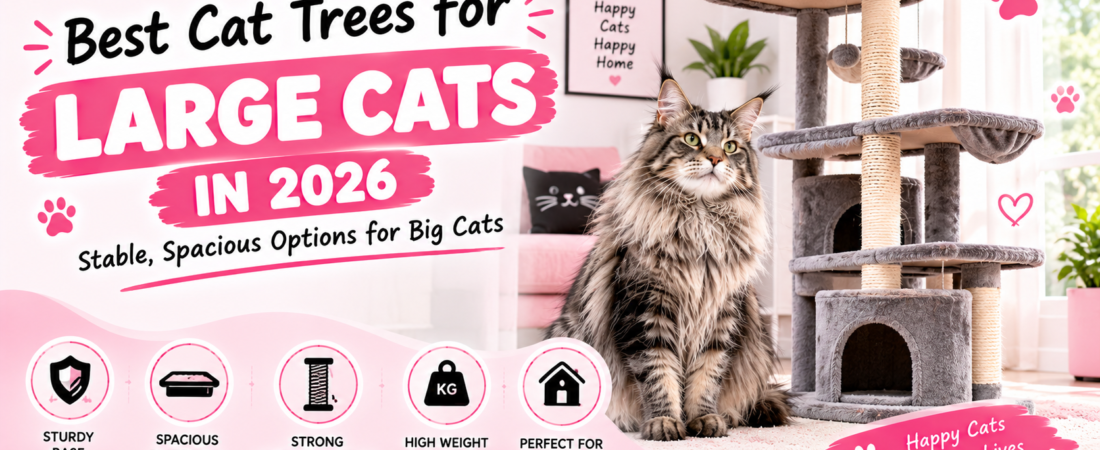
Choosing the right cat tree for a large cat can be challenging. Bigger cats need more than a tall structure with a few small platforms. They need a sturdy base, spacious resting areas, strong scratching posts, and comfortable places to climb, stretch, and relax.
Whether you have a Maine Coon, a Ragdoll, a Norwegian Forest Cat, or simply a heavier-than-average domestic cat, the right cat tree can help support your cat’s daily activity while protecting your furniture.
In this guide, we’ll explain what makes a cat tree suitable for large cats, which styles are worth considering, what features to prioritize, and how to choose a safe option for your home.
Quick Answer: What Is the Best Cat Tree for a Large Cat?
The best cat tree for a large cat is one with a wide, stable base, reinforced construction, large platforms, and sturdy scratching posts. Look for a model with clearly stated weight limits and enough room for your cat to lie down comfortably.
For many large cats, stability and platform size matter more than height. A shorter, well-built cat tree can be a better choice than a very tall model that wobbles when your cat jumps.
What to Look for in a Cat Tree for Large Cats
Before buying a cat tree, consider the following features.
1. A Wide and Stable Base
Large cats put more force on a cat tree when jumping, climbing, and landing. A narrow base can make the structure unstable, especially if it is tall.
Look for a broad base, solid construction, and a design that does not rock easily. Tall cat trees may also need a wall-anchoring strap to reduce the risk of tipping.
2. Spacious Platforms
A platform should be large enough for your cat to sit, turn around, and lie down without hanging over the edges.
Pay attention to the platform’s actual dimensions rather than relying only on product photos. A platform that looks generous in a listing may feel cramped for a large adult cat.
Consider these features:
- Wide resting platforms that support your cat’s entire body.
- Large top perches with raised edges, if your cat enjoys lounging at height.
- Spacious condos with entrances large enough for your cat to enter and turn around comfortably.
- Multiple resting spots so cats in multi-cat homes can share the tree.
3. Strong Scratching Posts
Scratching is a natural behavior that helps cats stretch and maintain their claws. Large cats need scratching posts that are tall enough for a full-body stretch and sturdy enough to withstand repeated use.
Look for thick posts wrapped in durable sisal rope or another suitable scratching material. The posts should remain firm when your cat pulls against them.
If scratching is one of your cat’s main reasons for using a tree, prioritize post quality over decorative features.
4. A Clearly Stated Weight Capacity
Always check the manufacturer’s stated weight limits for the entire structure and, when available, individual platforms or beds.
A cat tree rated for a particular total weight does not automatically mean every perch can comfortably support that weight. If you have multiple cats, consider their combined weight and how they might use the structure simultaneously.
Avoid products with unclear specifications or no useful information about construction and stability.
5. Durable Materials and Easy Maintenance
Common cat tree materials include engineered wood, plywood, particleboard, carpet, plush fabric, and sisal rope.
The quality of the construction matters as much as the material itself. Look for secure joints, firmly attached platforms, and replaceable scratching components when available.
Removable cushions or surfaces that are easy to vacuum can also make regular cleaning simpler.
Types of Cat Trees That Work Well for Large Cats
Different designs suit different cats and homes. Here are the main options to consider.
1. Heavy-Duty Cat Trees
Heavy-duty models are designed with stability and durability in mind. They may feature thicker posts, reinforced platforms, and broader bases.
Best for: Large, active cats that climb and jump frequently.
Advantages:
- Often designed for greater stability.
- May include larger platforms and stronger posts.
- Suitable for cats that use their tree every day.
Potential drawbacks:
- Can take up more floor space.
- May cost more than basic cat trees.
- Assembly can be more involved.
Before purchasing, confirm the actual dimensions and weight limits rather than assuming that a “heavy-duty” label guarantees quality.
2. Tall Cat Trees With Large Perches
Some cats love observing their surroundings from an elevated position. A tall cat tree can provide this opportunity, but only if the structure is stable and the platforms are appropriately sized.
Best for: Large cats that enjoy climbing and watching the room from above.
Advantages:
- Offers vertical territory.
- Can provide several resting levels.
- May help make use of vertical space in smaller homes.
Potential drawbacks:
- Requires more attention to stability.
- May need wall anchoring.
- Can be unsuitable for cats with limited mobility.
Choose a design with comfortable steps between levels so your cat does not have to make difficult jumps.
3. Cat Trees With Large Condos
A cat tree with a roomy condo can give your cat a private place to rest. However, many enclosed spaces are too small for large breeds.
Check the entrance dimensions and interior measurements before buying. Your cat should be able to enter and turn around without struggling.
Best for: Large cats that enjoy enclosed sleeping spaces.
Potential drawback: A spacious condo can make the overall structure bulkier, so measure your available floor space first.
4. Low and Wide Cat Trees
Not every large cat needs a tall climbing tower. A low, wide design can provide generous platforms and scratching areas without requiring substantial climbing.
Best for: Older cats, less active cats, or cats that prefer lounging close to the ground.
These designs may be particularly useful when stability and accessibility matter more than height.
5. Modular or Expandable Cat Trees
Some cat trees allow owners to add platforms, replace scratching posts, or rearrange components.
Best for: Owners who want to customize the layout or replace worn parts.
Check whether replacement components are actually available and compatible with the model you choose. Do not assume that parts from different brands will fit together.
How to Choose the Right Size for Your Cat
A cat tree should fit both your cat and your home. Before buying, take a few measurements.
- Measure your cat. Check your cat’s approximate length and weight so you can compare them with the product specifications.
- Check the platform dimensions. Choose perches that provide enough space for your cat to lie down comfortably.
- Measure your room. Leave enough space around the tree for your cat to approach and jump onto lower levels safely.
- Consider ceiling height. For tall models, check the required clearance and whether the structure needs wall anchoring.
- Think about accessibility. Your cat should be able to move between levels without risky jumps.
If you have more than one cat, consider whether they need separate resting platforms. A tree can have many levels but still feel crowded if its usable platforms are small.
For more general sizing advice, see How to Choose the Best Cat Tree for Your Cat.
How Much Should You Spend on a Cat Tree for a Large Cat?
Prices vary based on size, materials, construction, and included features. Rather than choosing by price alone, compare the features that affect everyday safety and comfort.
| Price level | What to look for |
|---|---|
| Budget | A simple, low design with a stable base and adequately sized platforms |
| Mid-range | Stronger construction, larger perches, and more scratching space |
| Premium | Larger structures, reinforced components, replaceable parts, or modular designs |
A more expensive tree is not automatically better. Read the specifications carefully and look for detailed photos, assembly instructions, and reviews that discuss stability and durability.
How to Introduce a New Cat Tree to Your Large Cat
Even a well-designed cat tree may take time to become part of your cat’s routine.
Place It in a Comfortable Location
Choose a location where your cat already likes to spend time. A spot near a window or in a frequently used room may be appealing, provided it is away from hazards and does not obstruct walkways.
Encourage Exploration
Allow your cat to investigate the tree at its own pace. You can place a familiar blanket on a platform or use treats to encourage exploration.
Never force your cat onto a high perch. Let your cat build confidence by using the lower levels first.
Make Scratching Rewarding
If your cat likes the scratching posts, praise the behavior and offer a small reward. You can also place the tree near furniture your cat already scratches, as long as the location is practical.
Be Patient
Some cats begin using a new tree immediately, while others need several days or longer. Keep the environment calm and avoid repeatedly placing your cat on the tree against its wishes.
For more ideas, read How to Get Your Cat to Use a Cat Tree in 2026.
Cat Tree Safety Tips for Large Cats
Safety should always come before appearance or height.
- Inspect the structure regularly. Check screws, joints, platforms, and scratching posts for looseness or damage.
- Anchor tall models when recommended. Follow the manufacturer’s instructions for wall straps or other anti-tip features.
- Keep the base on a level surface. Avoid slippery or uneven flooring that could make the tree unstable.
- Replace damaged parts. Frayed rope, cracked platforms, and loose attachments can become hazards.
- Provide easy routes between levels. Make sure your cat does not need to attempt a difficult jump to reach a favorite perch.
- Supervise initial use. Watch how the tree moves when your cat climbs or jumps, especially during the first few days.
If your cat is older or has difficulty jumping, choose a lower design with accessible levels rather than encouraging strenuous climbing.
Common Mistakes to Avoid When Buying a Cat Tree for a Large Cat
Choosing Height Over Stability
A tall tree may look impressive, but it is not the best option if the base is narrow or the structure wobbles. Prioritize stable construction first.
Ignoring Platform Dimensions
Large cats need enough room to rest comfortably. Always check measurements instead of relying on photographs.
Assuming All Weight Limits Are the Same
A listed maximum capacity may refer to the entire tree rather than each platform. Read the specifications and contact the manufacturer if important details are missing.
Forgetting to Measure the Room
A large cat tree can take up considerable floor space. Measure the intended area and check the product’s full height and footprint before ordering.
Ignoring Assembly and Maintenance
A sturdy design can still become unsafe if assembled incorrectly or left with loose fasteners. Follow the instructions and inspect the structure regularly.
Frequently Asked Questions
What is the best type of cat tree for a Maine Coon?
Look for a stable model with large platforms, sturdy scratching posts, and clearly stated weight limits. A roomy top perch and easy routes between levels can also be useful. Measure your individual cat rather than relying on breed alone.
Do large cats need a taller cat tree?
Not necessarily. Some large cats enjoy climbing, but others prefer wide platforms and low resting spots. Stability, platform size, and accessibility are more important than height alone.
How do I know if a cat tree is strong enough?
Review the manufacturer’s weight specifications, construction details, assembly instructions, and available customer feedback. Once assembled, check for wobbling and loose components before allowing regular use.
Are cat trees with condos suitable for large cats?
Yes, if the condo has a sufficiently large entrance and interior. Check the measurements carefully because enclosed spaces are often smaller than they appear in product photos.
Can two large cats share one cat tree?
They may be able to, provided the tree has enough stable resting areas and suitable weight capacity. In multi-cat homes, separate resting spots can help reduce competition.
How often should I inspect a cat tree?
Check it regularly and tighten fasteners according to the manufacturer’s instructions. Inspect it immediately if it begins to wobble, a platform shifts, or a scratching post becomes loose.
Final Verdict: Choosing the Best Cat Tree for a Large Cat
The best cat tree for a large cat is not necessarily the tallest or most expensive model. It is the one that offers stable construction, spacious platforms, strong scratching posts, and a suitable weight capacity for your cat.
Before purchasing, measure your cat and your available space, compare the manufacturer’s specifications, and consider how your cat prefers to climb and rest. These steps can help you choose a cat tree that is comfortable, practical, and suitable for everyday use.
A well-chosen cat tree can give your cat a place to scratch, climb, observe the room, and relax—while helping create a more cat-friendly home.
CatJoyLife participates in affiliate marketing programs. If you purchase through qualifying links on this page, we may earn a commission at no additional cost to you.