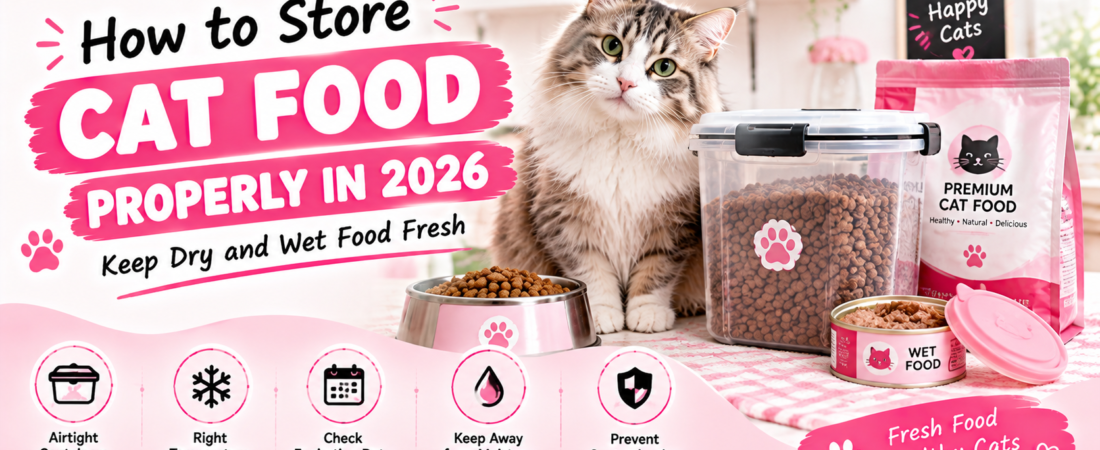
Choosing good cat food is important, but how you store it matters too. Even a nutritious formula can lose freshness when exposed to heat, humidity, air, or contamination.
Whether you feed your cat dry kibble, wet food, or a combination of both, proper storage helps preserve food quality, reduce waste, and keep mealtimes safer.
The good news is that storing cat food properly doesn’t require an expensive setup. A few simple habits, the right containers, and regular cleaning can make a significant difference.
In this guide, we’ll explain how to store dry and wet cat food, how long opened food can last, which storage accessories are useful, and which common mistakes to avoid.
Quick Answer: What Is the Best Way to Store Cat Food?
The best way to store cat food depends on its type.
- Dry cat food: Keep it in its original bag, tightly sealed, inside a clean airtight container. Store it in a cool, dry place.
- Wet cat food: Refrigerate unused portions promptly after opening in a covered, airtight container or with a suitable can lid.
- Unopened cat food: Keep it in a cool, dry location away from direct sunlight, moisture, and excessive heat.
- Fresh or raw cat food: Follow the manufacturer’s refrigeration, freezing, and handling instructions carefully.
The FDA recommends keeping dry food in its original packaging when possible and storing it in a cool, dry location below 80°F. It also recommends refrigerating leftover canned and pouched food promptly.
Why Proper Cat Food Storage Matters
Cat food contains nutrients, fats, and other ingredients that can be affected by poor storage conditions.
When food is exposed to air, moisture, or excessive heat, its quality can deteriorate. Improper handling can also increase the risk of contamination.
Proper storage helps:
- Maintain food freshness and flavor.
- Reduce exposure to moisture and pests.
- Protect the quality of ingredients.
- Prevent unnecessary food waste.
- Keep important product information available.
- Reduce the risk of accidental overeating or contamination.
An important point: an expiration or best-by date does not guarantee that opened food will remain fresh indefinitely. Storage conditions and the manufacturer’s instructions still matter.
How to Store Dry Cat Food Properly
Dry cat food is convenient because it is easy to portion and store. However, once a bag is opened, it needs protection from air, moisture, heat, and pests.
1. Keep the Original Packaging
One of the most important storage tips is to keep the kibble in its original bag.
Cat food packaging is designed to protect the food, and the bag also contains important information, including:
- Product name and brand.
- Ingredient information.
- Lot or batch number.
- Best-by date.
- Manufacturer information.
- Feeding instructions.
The FDA recommends placing the entire original bag inside a storage container rather than pouring the kibble directly into another container.
This helps preserve product information if you ever need to check a recall or contact the manufacturer.
2. Use an Airtight Storage Container
An airtight container provides an additional layer of protection against moisture, insects, and accidental access by pets.
Choose a container with:
- A secure, tightly fitting lid.
- A suitable capacity for your food bag.
- Easy-to-clean surfaces.
- Durable construction.
- A design that is easy to open and close.
You don’t necessarily need a very large container. Choose one that fits your usual bag size without requiring you to store excessive quantities of kibble for long periods.
This is a product to consider if you want a dedicated airtight storage solution. Check the available capacity and dimensions before purchasing.
3. Store Food in a Cool, Dry Place
Avoid storing dry cat food near:
- Ovens and cooking appliances.
- Direct sunlight.
- Radiators and heating equipment.
- Humid areas.
- Sinks or locations prone to water splashes.
- Garages with significant temperature changes.
A pantry or kitchen cabinet away from heat sources is often a practical option.
The FDA recommends keeping dry pet food below 80°F (approximately 27°C).
4. Close the Bag After Every Use
After scooping out your cat’s food, fold the top of the bag tightly and secure it with a clip.
Then place the entire bag back into its storage container.
This simple habit helps reduce unnecessary exposure to air and moisture.
5. Clean the Container Between Bags
Do not continuously refill an old container with fresh kibble without cleaning it.
Small amounts of crumbs and residual fat can remain inside and build up over time.
When one bag is finished:
- Remove remaining crumbs.
- Wash the container according to its care instructions.
- Rinse thoroughly.
- Allow it to dry completely.
- Add the new food bag.
The FDA specifically recommends washing and drying the storage container between bags.
How to Store Wet Cat Food After Opening
Wet cat food requires different storage because it contains much more moisture than dry kibble.
Once a can or pouch is opened, leftover food should not be left sitting at room temperature for extended periods.
1. Refrigerate Leftover Food Promptly
If your cat doesn’t finish an entire can, cover the remaining food and refrigerate it promptly.
The FDA recommends keeping the refrigerator at 40°F (approximately 4°C) or below.
Always check the manufacturer’s instructions for the recommended storage period after opening.
2. Use a Cat Food Can Cover
A reusable can cover can make storing opened wet food easier.
Look for a cover that:
- Fits the size of your cat food cans.
- Creates a secure seal.
- Is easy to wash.
- Is made from food-safe materials.
- Can be used repeatedly.
This is a recognizable option to look up when shopping for reusable pet food can covers. Confirm the size compatibility with your cans before buying.
3. Use a Small Airtight Container
If you prefer not to leave leftover food in the original can, transfer it into a clean, food-safe container with a secure lid.
Small containers are especially useful when you feed your cat several small wet-food meals throughout the day.
Label the container with the opening date if you prepare multiple portions.
4. Don’t Keep Wet Food Too Long
There isn’t one universal storage period for every wet food product.
Different formulations and packaging may have different recommendations.
Follow the manufacturer’s instructions. If the food develops an unusual smell, discoloration, mold, or an abnormal texture, discard it.
When in doubt, don’t risk feeding questionable leftovers.
How Long Does Cat Food Last After Opening?
Storage time varies by food type, packaging, manufacturer, and temperature.
| Cat food type | Storage guidance |
|---|---|
| Unopened dry food | Follow the best-by date and package instructions |
| Opened dry food | Keep tightly sealed and follow manufacturer guidance |
| Unopened wet food | Store according to package instructions |
| Opened wet food | Refrigerate promptly and follow the label’s recommended period |
| Fresh or raw food | Follow specific refrigeration or freezing instructions |
Some manufacturers recommend using opened dry food within approximately two to three months when stored properly. Others may give different recommendations.
For example, Purina provides specific storage guidance for opened dry and wet food, including refrigeration of leftover wet food and attention to the original package instructions.
Do not assume that every opened bag of kibble or every opened can of wet food has the same safe storage period.
Best Cat Food Storage Accessories to Consider
You don’t need to buy every accessory available. Start with the products that solve your actual storage problems.
1. Airtight Dry Food Container
An airtight container is useful for keeping a food bag protected and organized.
Look for a suitable size, a secure lid, and easy cleaning.
Recommended product to look up: Gamma2 Vittles Vault Outback Airtight Pet Food Storage Container
2. Reusable Cat Food Can Covers
Can covers are convenient for households that regularly open wet food cans but don’t use the entire portion at once.
Recommended product to look up: Trixie Can Cover
3. Small Food Storage Containers
Small containers can help organize individual wet-food portions in the refrigerator.
Choose food-safe materials and lids that fit securely.
Check the current Amazon listing for the exact size and food-storage suitability before adding your affiliate link.
4. Measuring Scoop
A dedicated measuring scoop can help make portioning easier.
Use a clean scoop rather than using your cat’s food bowl to collect kibble from the storage container.
Wash the scoop regularly.
How to Store Different Types of Cat Food
Different types of food have different storage requirements.
Dry Kibble
Keep the original bag sealed and place it inside an airtight container.
Store it in a cool, dry location.
Wet Canned Food
Before opening, store it according to the package instructions.
After opening, cover and refrigerate leftover food promptly.
Freeze-Dried Cat Food
Follow the manufacturer’s instructions carefully.
Some freeze-dried products require different handling depending on whether they are intended to be served dry or rehydrated.
Keep the packaging sealed between uses and avoid exposing the product to moisture.
Fresh Cat Food
Fresh cat food may require refrigeration or freezing, depending on the product.
Always follow the specific storage instructions on the package.
Raw Cat Food
Raw pet food requires extra care because it may contain harmful bacteria.
Keep it separate from human food, follow the manufacturer’s thawing and refrigeration instructions, and clean surfaces and utensils thoroughly after handling.
The FDA warns that raw pet food presents food-safety risks to both pets and people.
Common Cat Food Storage Mistakes to Avoid
Even well-intentioned cat owners can make storage mistakes.
1. Pouring Kibble Directly Into an Old Container
Adding new food on top of old crumbs and residue can create unnecessary contamination and cleaning problems.
Keep the original bag whenever possible and clean the storage container between bags.
2. Leaving the Bag Open
An open bag exposes kibble to air and moisture.
Always fold and secure the top after use.
3. Storing Food Near Heat
Heat and humidity can affect food quality.
Avoid keeping cat food beside ovens, windows with direct sunlight, or other warm locations.
4. Leaving Opened Wet Food on the Counter
Leftover wet food should be refrigerated promptly or discarded.
Don’t leave opened food sitting out for long periods, especially in a warm room.
5. Ignoring the Best-By Date
Always check the package date before feeding your cat.
Keep the product name, lot number, and date information available in case of a recall or product concern.
6. Buying More Food Than Your Cat Can Use
Large bags may offer a lower cost per pound, but that doesn’t automatically make them the best choice.
Consider how quickly your household uses the food and whether you can store it correctly.
A smaller bag may be more practical for households with one cat or cats that eat relatively little dry food.
How to Tell If Cat Food Has Gone Bad
Before feeding your cat, inspect the food and packaging.
Possible warning signs include:
- An unusual or unpleasant smell.
- Visible mold.
- Unexpected discoloration.
- Moisture inside dry food packaging.
- Unusual texture or clumping.
- Damaged, swollen, or leaking cans.
- Torn or compromised packaging.
If you notice these signs, stop using the product.
Do not assume food is safe simply because it is before its printed best-by date.
If your cat becomes sick after eating a questionable product, contact your veterinarian and keep the product packaging and lot information.
Frequently Asked Questions
Should dry cat food be kept in its original bag?
Yes. The FDA recommends keeping dry pet food in its original bag whenever possible. You can place the entire bag inside an airtight storage container for additional protection.
Is it safe to store cat food in a plastic container?
Yes, provided the container is clean, dry, food-safe, and has a secure lid. Keeping the original bag inside the container is a practical approach.
Should I refrigerate dry cat food?
No. Dry kibble should generally be stored in a cool, dry location according to the manufacturer’s instructions. Refrigeration can introduce unwanted moisture when the food is exposed to condensation.
Does opened wet cat food need to be refrigerated?
Yes. Leftover canned or pouched wet food should be covered and refrigerated promptly.
How long can wet cat food stay in the refrigerator?
It depends on the specific product. Follow the manufacturer’s instructions and discard leftovers that exceed the recommended storage period.
Can I freeze leftover wet cat food?
Some wet foods may be frozen, but not all manufacturers recommend it. Freezing can change texture and quality. Check the product instructions before freezing.
Is an airtight container necessary for dry cat food?
An airtight container is useful, especially when combined with the original food bag. It helps protect food from moisture, pests, and accidental access.
Final Thoughts: Keep Your Cat’s Food Fresh and Safe
Proper cat food storage is a simple but important part of everyday pet care.
For dry kibble, keep the original bag sealed and store it inside a clean, airtight container in a cool, dry location.
For wet food, cover leftover portions and refrigerate them promptly. Always follow the manufacturer’s storage instructions and discard food that looks or smells unusual.
You don’t need an expensive collection of accessories. A suitable storage container, a reusable can cover, and consistent cleaning habits are often enough to make your cat’s feeding routine more organized.
Remember: good nutrition starts with choosing appropriate food, but proper storage helps protect its quality until mealtime.
CatJoyLife participates in affiliate marketing programs. If you purchase through qualifying links on this page, we may earn a commission at no additional cost to you.