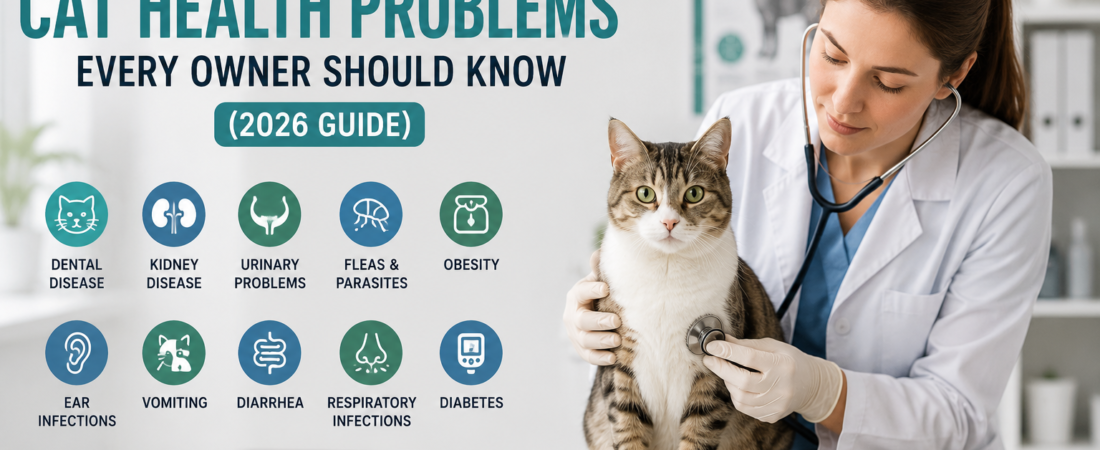
Keeping your cat healthy means more than providing food and fresh water. Cats are experts at hiding illness, which makes it important for owners to recognize the early warning signs of common health problems.
In this guide, we’ll cover the ten most common cat health issues, their symptoms, and practical tips to help keep your feline companion healthy and happy.
Why Early Detection Matters
Cats often mask pain or illness until a condition becomes serious.
Regular observation allows you to notice changes such as:
- Loss of appetite
- Weight loss
- Vomiting
- Diarrhea
- Excessive sleeping
- Changes in grooming
- Difficulty breathing
The earlier a problem is detected, the better the chances of successful treatment.
1. Obesity
Obesity is one of the most common health problems in indoor cats.
Symptoms
- Weight gain
- Difficulty jumping
- Low energy
- Heavy breathing
Prevention
- Portion control
- Daily play sessions
- High-quality diet
2. Dental Disease
Poor dental health can cause pain and infections.
Signs include:
- Bad breath
- Difficulty eating
- Drooling
- Bleeding gums
Brush your cat’s teeth regularly and schedule routine dental checkups.
3. Urinary Tract Problems
Cats may develop urinary tract infections or urinary blockages.
Symptoms include:
- Frequent trips to the litter box
- Blood in urine
- Crying while urinating
- Urinating outside the litter box
Seek veterinary care immediately if your cat cannot urinate.
4. Fleas and Parasites
External parasites can cause:
- Intense itching
- Hair loss
- Skin irritation
- Allergic reactions
Use veterinarian-approved flea prevention year-round.
5. Ear Infections
Common symptoms include:
- Head shaking
- Scratching ears
- Redness
- Bad odor
Never insert cotton swabs deep into your cat’s ears.
6. Vomiting
Occasional vomiting may occur due to hairballs, but frequent vomiting should never be ignored.
Possible causes include:
- Hairballs
- Food intolerance
- Parasites
- Digestive disease
7. Diarrhea
Diarrhea may result from:
- Dietary changes
- Stress
- Parasites
- Infection
Persistent diarrhea requires veterinary attention.
8. Respiratory Infections
Cats can develop upper respiratory infections similar to a common cold.
Symptoms:
- Sneezing
- Runny nose
- Watery eyes
- Loss of appetite
9. Kidney Disease
Kidney disease is especially common in senior cats.
Signs include:
- Increased thirst
- Frequent urination
- Weight loss
- Poor appetite
Routine blood tests help detect kidney disease early.
10. Diabetes
Obese cats have a higher risk of diabetes.
Symptoms include:
- Increased drinking
- Increased urination
- Weight loss
- Weakness
Early treatment can significantly improve quality of life.
Tips for Keeping Your Cat Healthy
Maintain your cat’s health by following these habits:
- Feed a balanced diet
- Keep fresh water available
- Schedule annual veterinary exams
- Maintain a healthy weight
- Brush teeth regularly
- Keep vaccinations up to date
- Provide daily exercise and enrichment
Final Thoughts
Understanding common cat health problems helps you recognize early warning signs and seek veterinary care before conditions become serious. A combination of preventive care, good nutrition, and regular checkups can help your cat enjoy a long, healthy, and happy life.
Frequently Asked Questions
How often should my cat visit the vet?
Healthy adult cats should have a wellness exam at least once a year, while senior cats may benefit from checkups every six months.
What is the most common health issue in cats?
Obesity and dental disease are among the most common health concerns in pet cats.
When should I worry about my cat vomiting?
If your cat vomits repeatedly, shows signs of pain, or stops eating, contact your veterinarian promptly.