Water is one of the most important nutrients for your cat’s health. Proper hydration supports kidney function, digestion, circulation, and overall well-being. Unfortunately, many cats don’t drink enough water, especially those eating only dry food.
In this guide, you’ll learn how much water cats need each day, the warning signs of dehydration, and simple ways to encourage healthy drinking habits.
Why Hydration Is Important
A cat’s body is made up of about 60–70% water. Every organ depends on proper hydration to function correctly.
Adequate water intake helps:
- Support healthy kidneys
- Aid digestion
- Regulate body temperature
- Maintain healthy joints
- Prevent urinary tract issues
- Improve overall health
How Much Water Does a Cat Need?
As a general guideline, healthy cats need approximately:
50–60 ml of water per kilogram (2.2 lbs) of body weight each day.
For example:
| Cat Weight | Daily Water Intake |
|---|---|
| 3 kg (6.6 lbs) | 150–180 ml |
| 4 kg (8.8 lbs) | 200–240 ml |
| 5 kg (11 lbs) | 250–300 ml |
| 6 kg (13.2 lbs) | 300–360 ml |
Cats that eat wet food often drink less because canned food contains around 70–80% moisture.
Signs Your Cat May Be Dehydrated
Watch for these warning signs:
- Dry or sticky gums
- Sunken eyes
- Lethargy
- Poor appetite
- Panting
- Skin that doesn’t spring back quickly
- Dark yellow urine
- Constipation
If your cat shows severe dehydration, contact your veterinarian immediately.
Common Causes of Dehydration
Cats may become dehydrated due to:
- Hot weather
- Vomiting
- Diarrhea
- Kidney disease
- Diabetes
- Fever
- Low water intake
How to Encourage Your Cat to Drink More Water
1. Provide Fresh Water Daily
Replace water at least once or twice a day.
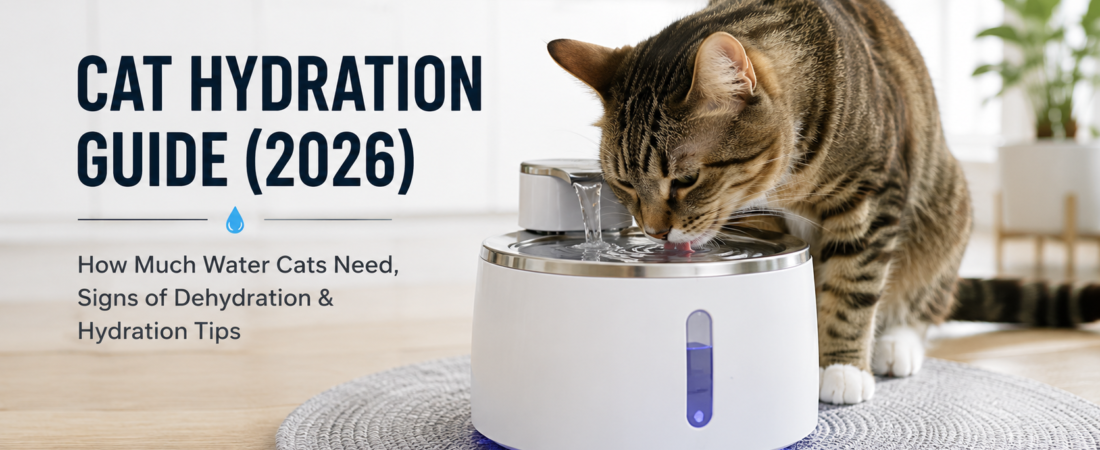
2. Use a Cat Water Fountain
Many cats prefer moving water because it stays cooler and fresher.
3. Feed Wet Food
Wet food naturally increases daily water intake.
4. Place Multiple Water Bowls
Provide water in different rooms to make drinking convenient.
5. Choose Wide Bowls
Many cats dislike their whiskers touching the sides of narrow bowls.
6. Keep Water Away From the Litter Box
Cats generally prefer water bowls placed away from food and litter areas.
Foods That Help Hydration
Water-rich foods include:
- Wet cat food
- Veterinary-approved broth
- Small amounts of cooked chicken mixed with water
Always avoid onions, garlic, excessive salt, and seasonings.
When to Visit the Veterinarian
Seek veterinary care immediately if your cat:
- Stops drinking for more than 24 hours
- Has repeated vomiting or diarrhea
- Shows severe lethargy
- Has difficulty urinating
- Appears severely dehydrated
Tips for Everyday Hydration
- Clean bowls daily.
- Wash water fountains weekly.
- Refresh water frequently.
- Monitor water intake during hot weather.
- Encourage play to maintain overall health.
Final Thoughts
Proper hydration plays a vital role in keeping your cat healthy throughout every stage of life. By offering fresh water, feeding moisture-rich foods, and recognizing the early signs of dehydration, you can help prevent many common health problems and support your cat’s long-term well-being.
Frequently Asked Questions
How much water should an indoor cat drink?
Most healthy indoor cats need about 50–60 ml of water per kilogram of body weight each day, depending on their diet and activity level.
Is it normal if my cat drinks very little?
Cats eating wet food often drink less because they receive moisture from their meals. However, a sudden decrease in water intake should be monitored.
Are water fountains better than bowls?
Many cats prefer water fountains because moving water tends to stay fresher and more appealing, encouraging them to drink more.