Meta Description:
Discover the best puzzle toys for cats in 2026. Learn how interactive feeders and puzzle toys improve your cat’s mental health, reduce boredom, and provide hours of fun.
Best Puzzle Toys for Cats: Keep Your Cat Smart, Active, and Entertained
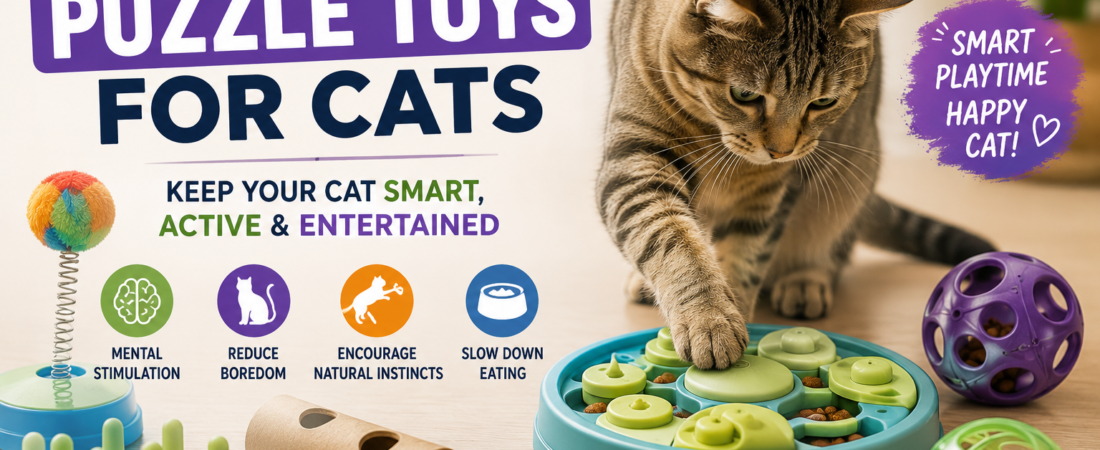
Cats are natural hunters. Even indoor cats have strong instincts to chase, solve problems, and search for food. Without enough mental stimulation, many cats become bored, overweight, or develop destructive behaviors.
Puzzle toys are one of the best ways to keep your cat engaged while encouraging healthy exercise and natural hunting skills.
In this guide, we’ll explain why puzzle toys are essential and how to choose the best one for your cat.
What Are Puzzle Toys?
Puzzle toys require cats to think before receiving a reward, usually treats or kibble.
Unlike ordinary toys, puzzle toys challenge your cat’s brain while encouraging movement and curiosity.
Popular types include:
- Treat-dispensing balls
- Sliding puzzles
- Interactive feeders
- Rolling food toys
- Hidden compartment puzzles
- Electronic puzzle toys
Benefits of Puzzle Toys
Reduce Boredom
Indoor cats spend much of the day alone.
Puzzle toys keep them busy even when you’re at work.
Encourage Natural Hunting Behavior
Cats naturally stalk, chase, and work for food.
Puzzle feeders imitate these instincts, making mealtime more rewarding.
Prevent Obesity
Instead of eating food in seconds, cats work gradually to earn every bite.
This slows eating speed and increases daily activity.
Improve Mental Health
Mental stimulation is just as important as physical exercise.
Puzzle toys can help reduce:
- Stress
- Anxiety
- Excessive meowing
- Destructive scratching
- Furniture damage
Slow Down Fast Eaters
Some cats eat too quickly and then vomit shortly afterward.
Puzzle feeders encourage slower eating, improving digestion.
Types of Puzzle Toys
Treat Dispensing Balls
Cats bat the ball around to release treats.
Best for:
- Active cats
- Young cats
- Food-motivated cats
Interactive Puzzle Boards
Cats move sliders, flip lids, or open compartments.
Great for:
- Intelligent cats
- Curious cats
- Indoor cats
Slow Feeders
Designed mainly for mealtime.
Benefits include:
- Better digestion
- Portion control
- Less overeating
Electronic Puzzle Toys
Battery-powered toys move automatically.
Many include lights, sounds, or unpredictable movement to keep cats entertained.
How to Choose the Right Puzzle Toy
Consider your cat’s:
Age
- Kittens need simple puzzles.
- Adult cats enjoy moderate difficulty.
- Senior cats benefit from easier designs.
Activity Level
Highly energetic cats often enjoy moving toys.
Calm cats may prefer treat puzzles.
Intelligence
Start with beginner puzzles.
Increase difficulty gradually as your cat learns.
Material
Choose toys made from:
- BPA-free plastic
- Food-safe silicone
- Durable rubber
- Non-toxic materials
Avoid toys with loose parts that can be swallowed.
Safety Tips
Always supervise your cat when introducing a new toy.
Regularly inspect toys for:
- Cracks
- Broken pieces
- Loose parts
Wash food puzzles frequently to prevent bacteria buildup.
Frequently Asked Questions
Are puzzle toys good for indoor cats?
Yes.
Puzzle toys help indoor cats stay mentally and physically active.
At what age can kittens use puzzle toys?
Most kittens can start using simple treat puzzles at around 10–12 weeks under supervision.
Can puzzle toys replace playtime?
No.
Puzzle toys are a supplement—not a replacement—for interactive play with your cat.
How often should cats use puzzle toys?
Many veterinarians recommend offering puzzle toys several times each week, or even daily for highly food-motivated indoor cats.
Final Thoughts
Puzzle toys are one of the easiest ways to enrich your cat’s daily life. They encourage natural hunting behaviors, reduce boredom, improve mental stimulation, and can even help with weight management.
Whether you have a playful kitten or a relaxed senior cat, the right puzzle toy can make mealtime and playtime far more rewarding.