Why Do Cats Love Boxes? The Science Behind This Strange Behavior (2026 Guide)
If you’ve ever purchased an expensive toy only to find your cat happily sitting inside the cardboard box instead, you’re not alone. Cats have fascinated their owners for years with their obsession with boxes. While it may seem strange, this behavior is actually rooted in their natural instincts.
In this guide, we’ll explore why cats love boxes, the benefits they provide, and how you can use boxes to enrich your cat’s environment.
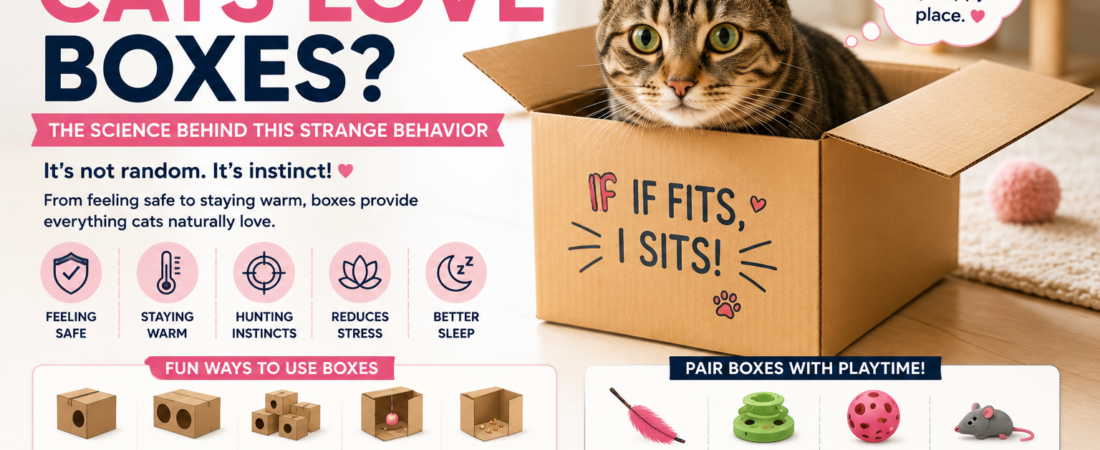
Why Are Cats Attracted to Boxes?
Cats are both predators and prey in nature. Because of this, they naturally seek small, enclosed spaces where they can feel protected while watching the world around them.
A cardboard box provides:
- Security
- Warmth
- A hiding place
- A hunting spot
- A comfortable place to rest
These instincts remain strong even in indoor cats.
Boxes Make Cats Feel Safe
Enclosed spaces reduce stress by limiting what your cat can see and by creating a sense of protection.
Cats often hide in boxes when:
- New visitors arrive
- They move to a new home
- Loud noises occur
- Another pet is nearby
A simple box can become a safe retreat during stressful situations.
Boxes Help Cats Stay Warm
Cats prefer temperatures between 86°F and 97°F (30°C–36°C), which is much warmer than the average home.
Cardboard acts as an insulator, helping cats conserve body heat while they sleep.
Boxes Encourage Natural Hunting Behavior
In the wild, cats hide before ambushing prey.
A cardboard box allows indoor cats to:
- Hide
- Observe
- Jump out unexpectedly
- Practice stalking
Pairing boxes with Best Feather Wand Toys for Cats in 2026: A Complete Guide to Interactive Play creates an exciting hunting game.
Boxes Reduce Stress
Several studies have shown that hiding places can help cats adjust more quickly to unfamiliar environments.
Boxes may help reduce stress:
- After adoption
- During travel
- After moving house
- During veterinary recovery
Providing hiding places is an easy way to support your cat’s emotional well-being.
Can Boxes Replace Toys?
Not completely.
While boxes are excellent enrichment, cats also need toys that encourage movement and mental stimulation.
A balanced play routine should include:
- Interactive toys
- Puzzle feeders
- Ball toys
- Feather wands
- Catnip toys
For more ideas, see Best Cat Toys in 2026 | Top Interactive Toys for Indoor Cats.
Fun Ways to Use Cardboard Boxes
You can make boxes even more interesting by:
- Cutting windows
- Creating tunnels
- Connecting multiple boxes
- Hiding treats inside
- Adding small toys
- Building a cardboard maze
These simple projects provide hours of entertainment at little cost.
When Should You Replace a Box?
Replace a cardboard box if it becomes:
- Wet
- Moldy
- Torn with sharp edges
- Covered in excessive dirt
- Infested with insects
Fresh boxes are safer and more appealing.
Frequently Asked Questions
Why does my cat ignore expensive toys but love boxes?
Boxes satisfy your cat’s instincts for security and hiding, while some toys may not match your cat’s preferred play style.
Are cardboard boxes safe?
Yes, provided they are clean, dry, and free from staples, tape, or sharp edges.
Can kittens play with cardboard boxes?
Absolutely. Boxes encourage exploration, confidence, and healthy play in young cats.
Final Thoughts
Your cat’s love of boxes isn’t random—it’s deeply connected to natural instincts for safety, warmth, and hunting. While a simple cardboard box can provide valuable enrichment, combining it with interactive toys, puzzle feeders, and daily play sessions creates the healthiest and happiest environment for your feline companion.