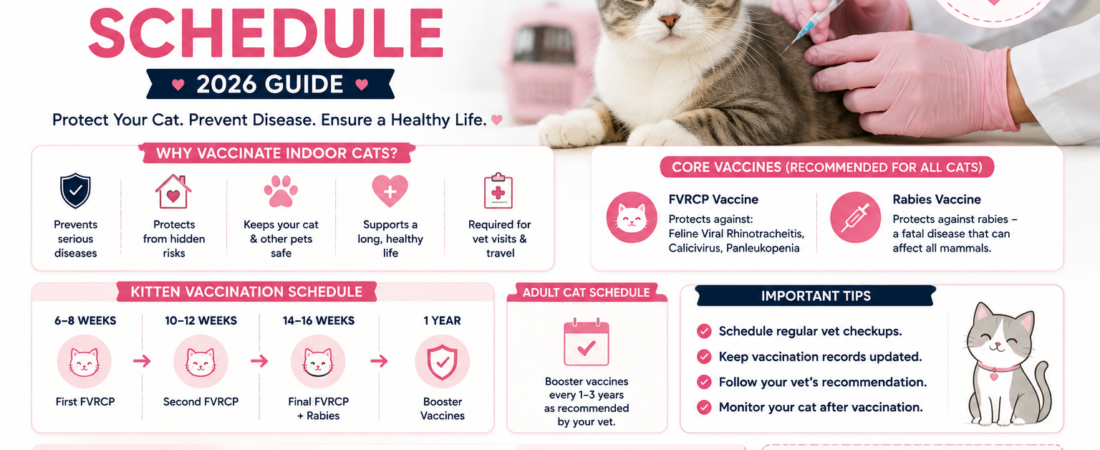
Indoor Cat Vaccination Schedule (2026 Guide)
Many cat owners assume that indoor cats don’t need vaccinations because they rarely come into contact with other animals. While living indoors greatly reduces exposure to disease, it doesn’t eliminate the risk completely. Viruses and bacteria can enter your home on clothing, shoes, or through unexpected encounters with other animals.
This guide explains why indoor cats still need vaccines, which vaccinations are considered essential, and the recommended schedule for kittens and adult cats.
Do Indoor Cats Really Need Vaccinations?
Yes.
Even strictly indoor cats can be exposed to infectious diseases in several ways, including:
- Veterinary clinic visits
- Escaping outdoors
- Contact with visiting pets
- Newly adopted animals
- Contaminated clothing or shoes
Vaccination remains one of the most effective ways to protect your cat from preventable illnesses.
Core Vaccines for Cats
Core vaccines are recommended for nearly every cat.
FVRCP Vaccine
This combination vaccine protects against:
- Feline viral rhinotracheitis
- Calicivirus
- Panleukopenia
These highly contagious diseases can cause severe illness, especially in kittens.
Rabies Vaccine
Rabies is almost always fatal once symptoms appear.
Even indoor cats may require rabies vaccination depending on local regulations or boarding requirements.
Non-Core Vaccines
Some vaccines are recommended only for cats with specific lifestyles.
Examples include:
- Feline leukemia (FeLV)
- Bordetella
- Chlamydia felis
Your veterinarian can help determine whether these vaccines are necessary.
Kitten Vaccination Schedule
Most kittens receive vaccines beginning at 6–8 weeks of age.
A typical schedule includes:
| Age | Recommended Vaccines |
|---|---|
| 6–8 weeks | First FVRCP |
| 10–12 weeks | Second FVRCP |
| 14–16 weeks | Final FVRCP + Rabies |
| 1 year | Booster vaccines |
Adult Cat Vaccination Schedule
Healthy adult indoor cats usually receive booster vaccinations every one to three years, depending on:
- Vaccine type
- Age
- Overall health
- Veterinary recommendations
Regular wellness exams are also important.
Learn more in How Often Should You Take Your Cat to the Vet? (2026 Complete Guide).
Possible Side Effects
Most cats experience only mild reactions such as:
- Sleepiness
- Mild soreness
- Reduced appetite
- Slight fever
These symptoms typically resolve within 24–48 hours.
Contact your veterinarian immediately if your cat experiences:
- Difficulty breathing
- Facial swelling
- Persistent vomiting
- Collapse
How to Prepare for Vaccination
Before the appointment:
- Bring previous vaccination records.
- Transport your cat in a secure carrier.
- Avoid unnecessary stress.
- Ask your veterinarian about recommended vaccines.
Frequently Asked Questions
Can an indoor cat skip vaccines?
No. Indoor cats still benefit from core vaccinations because accidental exposure is always possible.
How often should vaccines be updated?
Many booster vaccines are administered every one to three years, depending on the product and veterinary advice.
Are vaccines safe?
Vaccines are generally very safe, and serious adverse reactions are rare.
Final Thoughts
Vaccinations are a simple but essential part of preventive healthcare for indoor cats. By following the recommended schedule and attending regular veterinary checkups, you can greatly reduce your cat’s risk of serious infectious diseases and help ensure a long, healthy life.