Is My Cat Overweight? Signs, Risks, and How to Help (2026 Guide)
Keeping your cat at a healthy weight is one of the most important things you can do to support a long and active life. Unfortunately, many owners don’t realize their cat has gained excess weight until health problems begin to appear.
This guide explains how to recognize an overweight cat, understand the health risks, and safely help your feline reach a healthier weight.
Why Healthy Weight Matters
Extra weight affects nearly every part of a cat’s body.
Maintaining a healthy body condition can help:
- Reduce the risk of diabetes
- Protect joints and bones
- Improve heart health
- Support easier grooming
- Increase energy levels
- Promote a longer lifespan
How to Tell If Your Cat Is Overweight
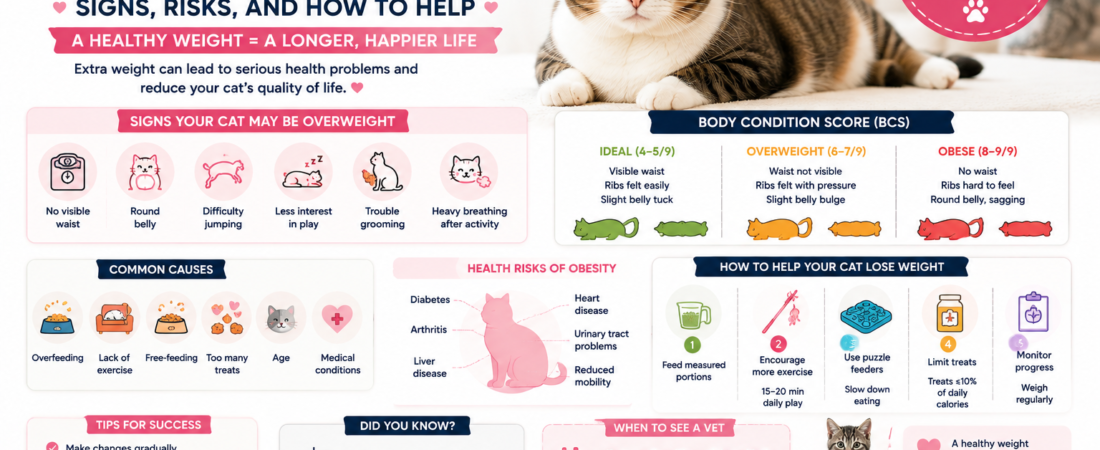
Instead of focusing only on body weight, veterinarians often use the Body Condition Score (BCS).
A healthy cat should have:
- A visible waist when viewed from above
- A slight abdominal tuck from the side
- Ribs that can be felt under a thin layer of fat
Signs your cat may be overweight include:
- No visible waist
- A rounded belly
- Difficulty jumping
- Less interest in playing
- Heavy breathing after activity
- Trouble grooming the back or tail area
If you notice several of these signs, schedule a veterinary checkup.
Learn more in How Often Should You Take Your Cat to the Vet? (2026 Complete Guide).
Common Causes of Weight Gain
Several factors can contribute to obesity.
Overfeeding
Giving large portions or too many treats is one of the most common causes.
Lack of Exercise
Indoor cats often burn fewer calories than outdoor cats.
Daily interactive play is essential.
Free-Feeding
Leaving food available all day makes it easy for some cats to overeat.
Age
Older cats usually become less active, making weight gain more likely.
Medical Conditions
Some health issues or medications may also contribute to weight gain.
If your cat suddenly gains weight, consult your veterinarian.
Health Risks of Obesity
Overweight cats have a higher risk of developing:
- Diabetes mellitus
- Arthritis
- Heart disease
- Liver disease
- Urinary tract problems
- Reduced mobility
Preventing obesity is easier than treating its complications.
How to Help Your Cat Lose Weight Safely
Feed Measured Portions
Use a measuring cup or kitchen scale instead of estimating portions.
Encourage More Exercise
Aim for at least 15–20 minutes of interactive play every day.
Use Puzzle Feeders
Puzzle feeders encourage cats to work for their food while slowing down eating.
Limit Treats
Treats should make up no more than 10% of your cat’s daily calorie intake.
Monitor Progress
Weigh your cat regularly and record changes over time.
Gradual weight loss is healthier than rapid dieting.
Can Indoor Cats Stay at a Healthy Weight?
Absolutely.
With the right diet, portion control, enrichment, and regular exercise, indoor cats can maintain an excellent body condition throughout their lives.
Proper hydration also supports overall health. Read How Much Water Should a Cat Drink? Signs of Dehydration & Hydration Tips (2026) for more information.
Frequently Asked Questions
What is a healthy weight for a cat?
It varies by breed, age, and body frame. Your veterinarian can assess your cat using the Body Condition Score rather than weight alone.
Should I put my cat on a diet?
Only after consulting your veterinarian to rule out underlying health conditions and determine an appropriate feeding plan.
Can play help my cat lose weight?
Yes. Daily interactive play increases activity levels and helps burn calories while reducing boredom.
Final Thoughts
Helping your cat maintain a healthy weight is one of the best investments you can make in its long-term health. By feeding appropriate portions, encouraging daily exercise, and scheduling regular veterinary checkups, you can reduce the risk of obesity-related diseases and improve your cat’s quality of life.