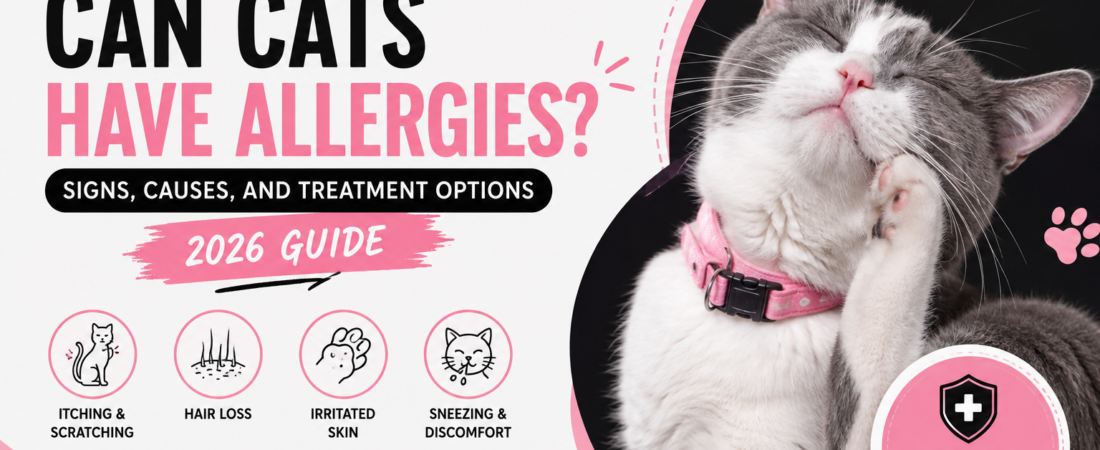
Can Cats Have Allergies? Signs, Causes, and Treatment Options (2026 Guide)
Cats can develop allergies just like people, but the signs are often easy to confuse with other skin or health problems. If your cat is frequently scratching, licking its fur, sneezing, or developing irritated skin, an allergy could be one possible cause.
In this guide, we’ll explain the most common cat allergy symptoms, possible causes, how allergies are diagnosed, and what you can do to help your cat feel more comfortable.
Can Cats Have Allergies?
Yes, cats can have allergies. An allergy occurs when a cat’s immune system reacts excessively to a normally harmless substance.
Depending on the type of allergy, cats may develop skin irritation, digestive symptoms, respiratory problems, or a combination of these signs.
Common allergy triggers include:
- Fleas and flea saliva
- Certain foods
- Pollen
- Dust and dust mites
- Mold
- Household cleaning products
- Fragrances
- Certain materials or substances in the environment
Because many conditions can cause similar symptoms, persistent problems should be evaluated by a veterinarian.
Common Signs of Allergies in Cats
The symptoms of allergies can vary from one cat to another. Some cats primarily develop skin problems, while others may experience respiratory or digestive symptoms.
1. Excessive Scratching
Frequent scratching is one of the most noticeable signs of an allergic reaction.
Your cat may repeatedly scratch its:
- Neck
- Head
- Ears
- Back
- Face
Constant scratching can damage the skin and lead to secondary infections.
2. Excessive Licking or Grooming
Cats naturally groom themselves, but excessive grooming can indicate irritation or discomfort.
If your cat repeatedly licks one area of its body or develops bald patches, an underlying skin problem should be considered.
3. Hair Loss
Allergies can cause hair loss because of inflammation and excessive scratching or grooming.
Look for unusual thinning or bald areas, particularly around the head, neck, abdomen, or legs.
4. Red or Irritated Skin
Allergic reactions may cause the skin to become red, inflamed, crusty, or irritated.
Some cats may also develop small bumps or scabs.
5. Ear Problems
Allergies can sometimes contribute to recurring ear irritation.
Possible signs include:
- Frequent ear scratching
- Head shaking
- Red ears
- Unusual ear odor
- Increased ear discharge
6. Sneezing
Environmental allergies may cause sneezing or other respiratory symptoms.
Occasional sneezing can happen for many reasons, but frequent or persistent sneezing deserves attention.
What Causes Allergies in Cats?
There are several common categories of feline allergies.
Flea Allergies
Flea allergy dermatitis is one of the most common allergic skin conditions in cats.
Interestingly, a cat does not need to have a large number of fleas to experience significant irritation. Some cats can have a strong reaction to flea saliva after only a few bites.
Regular flea prevention can therefore be an important part of managing allergy-related skin problems.
Food Allergies
Some cats can develop an allergic reaction to ingredients in their food.
Commonly suspected ingredients can include certain animal proteins, although the trigger varies between individual cats.
Possible signs of a food allergy include:
- Itchy skin
- Recurrent ear irritation
- Hair loss
- Skin lesions
- Occasionally digestive problems
A veterinarian may recommend a controlled elimination diet to determine whether food is contributing to the symptoms.
Environmental Allergies
Cats may react to substances in their environment, including:
- Pollen
- Mold
- Dust mites
- Household chemicals
- Fragrances
These allergies can sometimes be seasonal, while others may occur throughout the year.
How Are Cat Allergies Diagnosed?
Diagnosing allergies in cats can be challenging because many other conditions can cause similar symptoms.
A veterinarian may first look for other possible causes, such as:
- Fleas
- Parasites
- Skin infections
- Fungal infections
- Food reactions
- Other dermatological conditions
Your veterinarian may ask about your cat’s diet, environment, grooming habits, flea prevention, and when the symptoms started.
In some cases, additional testing or a carefully monitored diet trial may be recommended.
How to Help a Cat With Allergies
The best approach depends on the underlying cause.
Keep Your Home Clean
Regularly vacuum carpets, furniture, and areas where your cat sleeps.
Wash bedding regularly to help reduce dust, allergens, and other irritants.
Use Consistent Flea Prevention
Even indoor cats can potentially encounter fleas.
Following a veterinarian-recommended flea prevention program can help reduce the risk of flea-related skin irritation.
Avoid Strong Fragrances
Strong perfumes, air fresheners, scented cleaners, and similar products may irritate sensitive cats.
Consider using unscented products around your cat whenever possible.
Keep Your Cat’s Environment Stable
Cats can be sensitive to environmental changes. Keeping their sleeping area, litter box, food, and water in clean and consistent locations can help create a comfortable environment.
For more information about feline stress, see our guide on How to Reduce Stress in Cats (2026 Guide).
Follow Veterinary Advice
Do not give your cat human allergy medication unless your veterinarian specifically recommends it.
Some human medications can be dangerous for cats, and the correct treatment depends on the cause of the symptoms.
When Should You Take Your Cat to the Vet?
You should contact a veterinarian if your cat has persistent itching, hair loss, skin wounds, recurring ear problems, or other unexplained symptoms.
Seek prompt veterinary attention if your cat develops:
- Severe facial swelling
- Difficulty breathing
- Sudden widespread hives
- Extreme weakness
- Collapse
- Severe vomiting or other concerning symptoms
A serious allergic reaction can require urgent veterinary treatment.
Can Cat Allergies Be Prevented?
Not every allergy can be prevented, but you can reduce exposure to some common triggers.
Helpful habits include:
- Maintaining regular flea prevention
- Keeping bedding clean
- Vacuuming regularly
- Avoiding harsh household chemicals
- Limiting exposure to strong fragrances
- Feeding a consistent, nutritionally complete diet
- Monitoring your cat for changes in skin or behavior
- Scheduling routine veterinary examinations
Final Thoughts
Cat allergies can cause itching, excessive grooming, hair loss, skin irritation, sneezing, and other symptoms. Fleas, food ingredients, and environmental substances are among the possible triggers.
Because allergy symptoms can resemble other feline health problems, persistent or severe symptoms should be evaluated by a veterinarian. Identifying the underlying cause is the key to choosing the right treatment and helping your cat stay comfortable.
If your cat suddenly develops severe swelling, breathing difficulties, collapse, or other serious symptoms, seek emergency veterinary care immediately.