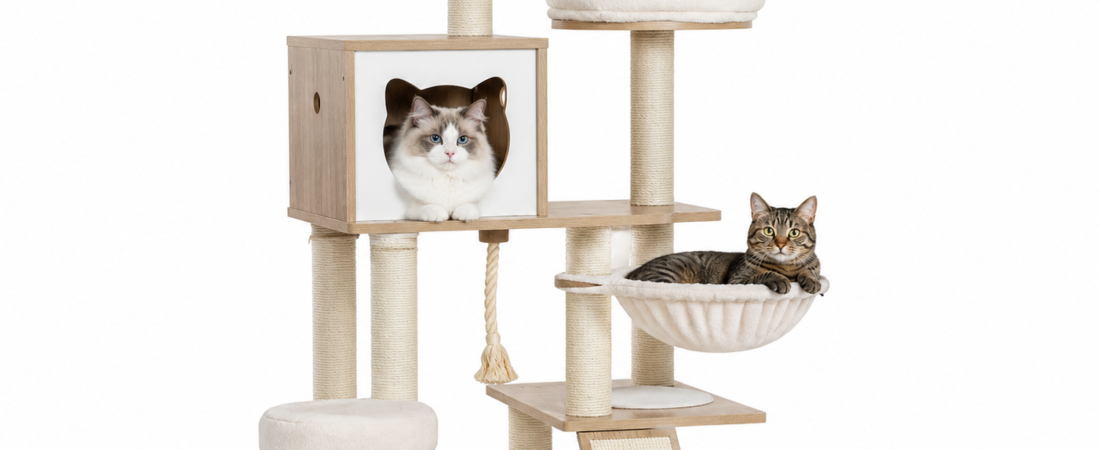
The Ultimate Guide to Choosing the Best Cat Trees for Happy Indoor Cats (2026)
Indoor cats may live safe and comfortable lives, but they still need opportunities to climb, scratch, jump, and explore. A cat tree is one of the best investments any cat owner can make because it provides exercise, entertainment, and a secure place for cats to rest.
Whether you have a playful kitten, an energetic adult, or a senior cat, choosing the right cat tree can improve your pet’s physical health and emotional well-being while protecting your furniture from scratching.
In this guide, you’ll learn everything you need to know about selecting the best cat tree for your furry companion.
Why Every Indoor Cat Needs a Cat Tree
Cats naturally love high places. In the wild, climbing allows them to observe their surroundings, avoid danger, and rest safely above the ground.
A quality cat tree helps satisfy these instincts by providing:
- Safe climbing opportunities
- Comfortable sleeping platforms
- Built-in scratching posts
- Daily exercise
- Mental stimulation
- Stress relief
- Personal territory inside your home
Cats with access to climbing furniture are often more active, confident, and less likely to develop destructive behaviors.
Benefits of Cat Trees
Encourages Healthy Exercise
Jumping between platforms strengthens muscles, improves balance, and helps maintain a healthy weight.
This is especially important for indoor cats that spend most of their time inside the house.
Protects Your Furniture
One of the biggest reasons cats scratch is to sharpen their claws and mark territory.
A cat tree with durable sisal scratching posts gives cats an appropriate place to scratch instead of your sofa, curtains, or carpets.
Reduces Stress and Anxiety
Cats enjoy observing their surroundings from elevated positions.
Having a dedicated space helps reduce stress in homes with children, visitors, or multiple pets.
Provides Better Sleep
Many cat trees include plush beds, hammocks, or enclosed condos where cats can relax and sleep peacefully.
Types of Cat Trees
Standard Cat Trees
Perfect for most households.
Features include:
- Multiple platforms
- Scratching posts
- Cozy resting areas
Suitable for one or two cats.
Multi-Level Cat Towers
Designed for active cats that love climbing.
These tall towers include:
- Several jumping platforms
- Hanging toys
- Multiple scratching posts
- Large resting spaces
Ideal for energetic indoor cats.
Cat Trees with Condos
These models include enclosed hideaways where shy cats can feel secure.
Best for:
- Nervous cats
- Senior cats
- Multi-pet households
Wall-Mounted Cat Trees
Perfect for small apartments.
Benefits include:
- Saves floor space
- Creates climbing pathways
- Modern appearance
- Excellent exercise opportunities
How to Choose the Best Cat Tree
Before buying, consider the following factors.
Height
Cats generally prefer taller trees because they enjoy observing their environment from above.
Choose:
- Small cats: 3–4 feet
- Adult cats: 5–6 feet
- Active climbers: 6 feet or taller
Stability
A sturdy base is essential.
The best cat tree should remain stable when your cat jumps or climbs.
Look for:
- Heavy base
- Strong construction
- Anti-tip design
Scratching Material
Natural sisal rope remains the most durable and cat-friendly material.
Avoid weak carpet-only posts that wear out quickly.
Platform Size
Large breeds like Maine Coons require wider platforms and stronger support.
Small kittens can use more compact designs.
Soft Sleeping Areas
Cats spend up to 16 hours sleeping every day.
Choose cat trees with:
- Plush cushions
- Soft hammocks
- Comfortable condos
Where Should You Place a Cat Tree?
The location matters almost as much as the tree itself.
Great locations include:
- Near a sunny window
- Living room corner
- Home office
- Quiet bedroom
Avoid placing the tree in isolated areas where your cat rarely spends time.
Maintenance Tips
To keep your cat tree clean:
- Vacuum weekly
- Tighten screws every month
- Replace worn sisal rope when necessary
- Wash removable cushions regularly
Proper maintenance extends the lifespan of your cat tree.
Frequently Asked Questions
How tall should a cat tree be?
Most indoor cats enjoy trees between 5 and 6 feet tall, while kittens may be comfortable with shorter models.
Are cat trees worth buying?
Absolutely. A quality cat tree provides exercise, reduces boredom, protects furniture, and supports natural feline behaviors.
How many cat trees do I need?
One large cat tree is usually sufficient for one or two cats. Larger households may benefit from multiple climbing stations.
What material is best?
Natural wood combined with sisal scratching posts offers durability, stability, and an attractive appearance.
Final Thoughts
A cat tree is much more than a piece of pet furniture. It serves as a playground, scratching post, observation tower, and cozy sleeping spot all in one.
Choosing the right model based on your cat’s size, age, and activity level will improve their quality of life while helping keep your home cleaner and your furniture protected.
Whether you’re raising a playful kitten or caring for an older feline companion, investing in a high-quality cat tree is one of the smartest decisions any cat owner can make.