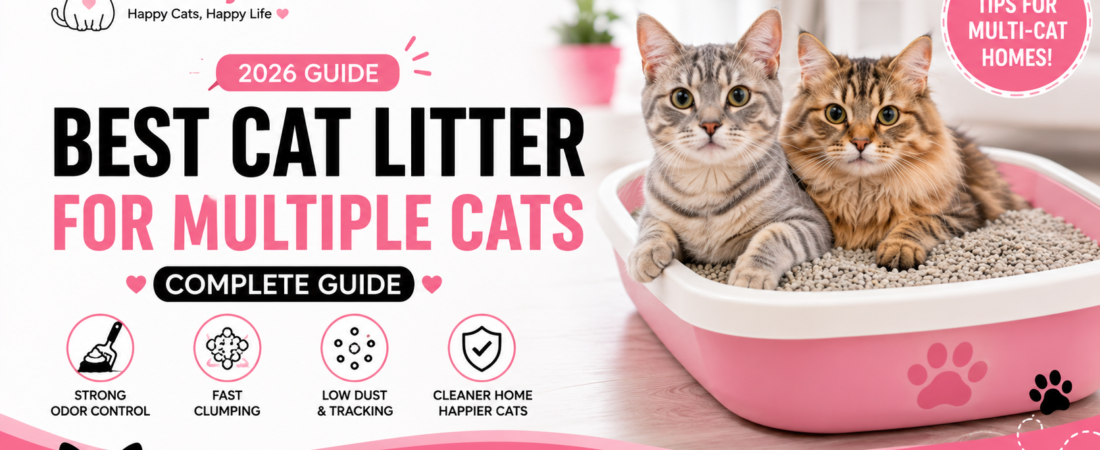
Best Cat Litter for Multiple Cats in 2026
Living with multiple cats can make litter box maintenance much more difficult.
More cats mean more urine, more waste, more tracking, and potentially stronger odors. Choosing the best cat litter for multiple cats can make your home cleaner and your daily routine much easier.
The right litter should provide good odor control, form easy-to-remove clumps, produce minimal dust, and work well with your cats’ preferences.
In this guide, we’ll explain what to look for when choosing cat litter for a multi-cat household.
Why Multiple Cats Need Better Litter Management
A single cat may use a litter box several times a day.
With two, three, or more cats, the amount of waste can increase significantly.
Poor litter management can lead to:
- Strong odors
- Wet litter
- Dirty litter boxes
- Increased tracking
- Cats avoiding the litter box
- More frequent cleaning
This is why choosing the right litter is only part of the solution. The number and placement of litter boxes also matter.
1. Choose Strong Odor Control
Odor control is one of the biggest concerns in multi-cat homes.
Look for litter designed to absorb moisture quickly and control unpleasant smells.
Some formulas use:
- Activated carbon
- Natural minerals
- Baking soda
- Plant-based ingredients
- Highly absorbent clay
However, stronger fragrance isn’t necessarily better.
Many cats prefer unscented litter, and heavily perfumed products may discourage some cats from using the box.
If odor is your biggest problem, see our guide to Best Cat Litter for Odor Control.
2. Clumping Litter Is Often Convenient
Clumping litter forms solid clumps when it comes into contact with urine.
This makes it easier to remove waste without replacing all of the litter.
For households with multiple cats, clumping litter can be especially convenient because you can remove soiled areas regularly.
Advantages include:
- Easy daily cleaning
- Less wasted litter
- Better moisture management
- Easier odor control
- Simple maintenance
If you’re unsure about the differences between litter types, read our Clumping vs Non-Clumping Cat Litter Guide.
3. Consider Dust Levels
Dust can become a bigger issue when multiple cats are using litter boxes every day.
Every time a cat digs or jumps out of the box, dust can potentially spread around the room.
Look for products marketed as low-dust or dust-reduced.
However, remember that “low dust” does not necessarily mean completely dust-free.
You should also consider where the litter box is placed and how often the surrounding area is cleaned.
4. Reduce Litter Tracking
Tracking occurs when small pieces of litter stick to your cat’s paws and spread around the house.
With multiple cats, this can become particularly noticeable.
To reduce tracking, consider:
- Larger litter granules
- Low-tracking formulas
- High-quality litter mats
- Litter boxes with appropriate entry points
- Regular sweeping or vacuuming
A litter mat placed directly outside the box can catch a significant amount of litter before it spreads throughout your home.
5. Don’t Forget Litter Box Size
Even the best cat litter for multiple cats won’t solve every litter box problem if the boxes are too small.
Your cats should have enough room to:
- Enter comfortably
- Turn around
- Dig
- Find a comfortable position
- Leave without stepping directly into waste
Large cats may need larger litter boxes than kittens or smaller breeds.
Avoid choosing a tiny litter box simply because it takes up less space.
How Many Litter Boxes Do Multiple Cats Need?
A commonly recommended guideline is:
Number of cats + 1 = recommended number of litter boxes
For example:
| Number of Cats | Recommended Litter Boxes |
|---|---|
| 1 cat | 2 boxes |
| 2 cats | 3 boxes |
| 3 cats | 4 boxes |
| 4 cats | 5 boxes |
This isn’t an absolute rule for every household, but it can be a useful starting point.
Multiple boxes can reduce competition and give each cat more options.
6. Unscented vs Scented Litter
Scented litter may seem like an obvious choice for odor control.
However, cats have a much stronger sense of smell than humans.
Some cats may dislike strong fragrances.
For a multi-cat household, unscented litter can be a good option if your cats are sensitive to smells.
If you want fragrance, choose a mild formula and observe how your cats respond.
The most important thing is that your cats consistently use the litter box.
7. Clay, Crystal, and Plant-Based Litter
There are several types of litter available today.
Clay Litter
Clay litter is one of the most common choices.
It is widely available and many clumping clay formulas provide strong absorption.
Crystal Litter
Crystal litter uses silica crystals to absorb moisture.
It can provide good odor control and may last longer between complete litter changes.
Read our Crystal vs Clay Cat Litter Guide to compare the two.
Plant-Based Litter
Plant-based litter can be made from materials such as:
- Corn
- Wheat
- Pine
- Grass
- Other plant fibers
Some owners prefer these options because of their material composition and lighter weight.
The best choice depends on your cats’ preferences and your cleaning routine.
8. Choose a Litter Your Cats Will Actually Use
This is perhaps the most important point.
You might find a litter with excellent odor control, low dust, and great reviews, but if your cat refuses to use it, it isn’t the right litter for your household.
Cats can be sensitive to:
- Texture
- Smell
- Dust
- Box location
- Litter depth
- Sudden changes
If you’re changing litter, transition gradually whenever possible.
Avoid suddenly replacing familiar litter with a completely different type unless there is a specific reason.
9. How Deep Should Cat Litter Be?
Most cats prefer enough litter to dig and cover their waste.
A moderate layer is usually a good starting point.
Too little litter may make it difficult for cats to bury waste.
Too much litter can increase tracking and make cleaning more difficult.
Start with the manufacturer’s recommendations and adjust based on your cats’ behavior.
10. How Often Should You Clean Multiple Cat Litter Boxes?
With several cats, daily cleaning becomes even more important.
A practical routine is:
Daily: Remove urine clumps and solid waste.
Every few days: Check litter depth and add fresh litter when needed.
Regularly: Empty, wash, dry, and refill the litter box according to the litter type and household needs.
If you’re unsure when to replace litter completely, read How Often Should You Change Cat Litter?
Best Features to Look for in Multi-Cat Litter
When comparing products, look for these features:
| Feature | Why It Matters |
|---|---|
| Strong absorption | Helps manage urine |
| Good odor control | Important with multiple cats |
| Low dust | Helps keep the surrounding area cleaner |
| Low tracking | Reduces litter around the house |
| Easy clumping | Makes daily cleaning easier |
| Unscented option | Useful for sensitive cats |
| Good value | More litter is needed in multi-cat homes |
You can compare recommended products on our Cat Litter Products page.
How to Introduce New Litter
If your cats already have a litter they like, don’t change it suddenly unless necessary.
Try mixing the new litter with the old litter gradually.
For example:
Days 1–2: 75% old litter + 25% new litter
Days 3–4: 50% old litter + 50% new litter
Days 5–6: 25% old litter + 75% new litter
Day 7: 100% new litter
Some cats may need more time.
If your cat refuses to use the box, return to the previous litter and make the transition slower.
Common Mistakes in Multi-Cat Homes
Using Only One Litter Box
One box for several cats can quickly become dirty.
More boxes can make litter management easier and reduce competition.
Waiting Too Long to Scoop
Waste sitting in the box for long periods can increase odors and discourage cats from using it.
Using Too Much Fragrance
A strong fragrance may hide odors for humans but can be unpleasant for cats.
Changing Litter Too Frequently
Cats often prefer consistency.
Frequent changes can create unnecessary stress.
Buying Based Only on Price
The cheapest litter isn’t always the best value.
A litter that clumps well and controls odors may last longer and reduce waste.
Frequently Asked Questions
What is the best cat litter for multiple cats?
The best option should provide good absorption, odor control, manageable dust levels, and easy cleaning.
Clumping litter is often a convenient choice for multi-cat households.
Is clumping litter better for multiple cats?
It can be.
Clumping litter allows you to remove urine and waste without replacing the entire box, which can make daily maintenance easier.
How many litter boxes should I have for three cats?
A common guideline is four litter boxes for three cats.
However, your home’s layout and your cats’ behavior should also be considered.
Should multiple cats share one litter box?
They can, but having multiple boxes is generally better.
Additional boxes give cats more choices and can help reduce competition.
How do I control litter box odor with multiple cats?
Scoop regularly, use an absorbent litter with good odor control, maintain enough litter boxes, and clean the boxes consistently.
Can I use scented litter for multiple cats?
You can, but some cats dislike strong fragrances.
If your cats avoid the box after switching to scented litter, consider an unscented option.
Final Thoughts
Finding the best cat litter for multiple cats is about more than choosing the product with the strongest fragrance or highest price.
A good multi-cat litter should provide reliable absorption, odor control, manageable dust, and easy cleaning.
But litter itself is only one part of the equation.
Providing enough litter boxes, scooping regularly, choosing suitable locations, and keeping a consistent routine can make a much bigger difference.
Start with a litter your cats already tolerate well, make changes gradually, and monitor their behavior.
If you’re ready to compare options, visit our Products page to find recommended cat litter products.
This article is for general educational purposes and is not a substitute for veterinary advice. If your cat suddenly stops using the litter box, urinates outside the box, or shows signs of pain or illness, consult a veterinarian.