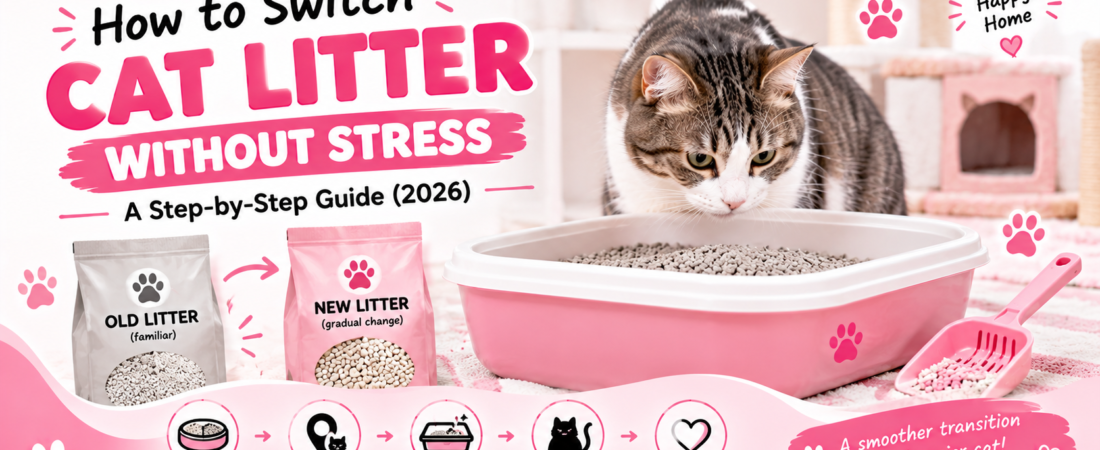
Changing your cat’s litter may seem like a simple household task, but some cats are surprisingly sensitive to changes in their bathroom routine. A new litter may feel different under their paws, smell unfamiliar, or produce a texture they dislike.
If you switch too quickly, your cat may avoid the litter box, eliminate elsewhere, or become reluctant to use a previously familiar area.
The good news is that most litter changes can be introduced gradually. By keeping the litter box familiar, mixing the new litter with the old one, and observing your cat’s behavior, you can make the transition easier.
In this guide, CatJoyLife explains how to switch cat litter step by step, what to do when your cat refuses the new litter, and how to choose a suitable replacement.
1. Why Do Cats Sometimes Reject New Litter?
Cats develop preferences based on texture, scent, cleanliness, and familiarity. A sudden change can make a litter box feel unfamiliar, even when the new product is designed to control odors or reduce tracking.
Here are some common reasons cats reject a new litter.
Different texture
Some cats prefer fine, sand-like litter, while others accept larger granules or pellets. A change from fine clay to coarse wood pellets, for example, may feel uncomfortable or unfamiliar under their paws.
Strong fragrance
Scented litter may smell pleasant to people but overwhelming to some cats. A heavily perfumed formula can discourage a cat from entering the box.
Different feel underfoot
Lightweight litter, crystal litter, paper pellets, and plant-based litter can all feel different from traditional clay litter.
Changes in the litter box itself
If you replace the litter and the box at the same time, your cat must adjust to two changes. A new location, covered design, or different box size may also affect acceptance.
A negative previous experience
If a cat has experienced pain while urinating or defecating, it may associate the litter box with discomfort. A litter change alone will not solve a medical problem.
For an overview of available materials, see Different Types of Cat Litter Explained (2026): Complete Comparison Guide.
2. Choose the Right Time to Change Cat Litter
Whenever possible, introduce a new litter during a relatively calm period.
Avoid changing the litter at the same time as major household changes, such as moving home, introducing a new pet, or rearranging the litter box area.
If your cat is already nervous or has recently started avoiding the box, keep the environment as predictable as possible.
Before switching, consider:
- Your cat’s current litter preference.
- Whether the new litter has a noticeably different texture.
- Whether the new product has a strong fragrance.
- Your cat’s age and mobility.
- Whether any recent litter box problems could indicate a medical issue.
If your cat is comfortable with the current litter and you simply want to try another brand, there is usually no need to rush.
3. How to Switch Cat Litter Step by Step
For many cats, a gradual transition over approximately 7–14 days is a reasonable starting point. Some cats adjust faster, while sensitive cats may need several weeks.
The following schedule is a flexible guide, not a strict deadline.
<text color=”secondary” size=”sm”>Suggested transition schedule</text>
| Period | Old litter | New litter | What to observe |
|---|---|---|---|
| Days 1–3 | 75% | 25% | Will your cat enter and use the box? |
| Days 4–6 | 50% | 50% | Is your cat comfortable with the new texture? |
| Days 7–9 | 25% | 75% | Are normal litter box habits continuing? |
| Day 10 onward | 0–10% | 90–100% | Is your cat consistently using the new litter? |
The percentages are approximate. If your cat shows reluctance, return to the last mixture it accepted and progress more slowly.
Step 1: Start with a small amount of new litter
Begin by mixing a small amount of the new litter into the existing litter. Keep enough familiar material in the box so the smell and texture do not change too dramatically.
Do not completely empty the box and replace everything on the first day unless there is a specific safety or hygiene reason to do so.
Step 2: Keep the box in the same location
Place the litter box where your cat already expects it to be.
Avoid moving the box, changing the litter type, switching to a covered box, and altering the cleaning routine all at once.
Familiar surroundings help your cat focus on the new litter rather than dealing with several changes.
Step 3: Increase the new litter gradually
If your cat continues using the box normally, slowly increase the proportion of new litter over the following days.
If your cat hesitates, sniffs the box repeatedly without entering, or begins eliminating elsewhere, slow down the transition.
Step 4: Maintain a clean litter box
Scoop waste regularly and keep the box at a comfortable, familiar level of cleanliness.
A dirty box can make a cat reject even a litter it previously accepted. Follow the product instructions for litter replacement and cleaning.
For more advice, read How to Clean a Cat Litter Box Properly (2026 Guide).
Step 5: Finish only when your cat is comfortable
Do not feel obligated to finish the transition on a specific day.
If your cat consistently uses the mixed litter without signs of discomfort, you can continue increasing the new litter until the change is complete.
If the cat repeatedly refuses the new material, consider whether the texture, fragrance, or other characteristics are unsuitable.
4. What If You Are Switching Between Different Types of Cat Litter?
Not all litter types can be mixed equally well. The transition method depends on the materials involved.
Clay to another clumping clay litter
This is often a relatively straightforward change if the new litter has a similar texture and fragrance.
Start with a small proportion of the new product and increase it gradually.
Clay to silica crystal litter
Crystal litter may have a different grain size and feel underfoot. Some cats accept it readily, while others dislike the texture.
Use a slower transition and monitor whether your cat continues digging, covering waste, and using the box normally.
Clay to natural plant-based litter
Natural litter may be made from wood, corn, paper, wheat, tofu, or other materials. These products can differ substantially in texture, weight, absorbency, and scent.
Start with a small amount and pay particular attention to whether your cat is comfortable walking and digging in the mixture.
Fine litter to large pellets
This can be a more noticeable change because pellets feel very different from fine granules.
Consider using a separate litter box containing the new material instead of immediately mixing large pellets into fine litter. Some materials do not combine well, and mixing may make scooping or cleaning less effective.
Important: Follow the manufacturer’s instructions. If the two litter types are not intended to be mixed, offer them in separate boxes during the transition.
5. Should You Offer Two Litter Boxes During the Transition?
For many cats, offering a choice can be helpful.
If space allows, keep one litter box with the familiar litter and place a second box with the new litter nearby. This lets your cat investigate the new material without losing access to its preferred bathroom.
Benefits of offering a choice
- Your cat can explore the new litter at its own pace.
- You can observe which litter your cat prefers.
- You reduce the risk of suddenly removing the familiar option.
- You can compare litter box habits more easily.
Keep both boxes clean and accessible. Avoid placing them in noisy, crowded, or difficult-to-reach locations.
If you have multiple cats, provide enough litter boxes to reduce competition. A common guideline is one box per cat plus one extra, although the ideal arrangement depends on your home and your cats.
For households with several cats, read Best Cat Litter for Multiple Cats in 2026.
6. How to Help a Cat That Is Sensitive to New Litter
Some cats need more time and reassurance than others. The goal is to make the litter box feel safe rather than forcing your cat to accept a new product.
Choose an unscented option
If your cat reacts negatively to a perfumed litter, consider an unscented formula. Cats can be sensitive to strong smells, and reducing fragrance may make the box more appealing.
Keep the familiar litter box
If possible, keep the same box, location, and general cleaning routine throughout the transition.
Make the box easy to enter
Older cats, kittens, and cats with mobility problems may struggle with high sides or awkward entrances. A low-entry box may help, depending on your cat’s needs.
Avoid punishment
Never scold, frighten, or punish your cat for avoiding the litter box. Punishment can increase stress and make the problem worse.
Give your cat time
Allow your cat to explore the box voluntarily. Do not place the cat inside repeatedly or force its paws into the new litter.
If the cat remains uncomfortable, try a different product rather than continuing to push the transition.
7. Signs Your Cat Is Adjusting Well
Your cat may be adapting successfully if you notice:
- Entering the litter box without hesitation.
- Digging or scratching in the litter normally.
- Urinating and defecating in the usual location.
- Covering waste as usual, if that is the cat’s normal behavior.
- Returning to the box consistently.
- No increase in accidents outside the box.
Not every cat covers its waste, so this behavior alone is not a reliable measure of acceptance.
The most important signs are consistent litter box use and the absence of distress or unusual elimination patterns.
8. Warning Signs That the New Litter Is Not Working
Some signs suggest the transition is moving too quickly or that the new litter is not suitable.
Watch for:
- Repeatedly approaching and leaving the box.
- Standing on the edge rather than stepping into the litter.
- Scratching the floor near the box instead of digging in it.
- Avoiding the box.
- Urinating or defecating outside the box.
- Excessive licking of the paws after using the litter.
These behaviors do not always mean the litter itself is the problem. Stress, box cleanliness, location, pain, and medical conditions can also cause changes.
If your cat starts avoiding the box, return to the last familiar setup if it is safe and practical, and reassess the transition.
If the problem continues, contact your veterinarian rather than assuming it is purely behavioral.
9. What to Do If Your Cat Stops Using the Litter Box
A cat that suddenly stops using the litter box needs careful attention.
First, check the environment
Make sure the box is clean, accessible, and in a quiet location. Check whether the new litter has a strong scent or an unfamiliar texture.
If the problem began immediately after the litter change, consider returning to the familiar litter while you investigate.
Next, watch for medical symptoms
Look for signs such as:
- Straining to urinate.
- Frequent trips to the box with little or no urine.
- Crying while attempting to urinate.
- Blood in the urine.
- Constipation or painful defecation.
- A sudden change in appetite or energy.
Straining to urinate with little or no urine can indicate a life-threatening urinary blockage. Seek emergency veterinary care immediately, especially if your cat is male. Do not wait to see whether changing the litter solves the problem.
If your cat repeatedly urinates outside the box or appears uncomfortable, arrange a veterinary assessment.
For further troubleshooting, read Cat Avoiding Litter Box? Causes, Solutions & Prevention (2026 Guide).
10. How to Choose a New Litter Your Cat Is More Likely to Accept
When selecting a replacement, consider more than odor control or price.
Texture
If your cat likes fine, sand-like litter, a product with a similar texture may be easier to introduce than large pellets.
Fragrance
Unscented litter is a sensible starting point for cats that seem sensitive to perfumes.
Dust
If dust is a concern, look for a product with clear dust-control information. No litter should be assumed to be completely dust-free without reliable product evidence.
Absorbency and clumping
Choose a litter that meets your cleaning needs while remaining comfortable for your cat. Different products may require different scooping and replacement routines.
Your cat’s age and mobility
Kittens and senior cats may need a litter box that is easy to enter and a litter that feels comfortable under their paws.
Your household needs
Consider tracking, odor, disposal requirements, storage, and cost—but do not sacrifice your cat’s comfort simply to choose the most convenient option.
For a broader comparison, see The Ultimate Guide to Choosing the Best Cat Litter (2026).
11. Common Mistakes When Switching Cat Litter
Avoid these mistakes to make the transition easier.
Changing everything at once. Replacing the litter, box, location, and cleaning schedule together can make it difficult to identify what your cat dislikes.
Switching too quickly. A sudden change may be uncomfortable for cats that rely on familiar textures and smells.
Choosing heavily scented litter to mask odors. Strong fragrances do not necessarily make a litter more acceptable to cats.
Ignoring early signs of rejection. Hesitation and avoidance are reasons to slow down, not force the transition.
Punishing accidents. Punishment can increase stress and will not address an underlying medical problem.
Assuming every litter is suitable for mixing. Some materials have different properties and should be offered separately during the transition.
Ignoring possible illness. Changes in urination or defecation may be medical warning signs, not simply a reaction to new litter.
Frequently Asked Questions
How long does it take a cat to get used to new litter?
Some cats adjust within a few days, while others may need two weeks or longer. A gradual transition is generally safer than forcing a quick change.
Can I change cat litter immediately?
It may be necessary if the existing litter is contaminated or has another urgent problem, but gradual changes are preferable when practical. If you must change immediately, offer a familiar litter option in a separate box if possible and watch your cat’s behavior.
Should I mix old and new cat litter?
Mixing can help when the two products are compatible. Start with a small amount of new litter and increase it gradually. If the materials do not mix well, offer separate boxes instead.
What if my cat refuses the new litter?
Return to the last litter mixture your cat accepted, if possible. Check the texture, fragrance, box cleanliness, and location. Consider offering a second box with the new litter and allow your cat more time.
Is unscented cat litter better?
Many cats tolerate unscented litter well, particularly if they dislike strong fragrances. However, individual preferences differ, so monitor your cat’s response.
Can changing cat litter cause accidents outside the box?
Yes. A cat that dislikes a new texture, scent, or other change may avoid the box. However, accidents can also indicate stress or medical problems, so persistent or sudden changes should not be attributed to litter alone.
Should I change litter if my cat is already avoiding the box?
Not necessarily. First consider possible medical causes, box cleanliness, accessibility, location, and stress. If the problem began after a litter change, return to the familiar litter while investigating. Seek veterinary advice if the behavior persists or if you notice signs of pain.
Final Thoughts
Learning how to switch cat litter without stress can help you introduce a new product while keeping your cat’s bathroom routine familiar.
Start gradually, keep the litter box in its usual location, and pay attention to your cat’s behavior. If your cat becomes reluctant to use the box, slow down the transition or offer the new litter separately.
Remember that a successful switch is not about following a strict timetable. It is about finding a litter your cat comfortably accepts while meeting your household’s needs for cleanliness, odor control, and maintenance.
At CatJoyLife, we believe that understanding your cat’s preferences is an important part of creating a clean, comfortable, and cat-friendly home.
Explore more CatJoyLife guides: Different Types of Cat Litter Explained (2026): Complete Comparison Guide, How to Clean a Cat Litter Box Properly (2026 Guide), and Cat Avoiding Litter Box? Causes, Solutions & Prevention (2026 Guide).