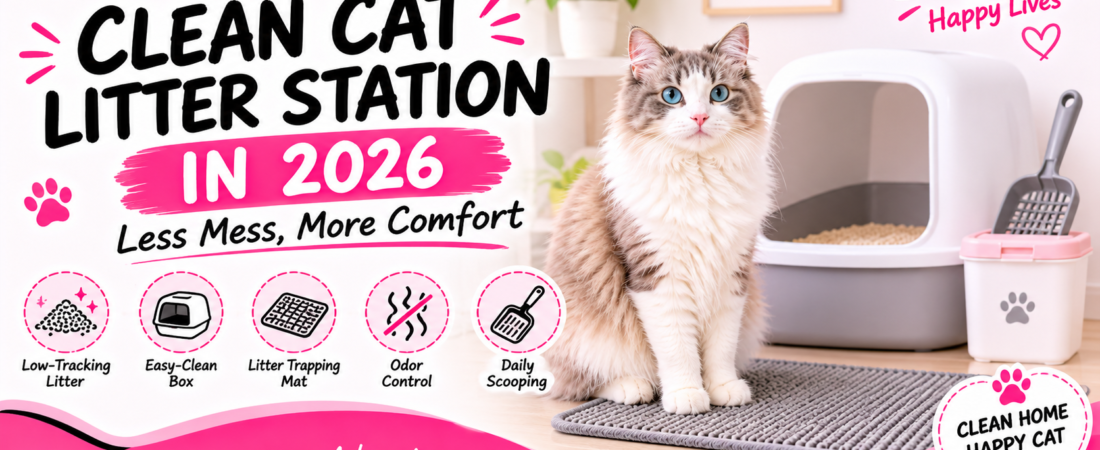
Keeping your cat’s litter area clean is about more than choosing a good cat litter. The right litter box, a suitable mat, proper placement, and a consistent cleaning routine can make a big difference in how much litter ends up on your floors and how fresh your home smells.
Many cat owners struggle with the same problems: litter scattered around the house, unpleasant odors, dusty floors, and cats refusing to use their litter boxes.
The good news is that you don’t need an expensive automatic litter system to create a cleaner setup. With a few practical changes and the right products, you can build a comfortable litter station that works for both you and your cat.
In this guide, we’ll explain how to create a clean, low-mess cat litter station, what products are worth considering, and how to maintain it throughout the year.
1. Choose the Right Location for Your Cat Litter Station
The location of your litter box is one of the most important parts of a successful setup.
A litter box placed in the wrong area can create unnecessary stress for your cat and make cleaning more difficult.
Look for a location that offers:
- Good ventilation to prevent odors from building up.
- A quiet environment away from loud appliances.
- Easy access for your cat at all times.
- Enough space for your cat to enter, turn around, dig, and leave comfortably.
- A surface that is easy to sweep or vacuum.
Avoid placing the litter box directly next to your cat’s food and water bowls. Cats generally prefer separate areas for eating and eliminating.
For apartments, a quiet bathroom corner, laundry area, or dedicated utility space may work well, provided your cat can access it freely.
2. Select a Litter Box That Fits Your Cat
A common mistake is buying a litter box based on appearance rather than the cat’s size and behavior.
A box that is too small can make your cat uncomfortable. Some cats may struggle to turn around, dig, or bury their waste properly.
Consider these options:
Open Litter Boxes
Open litter boxes provide good ventilation and make scooping easier.
They are often a practical choice for kittens, senior cats, and cats that dislike enclosed spaces.
Covered Litter Boxes
Covered boxes can help contain some scattered litter and provide privacy.
However, not every cat likes enclosed spaces. Some covered designs can also trap odors inside if they are not cleaned frequently.
High-Sided Litter Boxes
High-sided boxes are useful for cats that kick litter over the edges.
Make sure the entrance is still comfortable for your cat, especially if you have a kitten, senior cat, or cat with limited mobility.
Nature’s Miracle High-Sided Cat Litter Box
Consider linking to this product if you want to recommend a high-sided litter box for cats that scatter litter while digging. Check the available dimensions and entrance height before adding your affiliate link.
For more detailed measurements and recommendations, read Cat Litter Box Size Guide (2026): How to Choose the Right Size for Your Cat.
3. Choose Cat Litter That Reduces Mess
The type of litter you use can affect how much dust, odor, and tracking you experience.
There is no single perfect litter for every cat. The best choice depends on your cat’s preferences and your household’s cleaning needs.
Here are some common options:
Clumping Clay Litter
Clumping clay litter forms solid clumps when it comes into contact with urine.
Benefits include:
- Easy daily scooping.
- Convenient waste removal.
- Good odor control when maintained properly.
- Widely available.
Some clay formulas can produce dust or stick to paws, so look for products with clear low-dust and low-tracking claims.
Dr. Elsey’s Ultra Unscented Clumping Clay Cat Litter
This is a product worth considering for owners looking for unscented clumping litter. Check the current product specifications and customer feedback before recommending a particular package.
Crystal Cat Litter
Crystal litter is made from silica gel and absorbs moisture.
Potential benefits include:
- Effective moisture absorption.
- Generally low dust.
- Lightweight handling.
- Longer use between complete changes for some households.
However, some cats dislike the texture of crystals.
Natural and Plant-Based Litter
Plant-based litter can be made from tofu, corn, wood, paper, or other renewable materials.
Some options are lightweight and produce less dust, although performance varies considerably between brands.
If you are unsure which material to choose, explore Different Types of Cat Litter Explained (2026): Complete Comparison Guide.
You can also compare the two popular options in Crystal vs Clay Cat Litter (2026): Pros, Cons & Buying Guide.
4. Use a Cat Litter Mat to Reduce Tracking
Even when you choose a good litter, some particles will inevitably leave the box.
This happens when litter sticks to your cat’s paws or fur after digging.
A litter mat placed directly outside the entrance can catch some of these particles before they spread across your home.
When shopping for a litter mat, consider:
- A large enough surface area.
- A non-slip backing.
- Materials that are easy to shake out or wash.
- A comfortable surface for your cat’s paws.
- A design that allows collected litter to be emptied easily.
Honeycomb-style mats are popular because litter can fall through the top layer and collect underneath.
Gorilla Grip Honeycomb Cat Litter Trapping Mat
This product is a useful option to investigate if you want a mat designed to collect loose litter. Check the dimensions, material, cleaning instructions, and current customer reviews before adding your affiliate link.
For additional ways to reduce scattered litter, see Best Cat Litter for Tracking in 2026: Low-Tracking Options.
Remember that no litter mat can completely eliminate tracking. The goal is to reduce the mess, not promise a completely litter-free floor.
5. Maintain the Correct Litter Depth
The amount of litter inside the box matters more than many owners realize.
Too little litter can cause urine to reach the bottom of the box, making cleaning difficult and potentially creating persistent odors.
Too much litter can increase waste and tracking.
For many standard clumping litters, a starting depth of approximately 2–3 inches is practical. Always follow the manufacturer’s instructions because different litter materials may require different amounts.
Watch how your cat behaves:
- Does your cat have enough material to dig?
- Does urine stick to the bottom?
- Is your cat throwing excessive litter outside the box?
- Does your cat seem comfortable using the box?
Adjust the depth according to your cat’s preferences.
For a more detailed explanation, read How Deep Should Cat Litter Be? The Ideal Litter Depth Explained (2026).
6. Follow a Simple Daily and Weekly Cleaning Routine
Even the best cat litter cannot keep a litter box fresh without regular maintenance.
A consistent cleaning schedule is one of the most effective ways to reduce odor and prevent waste buildup.
Daily Cleaning
Every day:
- Remove solid waste.
- Scoop urine clumps if you use clumping litter.
- Remove visibly dirty litter.
- Add fresh litter when necessary.
- Sweep or vacuum around the litter station.
Daily scooping helps prevent waste from accumulating and keeps the remaining litter cleaner.
Weekly Cleaning
Depending on the litter type and product instructions:
- Empty and clean the litter box when needed.
- Wash the box with warm water and mild, unscented soap.
- Rinse thoroughly.
- Allow the box to dry completely.
- Refill with fresh litter.
Avoid strong-smelling cleaning products that may discourage your cat from using the box.
For a complete cleaning routine, read How to Clean a Cat Litter Box Properly (2026 Guide).
7. Control Odors Without Using Strong Perfumes
A fresh-smelling home doesn’t require heavily scented cat litter or powerful fragrances.
In fact, strong perfumes may bother some cats.
Instead, focus on controlling the source of the odor.
Try these practical steps:
- Scoop waste every day.
- Replace litter according to the manufacturer’s recommendations.
- Wash the litter box regularly.
- Keep the litter station properly ventilated.
- Remove waste promptly.
- Clean the surrounding floor and mat.
If you use a covered litter box, pay particular attention to cleaning the inside surfaces.
Never use fragrance as a substitute for removing waste.
If odor is your main concern, explore Best Cat Litter for Odor Control in 2026: Keep Your Home Fresh Every Day.
8. Make Waste Disposal Part of Your Routine
Used cat litter should be handled carefully because it can contain waste and potentially harmful microorganisms.
Use a dedicated waste bag or suitable disposal container, seal it properly, and follow local waste disposal rules.
Do not assume that a litter labeled biodegradable or flushable is automatically safe to put down your toilet.
Flushing cat litter can create plumbing problems, and cat waste may carry pathogens that wastewater systems are not designed to handle.
For more information, read How to Dispose of Cat Litter Safely in 2026.
9. How to Build a Complete Cat Litter Station
You don’t need dozens of accessories to create a functional litter station.
Start with a few essentials:
| Item | Purpose |
|---|---|
| Large litter box | Gives your cat enough room |
| Quality cat litter | Absorbs moisture and controls odor |
| Litter mat | Helps catch scattered litter |
| Litter scoop | Makes daily cleaning easier |
| Waste bags | Helps with hygienic disposal |
| Small cleaning brush | Removes loose litter around the station |
A dedicated litter scoop makes daily maintenance easier. Look for a durable design with openings suitable for the type of litter you use.
You can also organize these accessories in a small storage area next to the litter station, keeping them accessible without creating clutter.
10. Common Mistakes to Avoid
Even a well-designed litter station can become messy if you make these common mistakes.
Choosing a Box That Is Too Small
A small box may make it difficult for your cat to turn around and dig comfortably.
Changing Litter Too Suddenly
Some cats are sensitive to changes in texture and smell.
When introducing a new litter, mix it gradually with the old litter over several days, provided your cat continues using the box comfortably.
Ignoring Daily Scooping
Waiting several days between cleanings can quickly create unpleasant odors and an uncomfortable environment.
Using Strongly Scented Products
A strong fragrance may mask odors temporarily without addressing the actual source.
Placing the Box in a Difficult-to-Reach Area
Cats need reliable access to their litter boxes. Avoid locations that become blocked by doors, appliances, or household objects.
Frequently Asked Questions
How many litter boxes should I have?
A common recommendation is one litter box per cat, plus one additional box.
For example, two cats would ideally have three litter boxes, if space allows.
What is the best litter for reducing mess?
Pellet-style litter and some larger-granule formulas may reduce tracking. However, individual cats have different preferences, so comfort should always come first.
Do cat litter mats really work?
Yes. A suitable litter mat can catch some particles carried out on your cat’s paws. Results depend on the mat design, size, and litter type.
How often should I clean a cat litter box?
Scoop waste at least once daily. Complete litter replacement and box washing depend on the litter material, number of cats, and manufacturer’s instructions.
Should I use scented or unscented litter?
Unscented litter is a sensible starting point, particularly for cats that dislike strong fragrances. However, individual preferences vary.
Why does my litter box still smell after cleaning?
Possible reasons include residue on the box, infrequent waste removal, insufficient ventilation, or litter that no longer absorbs moisture effectively.
If odor persists despite good cleaning habits, check for health or urinary problems with your veterinarian, especially if your cat’s urination habits have changed.
Final Thoughts
Creating a clean, low-mess cat litter station doesn’t have to be complicated or expensive.
The most important factors are choosing a suitable litter box, selecting litter your cat accepts, using a practical litter mat, maintaining the correct litter depth, and following a consistent cleaning routine.
Remember that the best setup is not necessarily the one with the most accessories. It is the one that keeps your cat comfortable while making daily maintenance easier for you.
Start with the essentials, observe your cat’s behavior, and make small improvements over time.
A clean and comfortable litter station can make everyday life better for both you and your feline companion.
Affiliate Disclosure: As an Amazon Associate I earn from qualifying purchases. This article may contain affiliate links, which means CatJoyLife may earn a commission if you purchase through qualifying links, at no additional cost to you.