How Deep Should Cat Litter Be? The Ideal Litter Depth Explained (2026)
One of the most overlooked aspects of litter box maintenance is litter depth. While many cat owners focus on choosing the right litter, using too much or too little can make the litter box less comfortable and even discourage your cat from using it.
In this guide, you’ll learn the ideal litter depth, why it matters, and how to adjust it for different cats and litter types.
Why Litter Depth Matters
Cats instinctively dig and bury their waste. A litter box with the correct depth allows them to perform these natural behaviors comfortably.
Proper litter depth also helps:
- Control odors
- Form stronger clumps
- Reduce waste sticking to the bottom
- Extend the life of your litter
- Keep your cat comfortable
What Is the Ideal Cat Litter Depth?
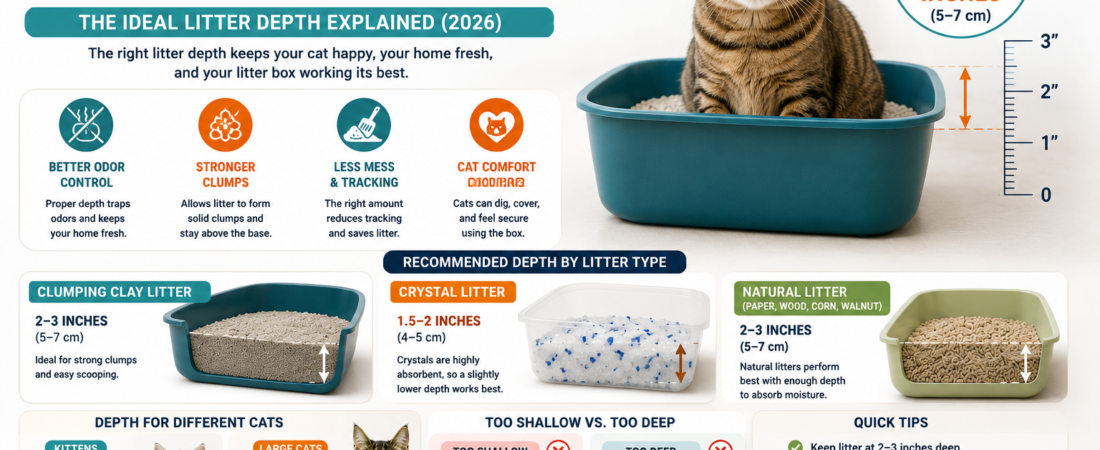
For most cats, experts recommend a litter depth of:
2–3 inches (5–7 cm)
This provides enough litter for digging without wasting product.
Some cats prefer slightly deeper litter, while others are comfortable with a thinner layer.
Different Litter Types Need Different Depths
Clumping Clay Litter
Clumping litter works best at about 2–3 inches.
This depth allows urine to form solid clumps without reaching the bottom of the litter box.
To understand how clumping litter compares with other options, read Clumping vs Non-Clumping Cat Litter: Which One Should You Choose in 2026?
Crystal Cat Litter
Crystal litter generally performs well with about 1.5–2 inches.
Because silica crystals absorb moisture efficiently, a slightly thinner layer is often enough.
If you’re deciding between crystal and clay litter, explore Crystal vs Clay Cat Litter (2026): Pros, Cons & Buying Guide.
Natural Cat Litter
Paper, wood, corn, and walnut litters usually perform best between 2–3 inches, although manufacturers may recommend slightly different amounts.
Learn more about these options in Different Types of Cat Litter.
Litter Depth for Kittens
Young kittens don’t need deep litter.
Around 1–2 inches is usually enough because:
- Easier to walk on
- Less chance of eating litter
- Easier to enter the box
For more tips, see Best Cat Litter for Kittens in 2026: Safe & Healthy Choices.
Litter Depth for Large Cats
Large breeds such as Maine Coons or Ragdolls often prefer slightly deeper litter.
A depth of 3–4 inches gives them enough material to dig and cover waste comfortably.
Signs Your Litter Is Too Shallow
You may notice:
- Urine sticking to the bottom
- Weak clumps
- Strong odors
- Cats scratching the plastic base
- Faster litter replacement
Signs Your Litter Is Too Deep
Too much litter can also create problems.
Common signs include:
- Excessive litter tracking
- Wasted litter
- Difficult digging
- Litter spilling over the sides
How Often Should You Refill Litter?
After daily scooping, simply add enough fresh litter to maintain the recommended depth.
Complete litter replacement depends on the litter type and the number of cats using the box.
For a detailed schedule, read How Often Should You Change Cat Litter? (Complete Guide).
Frequently Asked Questions
Can cats have too much litter?
Yes.
Excessively deep litter can increase tracking, waste more litter, and make digging uncomfortable for some cats.
Do all cats prefer the same litter depth?
No.
Some cats enjoy digging deeply, while others prefer a thinner layer. You may need to experiment slightly.
Does litter depth affect odor?
Absolutely.
Using the proper amount of litter helps absorb moisture more effectively and improves odor control.
For additional odor-control tips, read Best Cat Litter for Odor Control in 2026: Keep Your Home Fresh Every Day.
Final Thoughts
The correct litter depth may seem like a small detail, but it has a big impact on your cat’s comfort and your litter box’s performance. Keeping litter at the recommended depth helps reduce odors, improve clumping, and encourage consistent litter box habits.
For a complete litter setup, explore Cat Litter Box Size Guide: How to Choose the Right Size for Your Cat (2026), Different Types of Cat Litter, and How to Clean a Cat Litter Box Properly (2026 Guide).