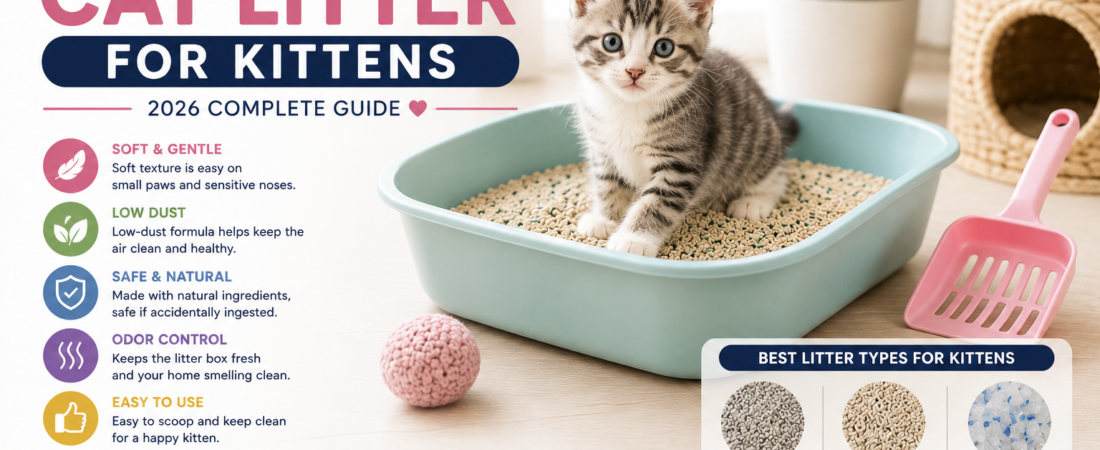
Best Cat Litter for Kittens in 2026: Complete Guide for New Cat Owners
Choosing the best cat litter for kittens is just as important as choosing the right food. Young kittens are curious and may sniff, dig, or even taste litter, so selecting a safe, low-dust, and comfortable option is essential.
Before selecting a litter, read our Ultimate Guide to Choosing the Best Cat Litter to understand the different litter materials and which ones are most suitable for your kitten.
In this guide, you’ll learn what makes kitten-friendly litter different, which materials are safest, and how to introduce your kitten to the litter box successfully.
Why Kittens Need Special Cat Litter
Unlike adult cats, kittens are still learning how to use a litter box.
They need litter that is:
- Low in dust
- Soft on tiny paws
- Free from harsh chemicals
- Unscented or lightly scented
- Easy to dig in
Choosing the right litter helps build good litter box habits from an early age.
What to Look for in the Best Cat Litter for Kittens
Low-Dust Formula
Dust can irritate a kitten’s developing respiratory system.
Look for litter labeled low dust or 99% dust-free.
Soft Texture
Fine, soft litter is usually more comfortable for kittens and encourages consistent litter box use.
Unscented Litter
Strong fragrances may discourage some kittens from using the litter box.
Unscented litter is often the safest choice.
Natural Ingredients
Natural plant-based litter can be a good option if your kitten occasionally tastes small amounts while exploring.
Always monitor your kitten and consult your veterinarian if you suspect they have ingested a significant amount of litter.
Types of Cat Litter for Kittens
Clay Litter
Pros:
- Affordable
- Easy to find
- Good odor control
Cons:
- Some products may produce more dust than others.
Plant-Based Litter
Pros:
- Biodegradable
- Lightweight
- Generally low dust
Cons:
- Performance varies depending on the material.
Crystal Litter
Pros:
- Excellent moisture absorption
- Long-lasting
Cons:
- The texture may not be comfortable for young kittens, especially when they are first learning to use a litter box.
How to Introduce a Kitten to the Litter Box
Follow these simple steps:
- Place the litter box in a quiet, easy-to-reach location.
- Gently place your kitten in the box after meals and naps.
- Keep the litter clean by scooping waste daily.
- Praise your kitten when they use the litter box correctly.
- Avoid punishment if accidents happen—patience and consistency work best.
For detailed cleaning tips, read our How to Clean a Cat Litter Box Properly guide.
Common Mistakes
Using Strongly Scented Litter
Heavy fragrances may discourage kittens from using the litter box.
Not Cleaning the Litter Box Often Enough
Kittens prefer a clean environment.
See our How Often Should You Change Cat Litter? guide for recommended cleaning schedules.
Choosing the Wrong Litter Type
Some kittens may prefer softer litter over coarse textures. Observe your kitten’s behavior and adjust if needed.
Frequently Asked Questions
When can kittens start using cat litter?
Most kittens begin using a litter box at around 3–4 weeks of age, usually with guidance from their mother or caregiver.
Is clumping litter safe for kittens?
Many veterinarians recommend using non-clumping litter for very young kittens because they may accidentally ingest litter while exploring. As your kitten grows and reliably uses the litter box, you can discuss transitioning to clumping litter with your veterinarian if appropriate.
To compare the two options, read our Clumping vs Non-Clumping Cat Litter guide.
How many litter boxes should a kitten have?
One litter box is usually enough for a single kitten, but if you have multiple kittens or a larger home, adding an extra box can make access easier.
Final Thoughts
The best cat litter for kittens is soft, low in dust, easy to use, and appropriate for your kitten’s age. By choosing a safe litter, keeping the box clean, and introducing it with patience, you’ll help your kitten develop healthy litter box habits that can last a lifetime.