Meta Description:
Learn why cats get hairballs, how to prevent them, and the best remedies to keep your cat healthy. Complete 2026 guide for every cat owner.
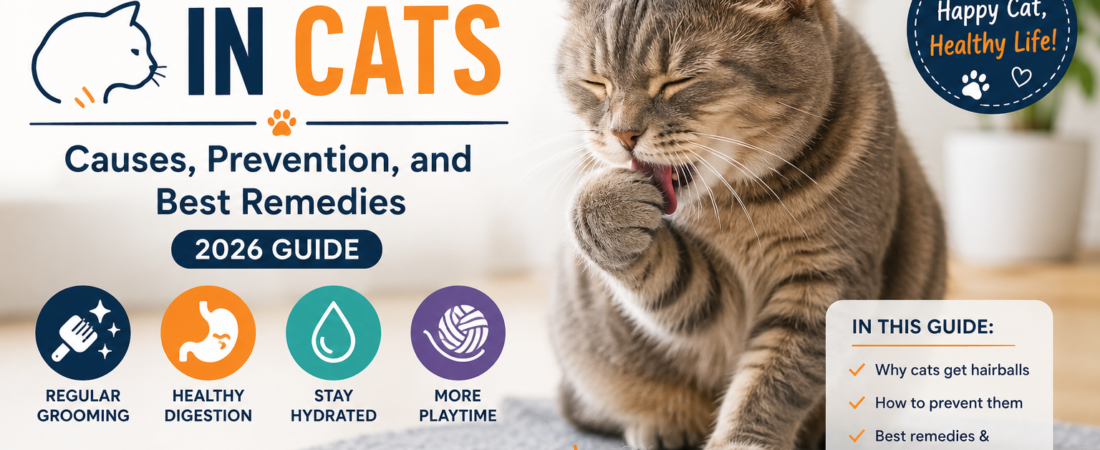
Hairballs in Cats: Causes, Prevention, and Best Remedies (2026 Guide)
If you’ve ever found a tube-shaped clump of fur on your floor, you’ve probably experienced one of the most common issues among cat owners—hairballs.
Hairballs are usually harmless, but frequent hairballs may signal poor grooming habits, digestive issues, or an underlying health problem.
In this guide, we’ll explain why cats get hairballs, how to reduce them, and when it’s time to contact your veterinarian.
What Are Hairballs?
Hairballs (also called trichobezoars) form when cats swallow loose fur while grooming themselves.
Most swallowed hair passes naturally through the digestive system.
However, some hair remains in the stomach and eventually forms a hairball that is vomited up.
Why Do Cats Get Hairballs?
Cats spend several hours every day grooming.
Tiny hook-like structures on their tongues catch loose hair, which is then swallowed.
Hairballs become more common in:
- Long-haired cats
- Cats during seasonal shedding
- Senior cats
- Cats that groom excessively
- Indoor cats with limited activity
Common Symptoms
Occasional hairballs are normal.
Watch for these signs:
- Coughing
- Gagging
- Vomiting fur
- Loss of appetite
- Constipation
- Reduced energy
How to Prevent Hairballs
Brush Your Cat Regularly
Brushing removes loose hair before your cat swallows it.
Recommended schedule:
- Short-haired cats: 2–3 times per week
- Long-haired cats: Daily
Feed a Hairball Control Diet
Many premium cat foods include:
- Extra fiber
- Omega fatty acids
- Easily digestible protein
These ingredients help move swallowed hair through the digestive system.
A balanced diet can also help reduce hairball formation. Learn more in our Wet vs Dry Cat Food guide.
Encourage Hydration
Proper hydration supports healthy digestion.
Ways to increase water intake include:
- Fresh water every day
- Cat water fountains
- Wet food
- Multiple water bowls
Increase Exercise
Regular play helps stimulate digestion.
Try:
- Wand toys
- Interactive toys
- Laser toys
- Puzzle feeders
Aim for at least 15–20 minutes of active play each day.
Hairball Remedies
Several products can help reduce hairballs.
Common options include:
- Hairball gel
- Fiber supplements
- Hairball treats
- Pumpkin (in small amounts)
- Hairball-control cat food
Always follow the product instructions and consult your veterinarian if your cat has ongoing issues.
When to Visit the Vet
Seek veterinary care if your cat:
- Cannot pass a hairball
- Stops eating
- Vomits repeatedly
- Becomes lethargic
- Has a swollen abdomen
- Experiences constipation for more than two days
These signs could indicate an intestinal blockage that requires immediate treatment.
Frequently Asked Questions
Are hairballs normal?
Yes. Occasional hairballs are a normal part of grooming.
Which cats get hairballs most often?
Long-haired breeds such as Persians and Maine Coons tend to experience hairballs more frequently.
Can kittens get hairballs?
Yes, although hairballs are more common in adult cats.
How often is too often?
If your cat produces hairballs several times each month or shows other symptoms, schedule a veterinary checkup.
Final Thoughts
Hairballs are a common part of a cat’s life, but they shouldn’t happen excessively. Regular grooming, a balanced diet, proper hydration, and daily exercise can greatly reduce the risk.
If your cat starts having frequent hairballs or shows signs of discomfort, it’s best to consult a veterinarian to rule out any underlying health problems.