Meta Description:
Wondering whether wet or dry cat food is better? Compare nutrition, hydration, cost, and health benefits to choose the best diet for your cat in 2026.
Wet vs Dry Cat Food: Which Is Better for Your Cat?
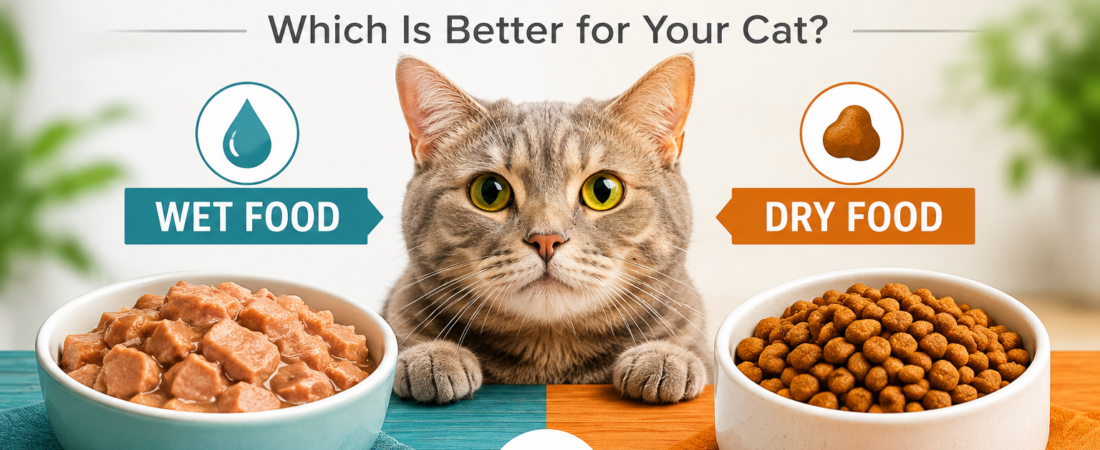
Choosing the right food is one of the most important decisions you’ll make as a cat owner. One of the biggest questions is whether wet cat food or dry cat food is the healthier option.
The truth is that neither is universally better. The best choice depends on your cat’s age, health, lifestyle, and nutritional needs.
In this guide, we’ll compare wet and dry cat food in detail so you can make the best decision for your furry companion.
Wet Cat Food
Wet cat food contains around 70–80% moisture, making it much closer to a cat’s natural prey.
Pros
- Excellent source of hydration
- Usually higher in animal protein
- Easier for kittens and senior cats to chew
- Can help support urinary tract health
- Often more appealing to picky eaters
Cons
- More expensive than dry food
- Spoils quickly after opening
- Requires refrigeration
- Can be less convenient for free-feeding
Dry Cat Food
Dry kibble contains only 8–10% moisture, but it is convenient and affordable.
Pros
- Budget-friendly
- Easy to store
- Long shelf life
- Convenient for automatic feeders
- Available in many specialized formulas
Cons
- Lower moisture content
- Cats may drink less water
- Some lower-quality brands contain excessive carbohydrates
- Can contribute to obesity if overfed
Nutritional Comparison
| Feature | Wet Food | Dry Food |
|---|---|---|
| Moisture | 70–80% | 8–10% |
| Protein | Usually Higher | Moderate |
| Carbohydrates | Lower | Often Higher |
| Calories | Lower per serving | Higher per serving |
| Storage | Refrigeration needed | Easy storage |
| Cost | Higher | Lower |
Which Cats Benefit Most from Wet Food?
Wet food is often recommended for:
- Senior cats
- Cats with kidney disease
- Cats with urinary tract problems
- Cats that rarely drink water
- Overweight cats needing portion control
The extra moisture helps keep cats hydrated and may reduce urinary issues.
Which Cats Benefit Most from Dry Food?
Dry food works well for:
- Healthy adult cats
- Multi-cat households
- Busy owners
- Cats using automatic feeders
Choose a high-quality dry food with real meat as the first ingredient.
Can You Feed Both?
Absolutely.
Many veterinarians recommend a mixed feeding approach.
Benefits include:
- Better hydration
- More dietary variety
- Easier weight management
- Greater convenience
- Reduced feeding costs
A common schedule is:
- Wet food in the morning
- Dry food during the day
- Wet food again in the evening
Always adjust portion sizes to avoid overfeeding.
Ingredients to Look For
When shopping for cat food, prioritize products that contain:
- Real chicken, turkey, salmon, or beef as the first ingredient
- Named animal protein sources
- Taurine
- Omega-3 fatty acids
- Essential vitamins and minerals
Ingredients to Avoid
Try to avoid foods with:
- Artificial colors
- Artificial preservatives
- Excessive corn fillers
- Too many meat by-products
- Large amounts of added sugar
Reading ingredient labels is one of the best ways to choose healthier food.
Frequently Asked Questions
Is wet food healthier than dry food?
Wet food provides better hydration, but both can be healthy if nutritionally complete.
Can cats eat dry food only?
Yes, as long as they drink enough water and eat a balanced, high-quality diet.
Should kittens eat wet or dry food?
Young kittens usually benefit from wet food because it is easier to chew and digest.
Is mixed feeding recommended?
Yes. Combining wet and dry food gives many cats the benefits of both.
Final Thoughts
Both wet and dry cat food can be excellent choices when selected carefully.
Wet food supports hydration and urinary health, while dry food offers convenience and affordability. Many veterinarians believe a balanced combination provides the best of both worlds.
Always choose complete and balanced foods made with high-quality ingredients, and consult your veterinarian if your cat has specific medical needs.