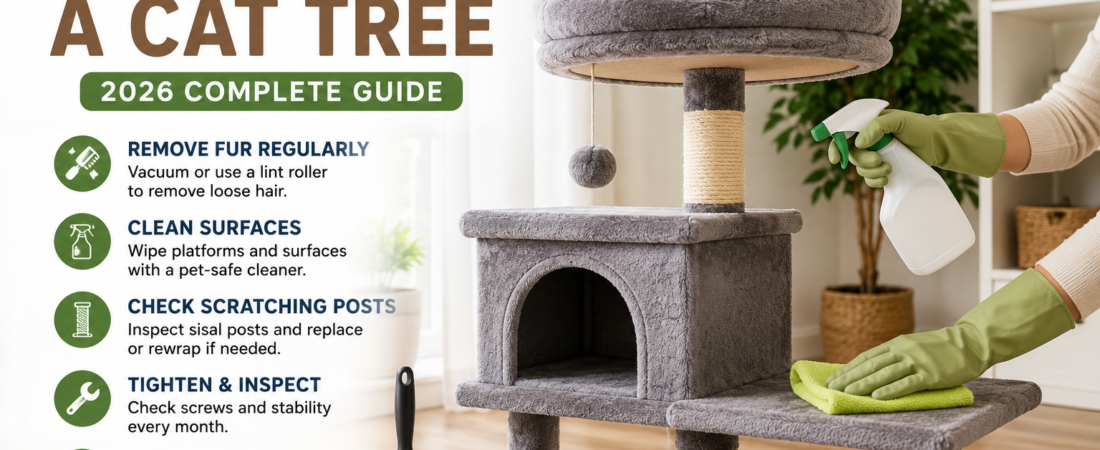
How to Clean and Maintain a Cat Tree (2026 Complete Guide)
A cat tree is one of the most frequently used pieces of furniture in your home if you have an indoor cat. Over time, it collects fur, dust, dirt, scratches, and odors. Knowing how to clean and maintain a cat tree helps keep your cat healthy while extending the life of your investment.
If you’re still choosing a cat tree, read our How to Choose the Right Cat Tree guide before making your purchase. Selecting a durable model makes cleaning and maintenance much easier.
This guide explains how often to clean your cat tree, the best cleaning methods, and simple maintenance habits that help it last for years.
Why Cleaning a Cat Tree Matters
Regular cleaning offers several benefits:
- Removes fur and dust
- Reduces unpleasant odors
- Helps prevent bacteria buildup
- Keeps scratching surfaces usable
- Makes the cat tree more attractive to your cat
A clean cat tree also creates a healthier environment for everyone in your home.
How Often Should You Clean a Cat Tree?
A simple schedule works well for most households.
Every Few Days
- Remove loose fur.
- Shake out removable cushions.
- Wipe smooth surfaces.
Weekly
- Vacuum fabric surfaces.
- Clean platforms.
- Remove dust from corners.
Monthly
- Deep clean the entire tree.
- Tighten loose screws.
- Check for worn scratching posts.
Step 1: Remove Loose Hair
Use:
- A vacuum cleaner with a brush attachment
- A lint roller
- A rubber grooming glove
Pay extra attention to sleeping areas where fur accumulates.
Step 2: Clean Fabric Surfaces
Use a pet-safe fabric cleaner or warm water with a mild soap.
Avoid soaking the material, as excess moisture can damage wooden parts and encourage mold.
Allow everything to dry completely before your cat uses the tree again.
Step 3: Wipe Wooden Parts
Use a damp microfiber cloth to remove dust and dirt.
Dry the surface immediately with a clean towel.
Avoid harsh chemical cleaners or bleach.
Step 4: Inspect the Scratching Posts
Sisal rope naturally wears over time.
Replace or rewrap scratching posts if they become loose, heavily frayed, or damaged.
Step 5: Check Stability
At least once a month:
- Tighten bolts and screws.
- Check every platform.
- Inspect the base for wobbling.
- Replace broken parts if necessary.
Safety should always come first.
Common Mistakes
Using Strong Chemical Cleaners
Cats have sensitive noses.
Always choose pet-safe cleaning products.
Ignoring Loose Hardware
A loose platform may become dangerous during climbing.
Inspect the frame regularly.
Waiting Too Long Between Cleanings
Heavy fur and dirt buildup makes cleaning much more difficult.
Regular maintenance saves time.
Frequently Asked Questions
Can I use a steam cleaner?
Some cat trees tolerate steam cleaning, but always follow the manufacturer’s care instructions and avoid excessive moisture.
How long does a cat tree last?
A quality cat tree can last several years with regular cleaning and maintenance.
When should I replace a cat tree?
Replace the tree if it becomes unstable, has significant structural damage, or can no longer be repaired safely.
Final Thoughts
Keeping your cat tree clean doesn’t require a lot of effort. By removing fur regularly, deep cleaning each month, and checking for loose parts, you can keep your cat’s favorite climbing spot safe, comfortable, and looking its best for years to come.