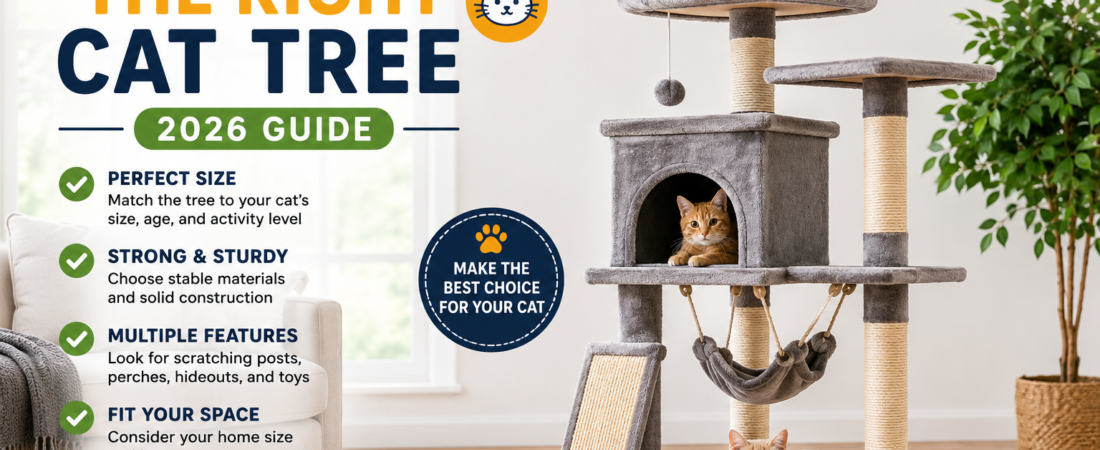
How to Choose the Right Cat Tree (2026 Guide)
Choosing the right cat tree is one of the best investments you can make for your cat’s health, happiness, and daily enrichment. A well-designed cat tree provides a place to climb, scratch, play, rest, and observe the world from above—all behaviors that come naturally to cats.
If you’re new to cat furniture, start with our Ultimate Guide to Choosing the Best Cat Trees for Happy Indoor Cats to understand the different styles, materials, and features available. This guide will help you narrow down the best option based on your cat’s unique needs.
In this article, you’ll learn what to consider before buying a cat tree, common mistakes to avoid, and how to choose a model that your cat will actually use.
Why Every Indoor Cat Needs a Cat Tree
Cat trees provide much more than an elevated place to sleep.
A quality cat tree helps your cat:
- Exercise through climbing and jumping
- Stretch muscles naturally
- Maintain healthy scratching habits
- Reduce boredom
- Feel safe by resting in elevated spaces
- Observe their surroundings with confidence
For indoor cats, a cat tree is one of the easiest ways to provide daily enrichment.
Consider Your Cat’s Size
Choosing the correct size is essential for safety and comfort.
Small Cats and Kittens
Young or lightweight cats usually do well with compact cat trees that feature lower platforms and shorter climbing distances.
Large Cats
Large breeds such as Maine Coons or Ragdolls require wider platforms, thicker scratching posts, and reinforced construction.
For recommendations, read our Best Cat Trees for Large Cats in 2026 guide.
Think About Your Living Space
The size of your home should influence your choice.
Small Apartments
Slim vertical cat trees maximize climbing space without taking up much floor area.
Explore our Modern Cat Trees for Small Apartments guide for space-saving ideas.
Larger Homes
If you have extra room, multi-level cat trees with several platforms and hideouts offer more opportunities for climbing and play.
Consider How Many Cats You Have
If you share your home with multiple cats, look for a tree that includes:
- Multiple resting platforms
- More than one scratching post
- Several entry points
- Strong, stable construction
See our Best Cat Trees for Multiple Cats in 2026 guide for detailed recommendations.
Choose the Right Materials
A durable cat tree should include:
Solid Frame
Wood or engineered wood generally provides better stability than lightweight plastic.
Sisal Scratching Posts
Natural sisal is durable and encourages healthy scratching.
Comfortable Platforms
Soft fabric or plush coverings create cozy resting areas, but removable or washable covers make cleaning easier.
Check Stability and Safety
Before buying, make sure the cat tree:
- Has a wide, sturdy base
- Doesn’t wobble during climbing
- Uses high-quality hardware
- Supports your cat’s weight
- Has smooth edges with no exposed staples or nails
Safety should always come before appearance.
Extra Features Worth Considering
Some cat trees include additional features that can make them even more enjoyable.
Examples include:
- Hanging toys
- Hammocks
- Enclosed condos
- Window-facing platforms
- Replaceable scratching posts
Choose features that match your cat’s personality rather than simply selecting the model with the most accessories.
Common Mistakes When Buying a Cat Tree
Buying Only Based on Price
A cheap cat tree may wear out quickly or become unstable after regular use.
Ignoring Your Cat’s Personality
Some cats love climbing to high platforms, while others prefer enclosed hideaways or simple scratching posts.
Observe your cat’s habits before making a purchase.
Choosing Style Over Function
A beautiful cat tree isn’t useful if your cat refuses to use it. Prioritize stability, comfort, and appropriate size over appearance.
Frequently Asked Questions
What size cat tree should I buy?
The ideal size depends on your cat’s age, weight, activity level, and available space. Larger breeds usually need taller, sturdier trees with wider platforms.
Are wall-mounted cat trees better?
Wall-mounted models save floor space and encourage climbing, but they require secure installation and may not suit every home.
Learn more in our Wall-Mounted Cat Trees: Are They Worth It? guide.
How long does a cat tree last?
A high-quality cat tree can last several years with regular cleaning and by replacing worn scratching surfaces when needed.
Final Thoughts
Choosing the right cat tree is about finding the best balance between your cat’s needs and your home’s available space. Consider your cat’s size, activity level, and personality before making a decision. A stable, well-built cat tree can provide years of exercise, comfort, and enrichment while helping protect your furniture from scratching.