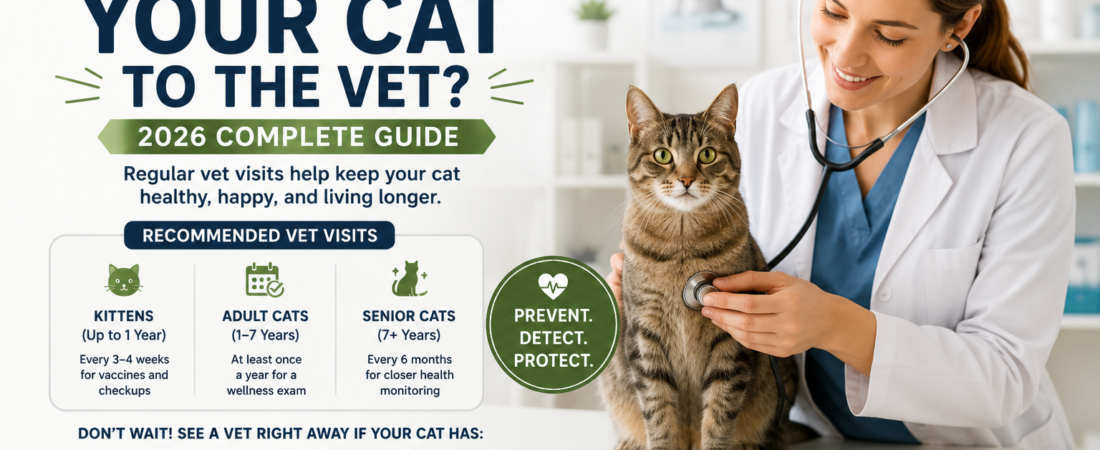
How Often Should You Take Your Cat to the Vet? (2026 Complete Guide)
Regular veterinary visits are one of the most important parts of keeping your cat healthy. Even if your cat appears perfectly fine, routine checkups can detect hidden health problems before they become serious.
If you’re building a complete health care routine, start with our Cat Health Guide: Everything Every Cat Owner Should Know (2026) for an overview of preventive care, nutrition, hydration, and common health concerns.
In this guide, you’ll learn how often cats should visit the veterinarian, what happens during a wellness exam, and when an immediate appointment is necessary.
Why Regular Vet Visits Matter
Cats are experts at hiding pain and illness.
Many medical conditions—including kidney disease, dental problems, diabetes, and arthritis—can develop gradually without obvious symptoms.
Routine veterinary examinations help detect these conditions early, often leading to better treatment outcomes.
Vet Visit Schedule by Life Stage
Kittens (Up to 1 Year)
Young kittens require several veterinary visits during their first year for vaccinations, parasite control, growth monitoring, and overall health assessments.
Most kittens visit the veterinarian every 3–4 weeks until their initial vaccination series is complete.
Adult Cats (1–7 Years)
Healthy adult cats should receive a comprehensive wellness examination at least once each year.
These visits may include:
- Physical examination
- Weight assessment
- Dental evaluation
- Parasite prevention advice
- Vaccination review
Senior Cats (7+ Years)
Senior cats benefit from veterinary checkups every six months because age-related conditions often progress quickly.
Your veterinarian may also recommend blood or urine tests to monitor organ function.
Signs Your Cat Needs Immediate Veterinary Care
Schedule an urgent veterinary visit if your cat experiences:
- Difficulty breathing
- Repeated vomiting
- Severe diarrhea
- Loss of appetite lasting more than 24 hours
- Difficulty urinating
- Sudden weakness
- Seizures
- Major injuries
For a complete list of warning signs, read our How to Tell If Your Cat Is Sick: 12 Warning Signs You Should Never Ignore guide.
What Happens During a Routine Checkup?
A wellness visit often includes:
- Weight measurement
- Temperature check
- Heart and lung examination
- Eye and ear inspection
- Oral and dental evaluation
- Skin and coat assessment
- Joint and mobility check
Your veterinarian may recommend additional tests depending on your cat’s age and health history.
How to Prepare Your Cat for the Vet
A few simple steps can reduce stress:
- Leave the carrier out before the appointment.
- Place a familiar blanket inside.
- Avoid loud noises during transport.
- Bring a list of any unusual behaviors or symptoms you’ve noticed.
Frequently Asked Questions
Do indoor cats still need yearly vet visits?
Yes. Indoor cats can develop chronic diseases, dental issues, obesity, and other health problems that may not be obvious at home.
How much does a routine cat checkup cost?
The cost varies depending on your location, the clinic, and any additional tests or vaccinations that may be needed.
Can I skip annual checkups if my cat looks healthy?
No. Many illnesses develop silently, and regular wellness exams are the best way to detect them early.
Final Thoughts
Routine veterinary care is one of the best investments you can make in your cat’s long-term health. Whether you have a playful kitten, a healthy adult, or a senior companion, regular checkups allow potential problems to be identified early and help ensure your cat enjoys a long, comfortable, and happy life.