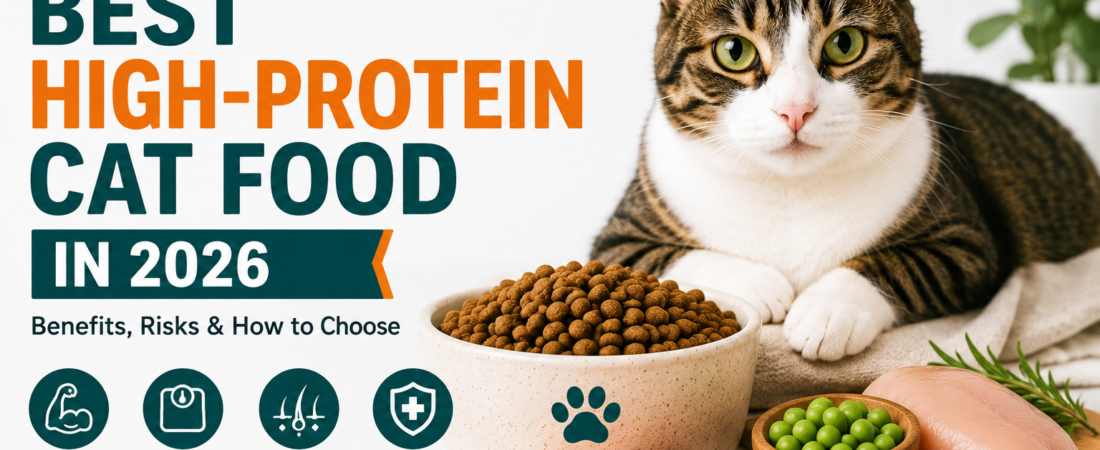
Best High-Protein Cat Food in 2026: Benefits, Risks & Buying Guide
Cats are obligate carnivores, meaning they rely on animal protein to thrive. A high-protein diet can help support lean muscle, healthy weight, and overall well-being. However, not every cat needs the same amount of protein, and choosing the right food depends on your cat’s age, activity level, and health condition.
In this guide, we’ll explain the benefits of high-protein cat food, who should eat it, possible drawbacks, and how to choose the best option for your feline friend.
What Is High-Protein Cat Food?
High-protein cat food contains a greater percentage of protein than standard cat food, with most of the protein coming from animal sources such as:
- Chicken
- Turkey
- Salmon
- Tuna
- Duck
- Beef
The first ingredient should always be a named animal protein rather than vague terms like “meat meal” or “animal by-products.”
Why Do Cats Need Protein?
Protein is essential because it helps:
- Build and maintain muscles
- Support healthy skin and coat
- Strengthen the immune system
- Provide energy
- Maintain healthy organs
Unlike humans, cats depend heavily on protein for their daily energy needs.
For a better understanding of your cat’s overall nutritional needs, check out Cat Health Guide: Everything Every Cat Owner Should Know (2026).
Benefits of High-Protein Cat Food
Supports Lean Muscle Mass
Protein provides amino acids that help maintain strong muscles throughout your cat’s life.
Senior cats especially benefit from diets that contain adequate high-quality protein.
Helps Maintain a Healthy Weight
High-protein diets often help cats feel full longer while preserving muscle during weight loss.
Combined with regular exercise, this may reduce obesity risk.
Promotes Healthy Skin and Coat
Protein contains essential amino acids needed for healthy fur growth.
Omega-3 and Omega-6 fatty acids can further improve coat quality.
Encourages Natural Eating Habits
Cats naturally consume prey that is rich in protein and moisture.
If you’re comparing moisture levels in different diets, read Wet Food vs Dry Food for Cats: Which Is Better in 2026?
Possible Risks
While protein is important, extremely high-protein diets are not ideal for every cat.
Consult your veterinarian if your cat has:
- Kidney disease
- Liver disease
- Certain metabolic disorders
Healthy adult cats usually tolerate high-protein diets very well.
Ingredients to Look For
Choose foods containing:
- Chicken
- Turkey
- Salmon
- Duck
- Eggs
- Taurine
- Omega-3 fatty acids
Avoid foods that list corn or wheat as the primary ingredient.
Wet vs Dry High-Protein Food
Wet Food
Pros
- Higher moisture
- Easier to digest
- Excellent for urinary health
Dry Food
Pros
- Convenient
- Longer shelf life
- Often more economical
Both can be healthy when formulated with high-quality animal protein.
How to Transition to High-Protein Food
Switch foods gradually over one week.
- Days 1–2: 25% new food
- Days 3–4: 50%
- Days 5–6: 75%
- Day 7: 100%
A gradual transition helps prevent digestive upset.
Frequently Asked Questions
Is high-protein food good for indoor cats?
Yes. Indoor cats still require high-quality protein, but calorie intake should match their activity level.
Can kittens eat high-protein food?
Absolutely. Kittens require more protein than adult cats to support rapid growth.
Is grain-free the same as high-protein?
No. Some grain-free foods are high in protein, while others are not. Learn more in Grain-Free Cat Food: Benefits, Risks, and Is It Right for Your Cat?
Final Thoughts
High-protein cat food closely matches a cat’s natural nutritional needs and can support muscle development, healthy weight, and overall wellness. Choosing a food with quality animal protein, balanced nutrients, and appropriate calories is the key to long-term health.
To build a complete nutrition plan, don’t forget to read How Much Water Should a Cat Drink? Signs of Dehydration & Hydration Tips and explore our Cat Health Guide: Everything Every Cat Owner Should Know (2026) for more expert advice.