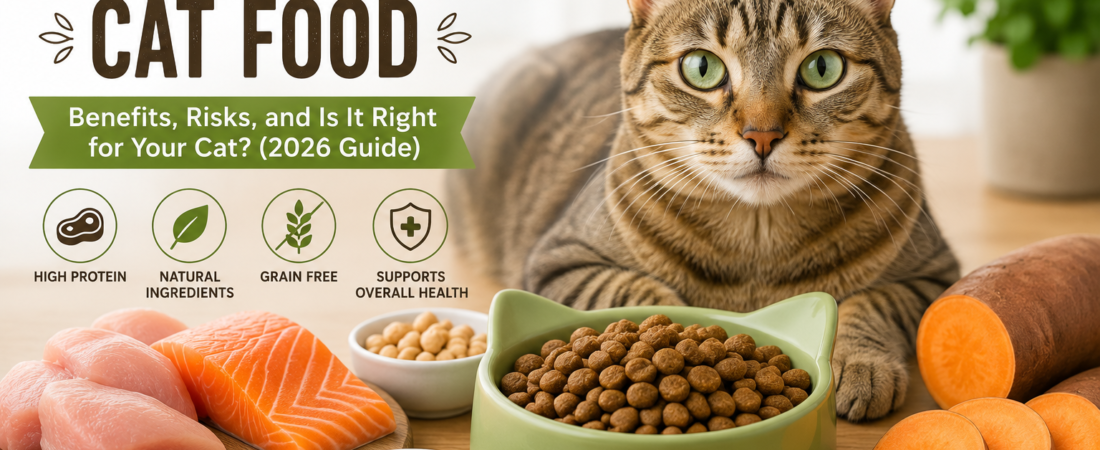
Choosing the right cat food can feel overwhelming with so many options available. One of the biggest trends in pet nutrition is grain-free cat food, but is it really healthier than traditional cat food?
Some owners believe grain-free diets are closer to a cat’s natural eating habits, while others wonder whether removing grains provides any real benefit. In this guide, we’ll explain what grain-free cat food is, its advantages, possible drawbacks, and how to decide if it’s the right choice for your feline friend.
What Is Grain-Free Cat Food?
Grain-free cat food is made without common grains such as:
- Corn
- Wheat
- Rice
- Barley
- Oats
Instead, manufacturers often use ingredients like:
- Sweet potatoes
- Peas
- Chickpeas
- Lentils
- Potatoes
These ingredients provide carbohydrates while keeping the recipe free from grains.
Why Do Some Cat Owners Choose Grain-Free Food?
Cats are obligate carnivores, meaning their bodies are designed to get most of their nutrition from animal protein.
Many owners choose grain-free food because it often contains:
- Higher meat content
- More animal protein
- Fewer fillers
- Better ingredient quality
- Natural recipes
However, not every grain-free food is automatically healthier. Always read the ingredient list carefully.
Benefits of Grain-Free Cat Food
1. Higher Protein Content
Many premium grain-free formulas contain more chicken, turkey, salmon, or beef than traditional cat foods.
Protein supports:
- Strong muscles
- Healthy organs
- Immune function
- Daily energy
2. Easier Digestion for Some Cats
Although most cats digest grains well, a small number may have food sensitivities.
Signs may include:
- Vomiting
- Diarrhea
- Excessive scratching
- Poor coat condition
If your veterinarian suspects a food sensitivity, switching to a grain-free formula may help.
3. Healthier Skin and Coat
Many grain-free foods include ingredients rich in Omega-3 and Omega-6 fatty acids.
Benefits include:
- Softer fur
- Reduced shedding
- Healthy skin
- Shinier coat
4. Better Weight Management
Premium grain-free diets often contain:
- More protein
- Less unnecessary fillers
- Balanced calories
Combined with portion control, these foods may help maintain a healthy body weight.
Are There Any Risks?
Despite the popularity of grain-free diets, they are not necessary for every cat.
Possible concerns include:
- Higher price
- Some recipes replace grains with large amounts of peas or potatoes
- Not all grain-free foods are nutritionally superior
The overall nutritional balance is more important than simply avoiding grains.
Is Grain-Free Food Good for Kittens?
Kittens require:
- High-quality protein
- Healthy fats
- DHA for brain development
- Vitamins and minerals
If you choose grain-free food for a kitten, ensure it is specifically formulated for kitten growth.
Is Grain-Free Food Good for Senior Cats?
Older cats often benefit from:
- Easily digestible protein
- Moderate calories
- Joint-support ingredients
- High moisture intake
Some grain-free wet foods are excellent choices for senior cats, especially those with dental problems.
How to Choose the Best Grain-Free Cat Food
Before buying, check the label.
Look for:
✅ Real meat as the first ingredient
✅ High protein content
✅ Taurine
✅ Omega-3 fatty acids
✅ No artificial preservatives
Avoid products with excessive fillers or vague ingredients like “meat by-products.”
Wet vs Dry Grain-Free Food
Wet Food
Pros:
- High moisture
- Easier to chew
- Supports urinary health
Cons:
- More expensive
- Shorter shelf life after opening
Dry Food
Pros:
- Convenient
- Affordable
- Easy to store
Cons:
- Lower moisture
- Easy to overfeed
Many veterinarians recommend combining both wet and dry food for balanced nutrition.
Feeding Tips
When switching to grain-free food:
- Change gradually over 7–10 days.
- Mix old and new food.
- Watch for digestive changes.
- Provide fresh water at all times.
- Monitor your cat’s weight regularly.
A slow transition helps reduce stomach upset.
Final Thoughts
Grain-free cat food can be an excellent option for some cats, particularly those with certain food sensitivities or owners seeking premium, meat-focused diets. However, the best food is one that provides complete and balanced nutrition while meeting your cat’s individual needs.
Rather than focusing solely on whether a food contains grains, pay attention to ingredient quality, protein sources, and nutritional completeness. If you’re unsure, consult your veterinarian before making significant dietary changes.
FAQ
Is grain-free cat food healthier?
Not always. High-quality ingredients and balanced nutrition matter more than whether the food contains grains.
Can all cats eat grain-free food?
Yes, most healthy cats can eat grain-free food, but it is not necessary unless recommended or preferred.
Should indoor cats eat grain-free food?
Indoor cats can benefit from grain-free diets if they provide appropriate calories and high-quality protein, but portion control remains important.