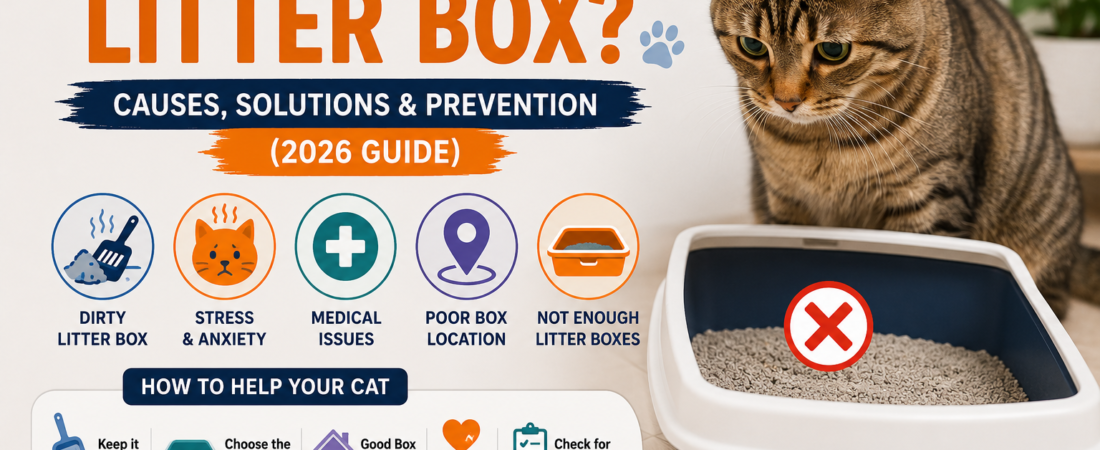
Cat Avoiding Litter Box? Causes, Solutions & Prevention (2026 Guide)
If your cat suddenly stops using the litter box, it can be frustrating and stressful. However, litter box avoidance is usually a sign that something is wrong rather than bad behavior.
The good news is that most litter box problems can be solved once you identify the underlying cause. In this guide, you’ll learn why cats avoid the litter box and what you can do to encourage healthy litter box habits.
Why Is Your Cat Avoiding the Litter Box?
Cats are naturally clean animals. When they stop using the litter box, there is often a medical, behavioral, or environmental reason.
Common causes include:
- Dirty litter boxes
- Stress or anxiety
- Medical conditions
- The wrong type of litter
- Poor litter box placement
- Too few litter boxes
1. The Litter Box Isn’t Clean Enough
Many cats refuse to use a dirty litter box.
Waste buildup creates unpleasant odors and makes the box less comfortable.
To keep the litter box inviting:
- Scoop waste daily.
- Replace litter regularly.
- Wash the box every few weeks.
For a complete cleaning routine, read How to Clean a Cat Litter Box Properly (2026 Guide).
2. Your Cat Doesn’t Like the Litter
Some cats are extremely particular about litter texture.
They may dislike:
- Strong fragrances
- Rough pellets
- Excessive dust
- Sharp crystals
If you’re unsure which litter is best, explore Different Types of Cat Litter.
3. The Litter Box Is in the Wrong Location
Cats prefer quiet, private locations away from loud appliances or heavy foot traffic.
Avoid placing litter boxes:
- Next to washing machines
- Near food and water bowls
- In noisy hallways
Choose a calm, easily accessible area instead.
4. Medical Problems
Sudden litter box avoidance can indicate:
- Urinary tract infections
- Bladder stones
- Constipation
- Arthritis
- Kidney disease
If your cat strains to urinate, cries, or has blood in the urine, contact your veterinarian immediately.
5. Stress and Anxiety
Cats may avoid the litter box after:
- Moving to a new home
- Introducing another pet
- Loud construction
- Changes in routine
Providing a stable environment often helps reduce stress.
6. Not Enough Litter Boxes
A common recommendation is:
One litter box per cat, plus one extra.
For example:
- 1 cat = 2 litter boxes
- 2 cats = 3 litter boxes
- 3 cats = 4 litter boxes
Learn more in Best Cat Litter for Multiple Cats in 2026.
How to Encourage Proper Litter Box Habits
To improve litter box use:
- Keep boxes clean.
- Choose a litter your cat enjoys.
- Place boxes in quiet areas.
- Use enough litter.
- Avoid sudden litter changes.
- Reward good behavior.
Common Mistakes
Avoid these mistakes:
- Punishing your cat
- Switching litter too often
- Using heavily scented litter
- Ignoring medical symptoms
- Cleaning accidents with ammonia-based cleaners
Frequently Asked Questions
Should I punish my cat for peeing outside the litter box?
No.
Punishment increases stress and often makes litter box problems worse.
Can changing litter solve the problem?
Sometimes.
Many cats simply prefer a different litter texture or lower-dust formula.
When should I visit a veterinarian?
Immediately if your cat:
- Cannot urinate
- Has blood in the urine
- Shows signs of pain
- Stops eating
- Becomes lethargic
Final Thoughts
Litter box avoidance is one of the most common concerns among cat owners, but it’s often preventable. Keeping the litter box clean, choosing the right litter, and paying attention to your cat’s health can solve most problems before they become serious.
If you’re still deciding which litter to use, don’t miss Different Types of Cat Litter, Best Dust-Free Cat Litter in 2026: Complete Buying Guide, and Best Cat Litter for Odor Control in 2026: Keep Your Home Fresh Every Day.