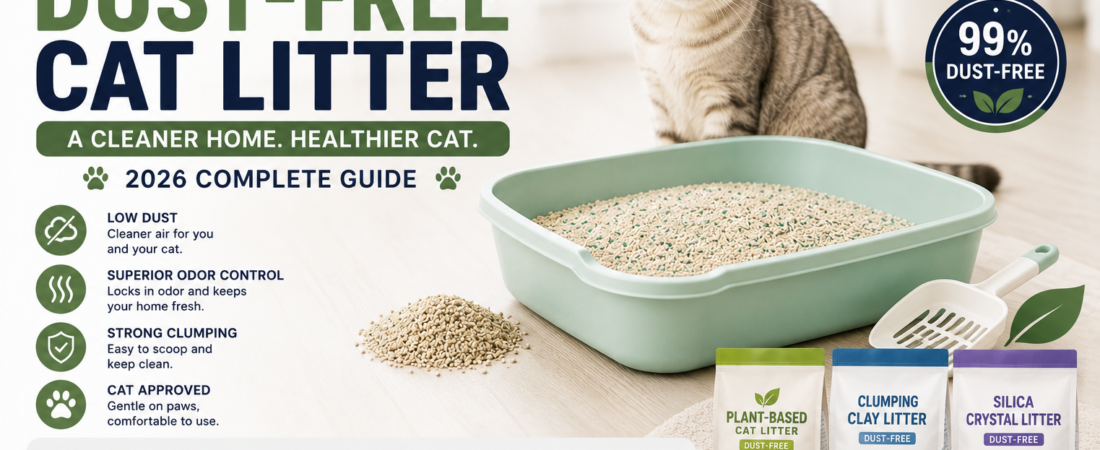
Best Dust-Free Cat Litter in 2026: Complete Guide for a Cleaner Home
Dust from cat litter can affect both cats and their owners, especially those with allergies or respiratory sensitivities. Choosing the best dust-free cat litter helps create a cleaner home, reduces airborne particles, and makes litter box maintenance more pleasant.
If you’re still comparing litter types, start with our Ultimate Guide to Choosing the Best Cat Litter to understand the advantages of different materials before selecting a low-dust option.
In this guide, you’ll learn why dust-free litter matters, what features to look for, and how to choose the right product for your home.
Why Choose Dust-Free Cat Litter?
Traditional litter may release fine dust when poured or scooped.
A high-quality dust-free litter can help:
- Improve indoor air quality
- Reduce respiratory irritation
- Keep floors cleaner
- Minimize litter tracking
- Create a more comfortable environment for cats and owners
What to Look for in Dust-Free Cat Litter
Low Dust Formula
Look for products labeled 99% dust-free or similar claims from reputable manufacturers.
Strong Clumping
Good clumping performance makes daily cleaning easier and keeps the remaining litter fresher.
Read our Clumping vs Non-Clumping Cat Litter guide for more details.
Effective Odor Control
Even dust-free litter should provide reliable odor control.
Learn more in our Best Cat Litter for Odor Control guide.
Comfortable Texture
Some cats prefer softer litter under their paws.
A fine, low-dust texture can encourage consistent litter box use.
Common Types of Dust-Free Cat Litter
Clay Litter
Pros:
- Excellent clumping
- Easy to scoop
- Widely available
Cons:
- Can be heavier than other types
Natural Plant-Based Litter
Pros:
- Eco-friendly
- Lightweight
- Often biodegradable
Cons:
- Performance varies by material
Silica Crystal Litter
Pros:
- Very low dust
- Long-lasting
- Excellent moisture absorption
Cons:
- Texture may not appeal to every cat
Tips for Reducing Dust Around the Litter Box
- Pour litter slowly.
- Scoop gently to avoid creating dust clouds.
- Use a litter mat to catch tracked litter.
- Clean around the litter box regularly.
- Place the litter box in a well-ventilated area.
Common Mistakes
Choosing Price Over Quality
Cheaper litter may create significantly more dust and require more frequent replacement.
Filling the Box Too Deep
Adding excessive litter can increase dust when your cat digs.
Skipping Regular Cleaning
Even low-dust litter should be scooped daily and replaced according to the manufacturer’s recommendations.
Read our How Often Should You Change Cat Litter? guide for a complete replacement schedule.
Frequently Asked Questions
Is dust-free cat litter completely dust-free?
No. Most products are low-dust, not completely dust-free. However, premium options can significantly reduce airborne particles.
Is dust-free litter better for kittens?
Yes, low-dust litter may help reduce irritation. Always choose a litter that is appropriate for your kitten’s age and avoid products that could be unsafe if ingested.
Does dust-free litter control odor?
Many dust-free litters also include excellent odor-control technology, but performance varies by product and cleaning routine.
Final Thoughts
The best dust-free cat litter helps keep your home cleaner while creating a healthier environment for both you and your cat. Look for products that combine low dust, strong clumping, effective odor control, and a texture your cat enjoys. With regular cleaning and the right litter, maintaining a fresh litter box becomes much easier.