How to Reduce Stress in Cats: 12 Simple Ways to Help Your Cat Feel Safe (2026 Guide)
Cats are creatures of habit. Even small changes in their environment—such as moving furniture, introducing a new pet, or changing their daily routine—can cause stress. While occasional stress is normal, long-term anxiety can affect your cat’s physical health and behavior.
In this guide, you’ll learn how to recognize the signs of stress and discover practical ways to help your cat feel calm, secure, and happy.
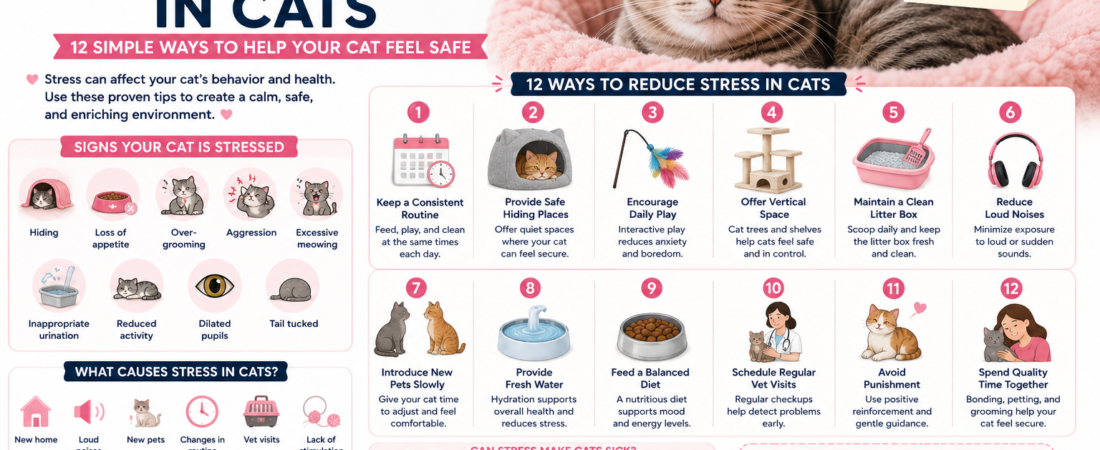
What Causes Stress in Cats?
Cats may become stressed for many reasons, including:
- Moving to a new home
- Loud noises
- New family members
- New pets
- Changes in routine
- Veterinary visits
- Lack of mental stimulation
- Conflict with other cats
Understanding the cause is the first step toward helping your cat.
Signs Your Cat Is Stressed
Watch for these common signs:
- Hiding more often
- Loss of appetite
- Over-grooming
- Aggressive behavior
- Excessive meowing
- Inappropriate urination
- Reduced activity
- Dilated pupils
- Tail tucked close to the body
Some of these signs may also indicate illness. If symptoms persist, read How to Tell If Your Cat Is Sick: 12 Warning Signs You Should Never Ignore (2026) and consult your veterinarian.
12 Ways to Reduce Stress in Cats
1. Keep a Consistent Routine
Feed, play, and clean the litter box at the same times each day whenever possible.
2. Provide Safe Hiding Places
Cats feel safer when they have quiet areas where they can retreat.
Cardboard boxes, cat caves, and elevated shelves all work well.
3. Encourage Daily Play
Interactive play reduces anxiety while providing exercise.
Feather wands, puzzle toys, and rolling balls are excellent choices.
4. Offer Vertical Space
Cat trees and wall shelves allow cats to observe their surroundings while feeling secure.
5. Maintain a Clean Litter Box
Dirty litter boxes are a common source of stress.
Scoop daily and replace litter regularly.
6. Reduce Loud Noises
Keep your cat away from fireworks, loud music, or noisy appliances whenever possible.
7. Introduce New Pets Slowly
Gradual introductions help prevent fear and territorial conflicts.
8. Provide Fresh Water
Hydration supports your cat’s overall health.
Learn more in How Much Water Should a Cat Drink? Signs of Dehydration & Hydration Tips (2026).
9. Feed a Balanced Diet
A nutritious diet supports both physical and emotional well-being.
10. Schedule Regular Veterinary Visits
Routine wellness exams can detect medical problems that may contribute to behavioral changes.
Read How Often Should You Take Your Cat to the Vet? (2026 Complete Guide).
11. Avoid Punishment
Cats do not understand punishment the way humans do.
Instead, reward positive behaviors and redirect unwanted actions.
12. Spend Quality Time Together
Gentle petting, grooming, and interactive play strengthen your bond and help your cat feel secure.
Can Stress Make Cats Sick?
Yes.
Long-term stress may contribute to:
- Digestive problems
- Urinary tract issues
- Reduced appetite
- Excessive grooming
- Weakened immune function
Early intervention can prevent these issues from becoming more serious.
Frequently Asked Questions
How do I know if my cat is stressed or sick?
Stress and illness often share similar symptoms. If your cat’s behavior changes suddenly or symptoms last more than a day or two, consult your veterinarian.
Can indoor cats become stressed?
Absolutely. Indoor cats can experience stress from boredom, changes in routine, or environmental factors.
How long does it take for a stressed cat to recover?
Some cats recover within a few days, while others may need several weeks depending on the cause and the support they receive.
Final Thoughts
Stress is a normal part of life, but chronic stress can negatively affect your cat’s health and happiness. By maintaining a consistent routine, providing enrichment, and paying attention to behavioral changes, you can create a calm environment where your cat feels safe and confident.