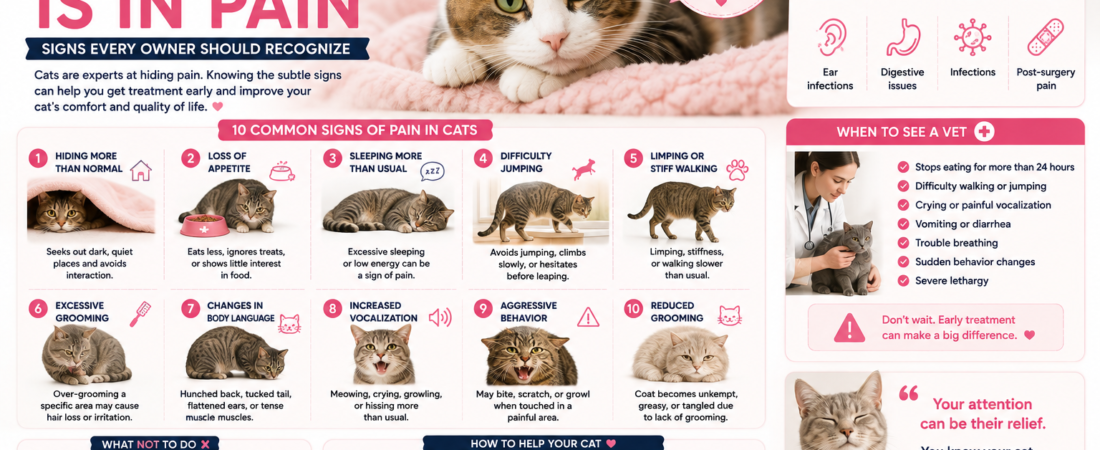
How to Know If Your Cat Is in Pain (2026 Guide): Signs Every Owner Should Recognize
Cats are masters at hiding discomfort. Unlike many other pets, they often continue eating, sleeping, and acting normally even when they are experiencing pain. This instinct comes from their wild ancestors, where showing weakness could make them vulnerable to predators.
Because of this, cat owners must learn to recognize subtle behavioral changes before a minor problem becomes a serious medical condition.
If you’re unsure whether your cat’s unusual behavior is caused by illness or pain, start by reading How to Tell If Your Cat Is Sick: 12 Warning Signs You Should Never Ignore (2026).
Why Cats Hide Pain
Cats naturally conceal pain as a survival mechanism. Even indoor cats retain these instincts, making early symptoms difficult to recognize.
Instead of crying or limping immediately, a cat in pain may simply:
- Sleep more than usual
- Avoid interacting with family members
- Stop playing
- Become less active
- Hide in quiet places
Learning to notice these small changes can help you seek treatment before the condition worsens.
Common Signs of Pain in Cats
1. Hiding More Than Normal
Cats often retreat to closets, under beds, or inside boxes when they don’t feel well.
If your friendly cat suddenly avoids people for an extended period, pain could be the cause.
2. Loss of Appetite
A painful cat may:
- Eat less
- Ignore favorite treats
- Drink less water
- Lose interest in meals
A loss of appetite lasting more than 24 hours should always be taken seriously.
You can also monitor your cat’s hydration by reading How Much Water Should a Cat Drink? Signs of Dehydration & Hydration Tips (2026).
3. Sleeping More Than Usual
Although cats naturally sleep a lot, excessive sleeping combined with reduced activity may indicate discomfort.
Watch for changes in:
- Sleeping location
- Sleeping duration
- Willingness to play
- Daily routine
4. Difficulty Jumping
Cats suffering from arthritis, injuries, or joint pain often hesitate before jumping.
You may notice they:
- Avoid high furniture
- Use stairs more slowly
- Miss jumps
- Climb instead of leap
5. Limping or Stiff Walking
Changes in movement are common signs of pain.
Look for:
- Limping
- Slow walking
- Stiff legs
- Reluctance to run
6. Excessive Grooming
Cats frequently lick painful areas.
This may eventually cause:
- Hair loss
- Red skin
- Bald patches
7. Changes in Body Language
A painful cat may display unusual posture, including:
- Hunched back
- Tail tucked close to the body
- Flattened ears
- Tense muscles
These changes often indicate discomfort or fear.
8. Increased Vocalization
Some cats become more vocal when they are hurting.
They may:
- Meow more frequently
- Cry when touched
- Growl
- Hiss unexpectedly
9. Aggressive Behavior
Even gentle cats may bite or scratch if a painful area is touched.
Always handle an injured cat carefully and avoid forcing physical contact.
10. Reduced Grooming
Some painful cats stop grooming altogether, leaving their coat:
- Greasy
- Tangled
- Dirty
- Unkempt
Poor grooming is especially common in older cats with arthritis.
Common Causes of Pain
Pain may result from many health conditions, including:
- Dental disease
- Arthritis
- Broken bones
- Urinary tract disease
- Injuries
- Ear infections
- Digestive problems
Good preventive healthcare can reduce the risk of many of these conditions. Learn more in Cat Health Guide: Everything Every Cat Owner Should Know (2026).
When Should You Visit the Veterinarian?
Schedule a veterinary appointment immediately if your cat:
- Stops eating for more than 24 hours
- Has difficulty walking
- Cries when touched
- Struggles to breathe
- Vomits repeatedly
- Suddenly becomes unable to jump
- Shows severe lethargy
Regular health checkups also help detect hidden illnesses before they become serious. Read How Often Should You Take Your Cat to the Vet? (2026 Complete Guide).
Never Give Human Pain Medication
Many medications that are safe for people are extremely dangerous for cats.
Never give your cat:
- Ibuprofen
- Acetaminophen (Paracetamol)
- Naproxen
- Aspirin (unless specifically prescribed by a veterinarian)
If you think your cat needs pain relief, consult your veterinarian immediately.
How to Help a Cat Recover
While waiting for veterinary care, you can:
- Keep your cat in a quiet room.
- Provide fresh water.
- Offer soft bedding.
- Avoid excessive handling.
- Monitor eating, drinking, and litter box habits.
If your cat is also showing signs of anxiety, How to Reduce Stress in Cats: 12 Simple Ways to Help Your Cat Feel Safe (2026 Guide) offers practical strategies to create a calm recovery environment.
Frequently Asked Questions
Can cats purr when they’re in pain?
Yes. Although purring often indicates contentment, cats may also purr when they are frightened, stressed, or in pain.
How do I know if my older cat is in pain?
Senior cats often show subtle signs such as sleeping more, avoiding stairs, difficulty jumping, decreased grooming, or reduced interest in play.
Should I wait to see if my cat gets better?
No. Cats often hide serious illness. If unusual behavior continues for more than a day or your cat shows severe symptoms, contact your veterinarian promptly.
Final Thoughts
Pain in cats is often difficult to detect because they instinctively hide weakness. Paying attention to changes in appetite, movement, grooming, posture, and behavior allows you to recognize problems earlier and seek timely veterinary care. Early diagnosis and treatment can greatly improve your cat’s comfort, recovery, and long-term health.