Why Is My Cat Sleeping So Much? What’s Normal and When to Worry (2026 Guide)
If you’ve ever looked at your cat curled up for yet another nap, you may have wondered whether it’s normal. Cats are famous for sleeping long hours, but excessive sleep can sometimes indicate an underlying health problem.
This guide explains how much sleep cats typically need, what factors affect their sleeping habits, and the warning signs that mean it’s time to seek veterinary care.
If you’ve already noticed unusual behavior in your cat, read How to Tell If Your Cat Is Sick: 12 Warning Signs You Should Never Ignore (2026) for additional symptoms to watch for.
How Many Hours Do Cats Sleep?
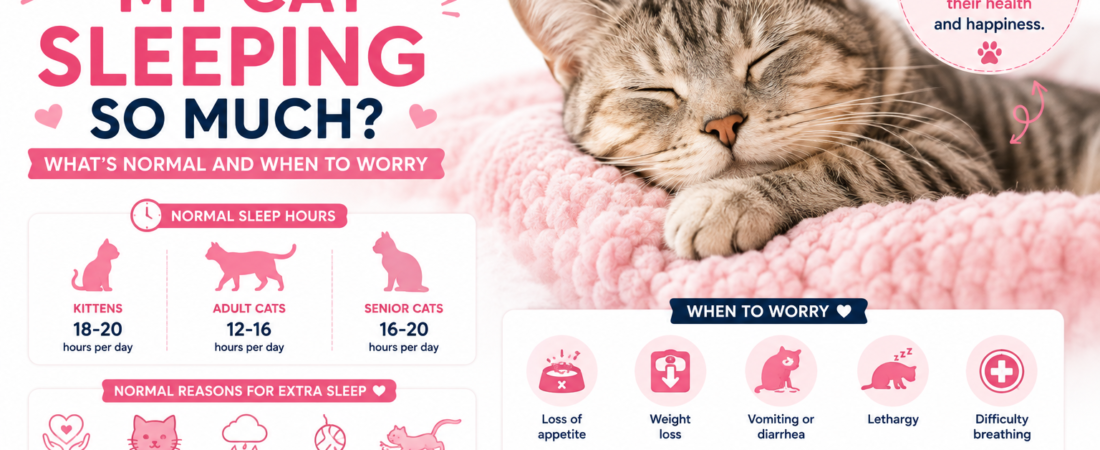
Healthy adult cats usually sleep between 12 and 16 hours per day.
Some cats may sleep even longer depending on their age and lifestyle.
Typical sleep patterns include:
- Kittens: 18–20 hours daily
- Adult cats: 12–16 hours daily
- Senior cats: 16–20 hours daily
Long sleeping hours alone are usually not a cause for concern.
Why Do Cats Sleep So Much?
Cats are natural hunters.
Although indoor cats don’t hunt for survival, they still conserve energy just as their wild ancestors did.
Common reasons include:
- Conserving energy
- Age
- Weather changes
- Boredom
- Recovery after active play
Normal Reasons for Extra Sleep
Your Cat Is Getting Older
Senior cats naturally spend more time resting because they have lower energy levels.
Your Cat Had an Active Day
After several hours of running, climbing, or interactive play, your cat may simply need extra recovery time.
Cold or Rainy Weather
Many cats become less active during cooler weather and choose to nap more frequently.
Lack of Stimulation
Indoor cats without enough enrichment often sleep simply because there’s nothing interesting to do.
Interactive toys and climbing furniture can help increase activity levels.
When Should You Be Concerned?
Sleeping becomes concerning when it is accompanied by other symptoms.
Watch for:
- Loss of appetite
- Weight loss
- Vomiting
- Diarrhea
- Difficulty walking
- Trouble breathing
- Hiding constantly
- Sudden personality changes
If your cat shows several of these signs, schedule a veterinary examination promptly.
You can also learn more in How to Know If Your Cat Is in Pain (2026 Guide): Signs Every Owner Should Recognize.
Health Problems That May Cause Excessive Sleeping
Several medical conditions may increase sleep duration.
These include:
- Fever
- Infections
- Diabetes
- Kidney disease
- Hyperthyroidism
- Arthritis
- Chronic pain
Regular wellness exams help identify these conditions early.
Read How Often Should You Take Your Cat to the Vet? (2026 Complete Guide) to learn how often your cat should receive routine checkups.
How to Encourage Healthy Activity
If your veterinarian confirms your cat is healthy, you can increase activity by:
- Scheduling two interactive play sessions daily
- Rotating toys every week
- Providing climbing trees
- Using puzzle feeders
- Offering window perches for bird watching
A stimulating environment supports both physical and mental health.
Frequently Asked Questions
Is it normal for my indoor cat to sleep all day?
Many indoor cats sleep longer than outdoor cats because they have fewer opportunities for exercise and exploration.
Can stress make cats sleep more?
Yes. Some stressed cats become withdrawn and spend more time hiding or sleeping.
If you suspect anxiety, read How to Reduce Stress in Cats: 12 Simple Ways to Help Your Cat Feel Safe (2026 Guide).
When should I call my veterinarian?
Seek veterinary advice if excessive sleeping is accompanied by appetite loss, breathing difficulty, weakness, vomiting, or major behavioral changes.
Final Thoughts
Sleeping for much of the day is perfectly normal for most cats. However, if your cat suddenly begins sleeping significantly more than usual or develops other concerning symptoms, don’t ignore the change. Careful observation and regular veterinary care are the best ways to protect your cat’s health and ensure a long, happy life.