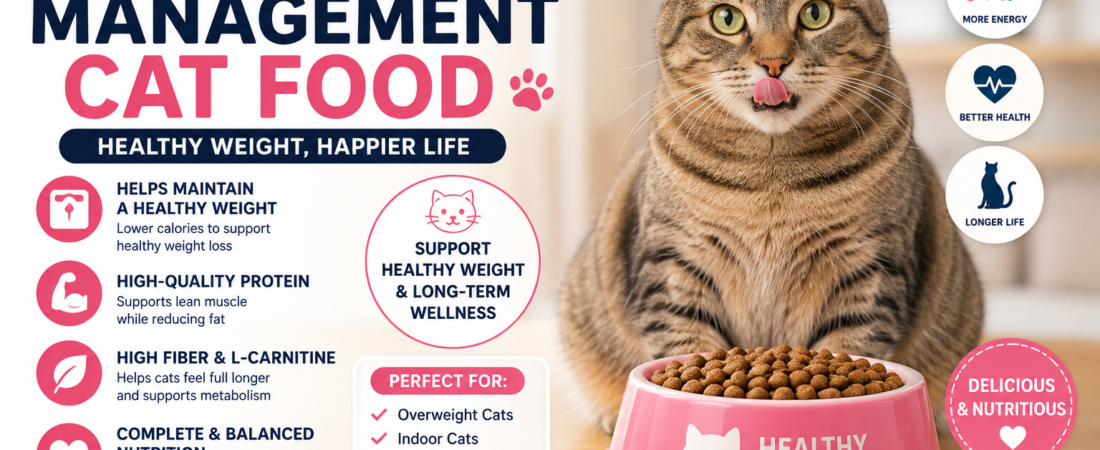
Best Weight Management Cat Food in 2026: Complete Guide for Healthy Weight Loss
Obesity is one of the most common health problems affecting domestic cats today. Extra weight may seem harmless at first, but over time it can increase the risk of diabetes, arthritis, heart disease, and a shorter lifespan. Choosing the best weight management cat food is one of the most effective ways to help your cat reach and maintain a healthy weight.
In this guide, you’ll learn how weight management cat food works, what ingredients to look for, and practical feeding tips to support safe, long-term weight loss.
Why Maintaining a Healthy Weight Matters
An overweight cat has to work harder to move, play, and even groom itself.
Maintaining a healthy body weight can help:
- Reduce the risk of diabetes.
- Improve joint health.
- Increase energy levels.
- Support heart health.
- Extend life expectancy.
- Improve overall quality of life.
Even losing a small amount of excess weight can significantly improve your cat’s health.
Signs Your Cat May Be Overweight
Many cat owners don’t realize their cat has gained too much weight.
Common signs include:
- Difficulty feeling the ribs.
- A round or sagging belly.
- Reduced activity.
- Sleeping more than usual.
- Difficulty jumping onto furniture.
- Heavy breathing after exercise.
If you’re unsure, ask your veterinarian to assess your cat’s body condition score (BCS).
What Makes Weight Management Cat Food Different?
Weight management formulas are designed to help cats lose fat while maintaining muscle.
They typically contain:
- Lower calorie density.
- Higher protein content.
- Increased fiber.
- Balanced vitamins and minerals.
- Controlled fat levels.
Unlike simply feeding less regular food, these diets provide complete nutrition while reducing calorie intake.
High Protein Cat Food in 2026: Benefits, Risks & How to Choose
Key Ingredients to Look For
High-Quality Animal Protein
Protein helps preserve lean muscle during weight loss.
Good sources include:
- Chicken
- Turkey
- Salmon
- Whitefish
Cats naturally require animal protein to stay healthy.
High Fiber
Fiber helps cats feel full between meals.
Common fiber sources include:
- Beet pulp
- Pumpkin
- Pea fiber
- Cellulose
Moderate Fat Levels
Healthy fats remain essential but should be provided in appropriate amounts.
Look for foods containing omega-3 fatty acids from fish oil.
L-Carnitine
Many weight management formulas include L-carnitine, which helps convert fat into energy and supports healthy metabolism.
Ingredients to Avoid
Some products marketed for weight control still contain unnecessary fillers.
Avoid foods high in:
- Artificial colors
- Artificial preservatives
- Excess sugars
- Low-quality meat by-products
- Excessive corn fillers
Choosing a balanced, high-quality formula is more important than simply selecting the lowest-calorie option.
Wet Food or Dry Food for Weight Loss?
Both can work when fed in appropriate portions.
Wet food may help because it:
- Contains fewer calories per serving.
- Provides more moisture.
- Helps some cats feel fuller.
Dry food is convenient but requires careful portion control.
Wet Food vs Dry Food for Cats: Which Is Better for Your Cat in 2026?
Portion Control Is Essential
Even the healthiest weight management food won’t work if your cat eats too much.
Follow these tips:
- Measure every meal.
- Avoid free feeding.
- Feed on a consistent schedule.
- Limit treats to less than 10% of daily calories.
- Monitor your cat’s weight every two to four weeks.
Cat Feeding Schedule by Age (2026): Complete Feeding Guide
Exercise Matters Too
Diet alone isn’t enough.
Encourage daily activity through:
- Interactive toys.
- Puzzle feeders.
- Climbing cat trees.
- Laser pointer games.
- Short play sessions several times a day.
Regular exercise helps burn calories while reducing boredom.
Frequently Asked Questions
How quickly should my cat lose weight?
Most veterinarians recommend gradual weight loss of about 1–2% of body weight per week.
Can indoor cats become overweight more easily?
Yes. Indoor cats are generally less active and may require fewer calories.
Best Indoor Cat Food in 2026: Complete Nutrition Guide
Should I stop giving treats?
No, but treats should be limited and counted as part of your cat’s daily calorie intake.
Top 7 Healthy Cat Treats That Cats Love in 2026
Is high-protein food good for weight loss?
Yes. High-protein diets help preserve muscle while promoting fat loss when fed in appropriate portions.
Final Thoughts
Choosing the best weight management cat food is about more than simply reducing calories. A balanced diet rich in high-quality protein, appropriate fiber, and essential nutrients can help your cat lose weight safely while maintaining muscle and overall health.
Combine portion control, regular exercise, and routine veterinary checkups for the best long-term results. With patience and consistency, your cat can achieve a healthier weight and enjoy a more active, happier life.