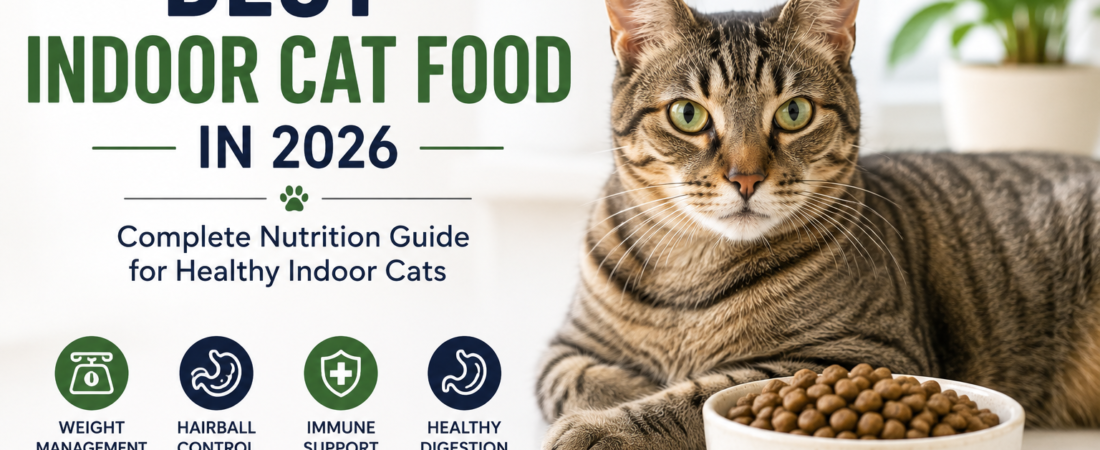
Best Indoor Cat Food in 2026: Complete Guide for Healthy Indoor Cats
Indoor cats live longer than ever, but they also have unique nutritional needs. Since they are generally less active than outdoor cats, choosing the best indoor cat food is essential for maintaining a healthy weight, supporting digestion, and preventing common health problems such as hairballs.
Before selecting a specific formula, read our Best Cat Food Guide to understand what makes a high-quality diet for cats at every life stage.
This guide explains what indoor cats need, which ingredients to look for, and how to choose the right food for your feline companion.
Why Indoor Cats Need Different Food
Indoor cats usually:
- Burn fewer calories
- Sleep more
- Exercise less
- Groom themselves more frequently
Because of these lifestyle differences, they may become overweight or develop hairballs more often than outdoor cats.
What to Look for in the Best Indoor Cat Food
High-Quality Animal Protein
Protein should always come from quality animal sources.
Look for ingredients like:
- Chicken
- Turkey
- Salmon
- Whitefish
Protein helps maintain lean muscle while supporting overall health.
Moderate Calories
Indoor cats don’t need as many calories as highly active outdoor cats.
Choose foods formulated specifically for indoor lifestyles to help maintain a healthy body weight.
Natural Fiber for Hairball Control
Indoor cats spend a lot of time grooming.
Natural fiber from ingredients such as beet pulp or pumpkin can help move swallowed hair through the digestive system, reducing hairball formation.
Omega-3 and Omega-6 Fatty Acids
Healthy fats support:
- Skin health
- A shiny coat
- Brain function
- Joint health
Essential Vitamins and Taurine
Choose foods containing:
- Taurine
- Vitamin A
- Vitamin E
- Vitamin B Complex
- Zinc
These nutrients help maintain vision, heart health, and immune function.
Wet Food vs Dry Food for Indoor Cats
Both wet and dry food can provide complete nutrition.
Wet Food
Benefits include:
- Higher moisture content
- Better hydration
- Easier digestion
- Often more appealing to picky eaters
For a full comparison, read our Wet vs Dry Cat Food guide.
Dry Food
Advantages include:
- Convenient storage
- Affordable
- Easy portion control
Many owners feed a combination of wet and dry food.
Foods to Avoid
Avoid products containing:
- Artificial colors
- Artificial preservatives
- Excessive fillers
- Large amounts of sugar
- Low-quality meat by-products
Common Feeding Mistakes
Free Feeding All Day
Leaving food available at all times can contribute to weight gain.
Instead, feed measured portions based on your cat’s age and weight.
Too Many Treats
Treats should make up no more than 10% of your cat’s daily calorie intake.
For healthier options, see our Top 7 Healthy Cat Treats That Cats Love in 2026.
Ignoring Weight Changes
Weigh your indoor cat regularly and adjust portions if necessary.
Frequently Asked Questions
Is indoor cat food really necessary?
Not always, but indoor formulas are often lower in calories and contain extra fiber to help control weight and reduce hairballs.
Can kittens eat indoor cat food?
No. Growing kittens should eat food specially formulated for their life stage. Learn more in our Best Kitten Food guide.
Should senior indoor cats eat senior food?
Yes. Older indoor cats generally benefit from senior formulas that support joint health, digestion, and healthy aging. See our Best Senior Cat Food guide.
Is grain-free indoor cat food better?
It depends on your cat’s individual needs. Read our Grain-Free Cat Food Guide to learn more about the potential benefits and risks.
Final Thoughts
The best indoor cat food provides balanced nutrition, high-quality protein, moderate calories, and beneficial fiber to support a healthy lifestyle. Combined with regular exercise, fresh water, and routine veterinary care, the right diet can help your indoor cat stay active, maintain a healthy weight, and enjoy a long, happy life.