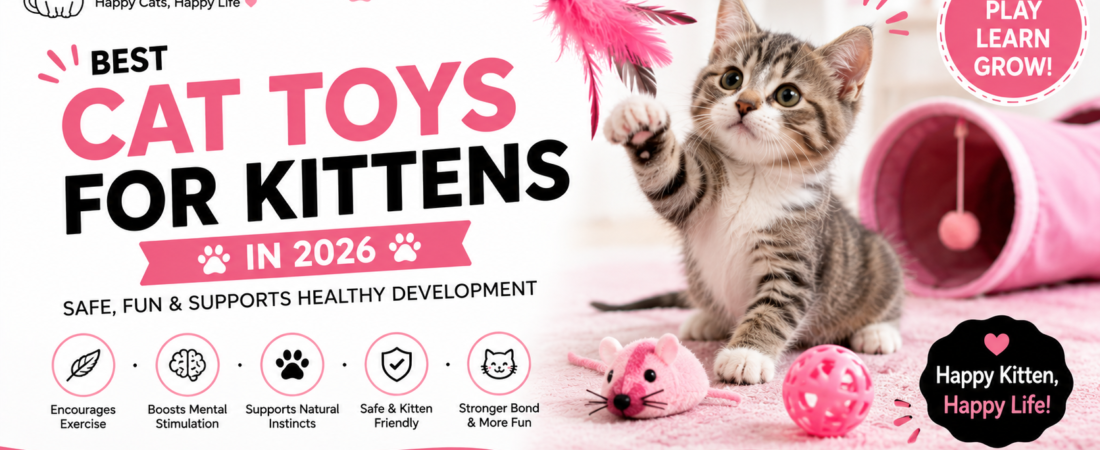
Best Cat Toys for Kittens in 2026
Kittens are naturally curious, energetic, and eager to explore everything around them.
The right toys can help kittens stay active, develop hunting skills, practice coordination, and avoid boredom.
However, not every cat toy is appropriate for a young kitten.
Small parts, loose strings, sharp edges, and poorly designed toys can create safety risks.
In this guide, we’ll explain how to choose the best cat toys for kittens, what types of toys are most useful, and how to create a safe play routine.
Why Do Kittens Need Toys?
Play is an important part of a kitten’s development.
Kittens naturally practice behaviors such as chasing, pouncing, grabbing, and stalking.
Toys give them a safe way to express these natural behaviors.
Regular play can help provide:
- Physical exercise
- Mental stimulation
- Coordination practice
- Hunting-style activities
- Social interaction
- Entertainment
- A healthier daily routine
If your kitten gets bored easily, you can also explore our guide to Interactive Cat Toys.
1. Wand Toys
Wand toys are one of the most engaging options for kittens.
A typical wand toy has a long handle with a feather, fabric, or toy attached to the end.
You can move it across the floor, around furniture, or through the air to encourage your kitten to chase and pounce.
Benefits of wand toys
- Encourage physical activity
- Improve coordination
- Simulate hunting behavior
- Encourage interaction with owners
- Help kittens burn energy
Always supervise your kitten while using toys with strings, feathers, or attachments.
Store the toy somewhere your kitten cannot access it when playtime is finished.
For more ideas, see our Best Interactive Cat Toys Guide.
2. Small Balls
Balls are simple but effective kitten toys.
Many kittens enjoy pushing, chasing, and batting small lightweight balls around the house.
Look for balls that are:
- Large enough that they cannot be swallowed
- Lightweight
- Durable
- Free from easily detachable parts
- Easy to clean
Textured balls can also provide additional sensory stimulation.
Avoid toys that contain small pieces that can break off during play.
3. Plush Cat Toys
Soft plush toys can become popular companions for kittens.
Some plush toys are designed to resemble mice, birds, or other small animals.
They can encourage chasing, batting, carrying, and kicking behaviors.
Choose toys made from durable materials with securely attached features.
Check them regularly for damage.
If stuffing, eyes, threads, or other pieces become loose, replace the toy.
4. Catnip Toys
Catnip toys are popular among adult cats, but kittens may not respond strongly to catnip.
The sensitivity to catnip is influenced by genetics, and many young kittens do not show much interest in it.
That doesn’t mean catnip toys are useless.
Your kitten may become more interested as they get older.
For younger kittens, toys that move, make interesting sounds, or encourage chasing may be more engaging.
5. Crinkle Toys
Crinkle toys make a soft noise when your kitten touches or bites them.
The sound can attract attention and encourage investigation.
They are particularly useful for kittens that enjoy sensory stimulation.
When choosing a crinkle toy, make sure the material is durable and doesn’t easily tear.
Always remove damaged toys.
6. Tunnel Toys
Cat tunnels can provide both exercise and mental stimulation.
Kittens often enjoy running through tunnels, hiding inside them, and jumping out unexpectedly.
A tunnel can also become a safe place for your kitten to explore.
Look for tunnels that:
- Are stable
- Have enough room for your kitten
- Don’t contain dangerous loose strings
- Can be folded for storage
- Are made from durable materials
You can combine a tunnel with balls or other toys to create a more interesting play area.
7. Puzzle Toys
Puzzle toys can help kittens develop problem-solving skills.
Some puzzle toys hide treats or food that the kitten has to discover.
Start with simple puzzles.
If the toy is too difficult, your kitten may lose interest.
As your kitten becomes more experienced, you can gradually introduce more challenging activities.
For more ideas, check our Best Puzzle Toys for Cats guide.
8. Electronic Interactive Toys
Electronic toys can move automatically and provide entertainment when you’re busy.
Examples include:
- Automatic moving balls
- Motion-activated toys
- Rotating toys
- Interactive electronic games
These toys can be useful, but they shouldn’t completely replace interactive play with you.
Your kitten still benefits from regular human interaction.
If you’re considering automatic toys, read our Best Automatic Cat Toys Guide.
9. Teaser Toys
Teaser toys can imitate the movement of prey.
You can move the toy slowly across the floor and then quickly change direction.
This encourages your kitten to stalk, chase, and pounce.
To make play more realistic:
- Move the toy slowly.
- Let your kitten watch it.
- Move it behind an object.
- Bring it back into view.
- Allow your kitten to chase it.
- Let your kitten catch it occasionally.
Don’t keep the toy moving constantly.
Giving your kitten opportunities to catch the “prey” can make play more rewarding.
10. Kick Toys
Some kittens enjoy grabbing a toy with their front paws and kicking it with their back legs.
Kick toys are usually longer and larger than small plush toys.
They can be useful for energetic kittens that enjoy wrestling with toys.
Choose a toy that is large enough to prevent accidental swallowing of pieces.
How to Choose Safe Toys for Kittens
Safety should always come before entertainment.
Before buying a toy, check for:
No Small Detachable Parts
Avoid toys with pieces that can easily break off.
Durable Construction
Kittens can bite, scratch, and pull toys aggressively.
The toy should be able to handle normal play.
Safe Size
Avoid toys that are small enough to fit completely inside your kitten’s mouth.
No Dangerous Strings
Strings, ribbons, and elastic pieces can become dangerous if swallowed.
Use these toys only under supervision.
Non-Toxic Materials
Choose toys made from materials intended for pet use.
How Many Toys Does a Kitten Need?
You don’t need to buy dozens of toys at once.
A small collection of different toy types can provide plenty of variety.
For example, you could have:
- 1–2 wand toys
- 2 small balls
- 1 plush toy
- 1 tunnel
- 1 puzzle toy
- 1 interactive toy
Rotate them regularly instead of leaving every toy available all the time.
This can make old toys feel new again.
Toy Rotation: A Simple Strategy
Toy rotation is an easy way to prevent boredom.
Instead of leaving ten toys on the floor every day, keep some toys stored away.
For example:
Week 1: Balls + tunnel + wand toy
Week 2: Plush toys + puzzle toy + teaser
Week 3: Electronic toy + balls + tunnel
Then repeat the rotation.
Your kitten may become more interested when a familiar toy returns after several days.
How Long Should You Play With a Kitten?
Short, frequent play sessions are usually better than one extremely long session.
Try several play sessions throughout the day.
A session might include:
5–15 minutes of active play
followed by a short rest period.
Your kitten’s age, energy level, and personality should determine how much play is appropriate.
Very energetic kittens may want more activity.
Don’t Let Your Kitten Play With Your Hands
It may seem cute when a kitten attacks your fingers.
However, allowing this behavior can teach the kitten that hands are toys.
Instead, redirect biting and scratching toward an appropriate toy.
Use a wand, plush toy, or other safe object during interactive play.
This can help establish better play habits as your kitten grows.
How to Make Toys More Interesting
Even simple toys can become more exciting when you change how you use them.
Try:
- Moving toys unpredictably
- Hiding toys behind furniture
- Using tunnels
- Rotating toys
- Introducing new textures
- Combining toys during play
- Letting your kitten “catch” the toy
You don’t necessarily need to buy a new toy every week.
Sometimes changing the way you play is enough.
Common Kitten Toy Mistakes
Buying Too Many Toys
More toys don’t necessarily mean more fun.
A small collection with regular rotation can be more effective.
Leaving String Toys Unsupervised
String, ribbon, and similar materials can be dangerous if swallowed.
Always supervise this type of play.
Choosing Toys That Are Too Small
A toy should be appropriately sized for your kitten.
Avoid anything that could become a choking hazard.
Never Rotating Toys
If the same toys are available every day, your kitten may eventually lose interest.
Rotation can help maintain novelty.
Using Hands as Toys
This can encourage biting and scratching toward people.
Always redirect play toward appropriate toys.
Best Cat Toys for Kittens: Quick Comparison
| Toy Type | Exercise | Mental Stimulation | Best For |
|---|---|---|---|
| Wand toy | High | High | Interactive play |
| Ball | High | Medium | Chasing |
| Plush toy | Medium | Medium | Carrying & kicking |
| Tunnel | High | High | Exploring |
| Puzzle toy | Low | High | Problem solving |
| Electronic toy | Medium | High | Independent play |
| Crinkle toy | Medium | Medium | Sensory stimulation |
| Kick toy | Medium | Medium | Wrestling & kicking |
Frequently Asked Questions
What is the best toy for a kitten?
There isn’t one perfect toy for every kitten.
Wand toys, balls, tunnels, plush toys, and puzzle toys can all provide different types of stimulation.
A combination of toys is usually better than relying on only one.
Are laser toys safe for kittens?
Laser toys can provide exercise and encourage chasing.
However, never shine a laser directly into your kitten’s eyes.
It’s also useful to finish laser play with a physical toy that your kitten can actually catch.
For more information, see our Best Laser Toys for Cats guide.
Can kittens play with catnip toys?
Some kittens may show little or no response to catnip when they are young.
You can try catnip toys later as your kitten matures.
Should kittens have toys all day?
You can leave safe toys such as appropriate balls or plush toys available.
However, toys containing strings, feathers, elastic, or small detachable parts should be stored away when you’re not supervising play.
How often should I replace kitten toys?
Replace a toy whenever it becomes damaged, starts losing pieces, or develops loose threads.
Inspect toys regularly, especially if your kitten chews them heavily.
Final Thoughts
The best cat toys for kittens should provide a combination of exercise, mental stimulation, exploration, and safe entertainment.
You don’t need to spend a lot of money to create an engaging play environment.
A few well-chosen toys, regular play sessions, and a simple toy rotation system can keep your kitten active and interested.
Start with safe basics such as wand toys, balls, tunnels, and plush toys. Then add puzzle or interactive toys as your kitten becomes more confident.
For more cat toy recommendations, visit our Products page and compare products before choosing the right toys for your kitten.
This article is for general educational purposes and is not a substitute for veterinary advice. Always supervise kittens with toys that contain strings, feathers, elastic, or small components.