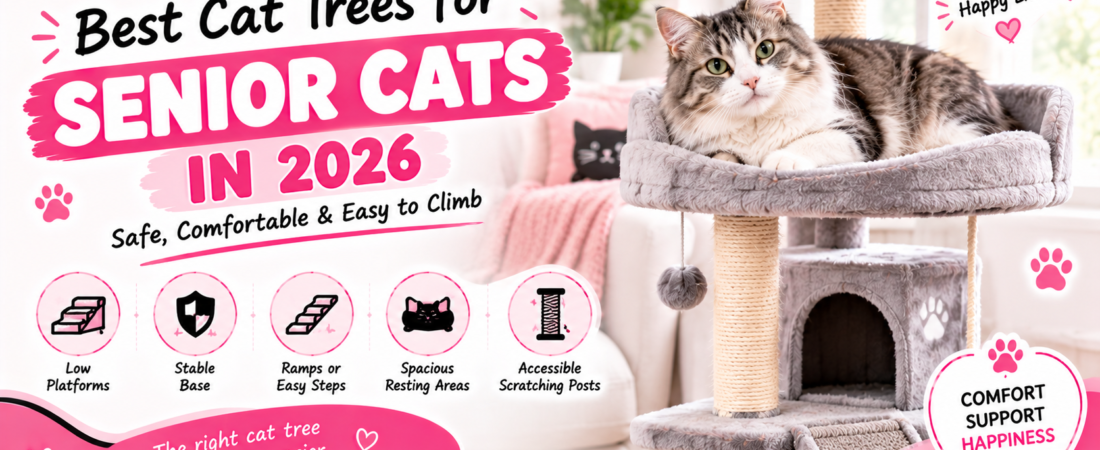
As cats get older, their favorite activities may begin to change. A cat that once jumped onto the highest shelf might start sleeping on the sofa instead. Climbing may become slower, jumping may seem less appealing, and high platforms may become harder to reach.
A cat tree can still provide a valuable place for an older cat to scratch, rest, observe the room, and enjoy gentle activity. The key is choosing a design that matches your cat’s current mobility rather than its abilities when it was younger.
In this guide, we’ll explain what to look for in the best cat trees for senior cats, compare useful design types, discuss safety considerations, and share practical tips for helping an older cat enjoy its new furniture.
Quick Answer: What Is the Best Cat Tree for a Senior Cat?
The best cat tree for a senior cat usually has low platforms, short climbing distances, a wide stable base, comfortable resting areas, and easy access to scratching surfaces.
A ramp or gently spaced steps can help cats that struggle with high jumps. For cats with more significant mobility limitations, a low cat tree or ground-level scratching lounge may be more suitable than a traditional tall tower.
Choose based on your cat’s individual movement, size, preferences, and veterinary needs—not age alone.
Why Senior Cats May Need a Different Cat Tree
Older cats can experience changes in strength, balance, flexibility, and joint comfort. Some begin avoiding high furniture because jumping up or landing down feels difficult.
You may notice your cat:
- Hesitating before jumping onto a sofa or bed.
- Using lower resting places more often.
- Avoiding a favorite high perch.
- Taking longer to climb stairs or furniture.
- Spending more time resting.
- Showing less interest in a cat tree it previously used.
These changes do not always mean your cat simply needs different furniture. A sudden change in jumping ability, activity, grooming, or behavior can be a sign of pain or illness. Arrange a veterinary examination if you notice new or worsening mobility problems.
A more accessible cat tree can make daily movement easier, but it does not treat arthritis or other medical conditions.
What to Look for in the Best Cat Trees for Senior Cats
1. Low Platforms and Short Climbing Distances
For an older cat, a useful cat tree does not need to be extremely tall. Look for a design with a low first platform and manageable distances between levels.
A sequence of short steps is generally more accessible than a tower that requires one large jump to reach the first perch.
Before buying, check the height of each platform rather than looking only at the product’s total height.
2. A Stable, Wide Base
Stability is essential for cats that may have reduced balance or confidence.
Choose a tree that sits firmly on the floor and does not wobble easily. Follow the manufacturer’s assembly instructions, tighten fasteners correctly, and use any recommended anti-tip hardware.
Avoid placing the tree on slippery flooring unless you can secure it appropriately.
3. Ramps or Step-Like Platforms
A ramp can provide a gradual route to an elevated resting area. Short, well-spaced platforms are another useful option for cats that can manage small steps but struggle with bigger jumps.
Check that any ramp has sufficient grip and a suitable incline. A steep or slippery ramp may be difficult for a senior cat to use.
If your cat cannot climb comfortably, consider placing a low pet step beside a favorite resting area or choosing a floor-level design instead.
Amazon Link 1 — Feandrea Cat Tree with Ramp
Use this product as a candidate to investigate for ramp-style access. Before linking it, verify the exact model, ramp design, dimensions, and current specifications on the Amazon listing.
4. Wide, Comfortable Resting Platforms
Older cats may appreciate having enough room to lie down, turn around, and stretch without balancing near the edge.
Look for broad platforms with soft, secure surfaces. Raised edges can provide a comfortable resting boundary, but the entrance should remain easy to use.
If your cat is large, check the platform dimensions and stated weight limits carefully.
5. Easy-to-Reach Scratching Surfaces
Scratching remains a natural cat behavior throughout life, although an older cat may prefer a different position or texture.
A low vertical scratching post, angled scratcher, or horizontal cardboard scratcher can provide an accessible alternative to a tall post.
Place the scratching surface where your cat can reach it without making a difficult jump.
6. Easy Cleaning and Maintenance
Older cats may need more frequent bedding changes, especially if they have grooming or mobility difficulties.
Consider cat trees with removable cushions, washable covers, or surfaces that can be vacuumed easily. Inspect fabric, rope, joints, and platforms regularly for wear.
Avoid structures with loose parts or damaged surfaces that could catch claws.
Best Types of Cat Trees for Senior Cats
There is no single design that works for every older cat. These options cover different mobility levels and home layouts.
1. Low-Profile Cat Trees
Low-profile cat trees provide a resting platform and scratching opportunities without requiring substantial climbing.
Best for: Cats that prefer staying close to the ground or struggle with taller structures.
Pros
- Easier access to resting areas.
- Usually take up less vertical space.
- Can be suitable for smaller rooms.
- May be easier to inspect and clean.
Cons
- Offer less vertical territory.
- May have fewer play features.
- Still need a stable base and comfortable surfaces.
For cats that cannot jump safely, prioritize ground-level furniture rather than expecting them to climb even a low tower.
Amazon Link 2 — Go Pet Club 23-Inch Cat Tree Condo
Check the current listing for platform height, base dimensions, entrance size, and weight capacity before deciding whether this model fits your cat.
2. Cat Trees With Ramps
Ramp-equipped cat trees provide a more gradual route between resting levels.
Best for: Cats that can walk up a gentle incline but struggle with jumping.
Pros
- Can reduce the need for large jumps.
- Offer a route to an elevated resting place.
- May combine scratching and climbing functions.
Cons
- Ramps take up floor space.
- A steep or slippery surface may be difficult to use.
- Not every cat is comfortable with ramps.
Look for a wide ramp with good traction and a secure connection to the structure.
3. Cat Trees With Closely Spaced Platforms
Some cats can still climb but need shorter distances between levels.
A design with several accessible platforms can allow your cat to move gradually from the floor to a favorite perch.
Best for: Older cats that remain mobile but no longer enjoy large jumps.
Pros
- Provides several resting locations.
- Allows a gradual climbing route.
- Can preserve some vertical enrichment.
Cons
- Platform spacing varies considerably.
- Some towers still require a large jump at the bottom.
- Tall models may need wall anchoring.
Check the entire route, including the first step and the way your cat gets back down.
4. Cat Trees With Wide, Padded Perches
For cats that enjoy observing the room or sleeping above floor level, a comfortable perch can be a useful feature.
Best for: Older cats that can still climb a short distance and enjoy elevated resting spots.
Pros
- Offers a dedicated resting place.
- Can provide room to stretch.
- May make a favorite window-viewing spot more accessible.
Cons
- A high perch may still be unsuitable for cats with limited mobility.
- Plush surfaces can be harder to clean if covers are not removable.
- Soft padding does not compensate for an unstable structure.
Choose a perch height your cat can reach comfortably, with an easy route back to the floor.
5. Ground-Level Scratching Lounges
Some senior cats no longer need or want a climbing tower. A horizontal scratcher with a comfortable lounging surface may be the better choice.
Best for: Cats with significant mobility limitations or those that prefer sleeping and scratching near the floor.
These products can offer enrichment without requiring your cat to climb. Pair one with a comfortable bed and easy access to food, water, and the litter box.
How to Choose the Right Cat Tree for Your Senior Cat
Use these practical steps before making a purchase.
Step 1: Observe Your Cat’s Current Mobility
Watch how your cat moves around the home. Can it climb onto a low sofa? Does it hesitate before jumping down? Can it use short steps comfortably?
Choose furniture that matches what your cat can do comfortably now.
Step 2: Measure Your Available Space
Measure the floor area where you intend to place the tree. Check the full height, width, depth, and any additional clearance needed for a ramp.
Leave enough space for your cat to approach and leave the structure without navigating around clutter.
Step 3: Check Every Level
Read the dimensions and look at the product photos carefully.
Ask yourself:
- Is the first platform easy to reach?
- Are the gaps between levels manageable?
- Is the top perch large enough?
- Does the structure provide a safe way back down?
- Is the ramp wide and stable enough?
Step 4: Verify the Weight Limit
Check the manufacturer’s weight specifications, particularly if your senior cat is large or overweight.
Do not assume that the stated maximum weight for the whole tree applies to every individual platform.
Step 5: Consider Your Cat’s Preferences
Some cats love enclosed condos, while others prefer open perches. Some enjoy scratching vertical posts, while others prefer flat scratchers.
Choose features your cat is likely to use rather than paying extra for accessories that do not match its habits.
For broader selection advice, see How to Choose the Best Cat Tree for Your Cat.
How to Make an Existing Cat Tree More Senior-Friendly
You may not need to replace your cat’s current tree immediately. A few adjustments may make it easier to use, depending on the structure and your cat’s mobility.
- Add a low pet step: A stable step may help your cat reach a favorite low platform.
- Improve floor traction: Place a non-slip mat around the tree if the floor is slippery.
- Move favorite items lower: Place a familiar blanket or resting pad on an accessible level.
- Provide a nearby scratching surface: Add a horizontal scratcher at floor level.
- Secure the structure: Tighten fasteners and use recommended anti-tip hardware.
- Remove difficult routes: If a high perch is no longer safe to reach, prevent access rather than encouraging risky jumps.
Do not attach homemade ramps or platforms unless you can secure them properly. A loose accessory can introduce a new fall risk.
If your cat has suddenly stopped using a previously familiar tree, investigate possible discomfort rather than assuming it is simply being picky.
For tips on encouraging a cat to use its furniture, read How to Get Your Cat to Use a Cat Tree in 2026.
How to Encourage a Senior Cat to Use a New Cat Tree
Older cats may need more time to accept a new piece of furniture. Keep the introduction gentle and allow your cat to choose when to explore.
Place the Tree Near a Familiar Resting Area
Choose a quiet location your cat already likes. A spot near a window or in a commonly used room can be appealing, provided the area is safe and accessible.
Use Familiar Bedding
A familiar blanket can make the new platform feel more inviting. Ensure it is secured so it cannot slide off.
Reward Small Steps
Offer praise or a small treat when your cat approaches or explores the tree. Let your cat decide whether to climb higher.
Never lift a reluctant cat onto a high platform or force it to use a ramp.
Keep the Route Clear
Remove nearby obstacles and make sure the cat can get on and off the structure comfortably.
If your cat appears uncomfortable, stop the session and reassess whether the design is suitable.
Cat Tree Safety Tips for Older Cats
Safety should come before height, appearance, or the number of features.
- Inspect the tree regularly for loose screws, damaged platforms, and worn scratching surfaces.
- Anchor tall models according to the manufacturer’s instructions.
- Keep the floor around the tree clear.
- Avoid slippery surfaces on ramps and steps.
- Provide a comfortable way down, not just an easy way up.
- Replace broken or unstable components promptly.
- Reassess the setup if your cat’s mobility changes.
If your cat repeatedly falls, cries when moving, avoids jumping, or shows a sudden reduction in activity, contact your veterinarian. A new cat tree cannot solve an underlying medical problem.
Common Mistakes to Avoid
Buying the Tallest Tree Available
A tall tree is not necessarily the most useful option for an older cat. Prioritize easy access, stable construction, and comfortable platforms.
Assuming a Ramp Is Always Suitable
Some ramps are steep, narrow, or slippery. Check the incline and surface before purchasing.
Ignoring the Way Down
A cat may be able to climb onto a platform but struggle to return to the floor. Evaluate the complete route in both directions.
Choosing Softness Over Stability
A plush bed may look comfortable, but it should sit on a secure platform. Soft materials cannot compensate for a tree that wobbles.
Ignoring Sudden Mobility Changes
If a cat that previously climbed easily begins avoiding furniture, pain or illness may be involved. Seek veterinary advice when the change is new or persistent.
Frequently Asked Questions
At what age should I consider a senior-friendly cat tree?
There is no exact age when every cat needs one. Pay attention to changes in jumping, climbing, balance, and resting preferences. Some cats benefit from easier access earlier, while others remain active well into old age.
Are tall cat trees bad for senior cats?
Not necessarily. A mobile senior cat may still enjoy a tall tree if it has a safe, accessible route and stable construction. For cats that struggle with jumping or balance, a lower design is usually more practical.
Are ramps or steps better for older cats?
It depends on the cat. A gentle ramp may help a cat that struggles with jumps, while closely spaced steps can suit one that still climbs comfortably. The surface must be secure and easy to grip.
Should I buy a cat tree if my senior cat has arthritis?
A cat tree may still provide enrichment, but choose its height and access features carefully. Ask your veterinarian about your cat’s specific mobility limitations and whether climbing is appropriate.
What if my older cat refuses to use the new cat tree?
Give your cat time to explore, use familiar bedding, and reward voluntary investigation. If your cat seems uncomfortable or cannot reach the platforms easily, reconsider the design.
Can a floor-level scratcher replace a cat tree?
For a cat that can no longer climb safely, a floor-level scratcher and comfortable bed may be better than a traditional tower. The goal is to provide enjoyable, accessible activities—not to make your cat climb.
Final Verdict: Choosing the Best Cat Tree for a Senior Cat
The best cat tree for a senior cat is one that makes scratching, resting, and exploring comfortable without demanding more jumping or climbing than your cat can manage.
Prioritize easy access, a stable base, short climbing distances, wide resting platforms, and surfaces that provide good grip. Consider a ramp-equipped design for cats that can walk up a gentle incline, or choose a low-profile scratcher lounge for cats that need to stay close to the floor.
Before purchasing, check the product dimensions, weight limits, assembly instructions, and cleaning requirements. Most importantly, pay attention to your cat’s individual abilities and consult a veterinarian if mobility changes suddenly.
With the right setup, older cats can continue enjoying a comfortable and enriching environment at their own pace.
CatJoyLife participates in affiliate marketing programs. If you purchase through qualifying links on this page, we may earn a commission at no additional cost to you.