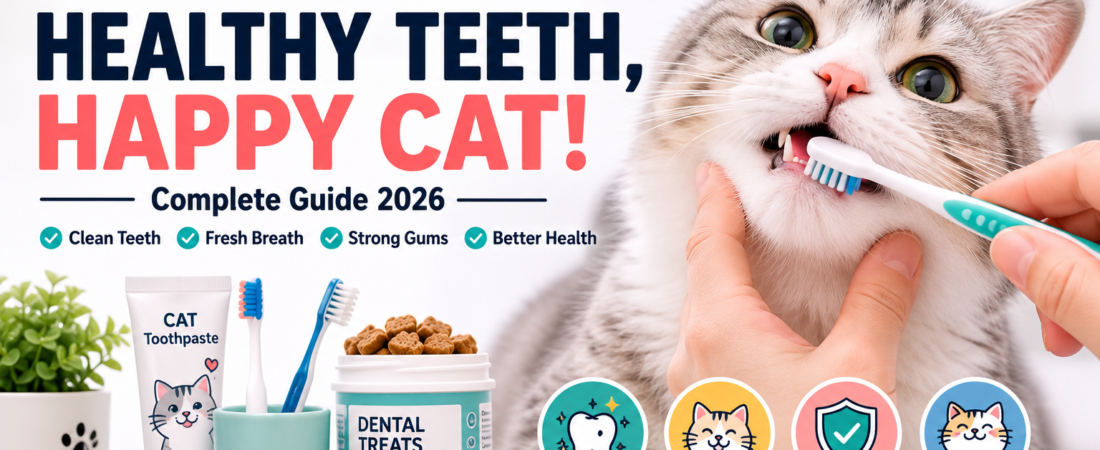
Cat Dental Care: How to Keep Your Cat’s Teeth Healthy (2026 Guide)
Dental health is an essential part of your cat’s overall well-being, yet it’s often overlooked. Poor oral hygiene can lead to bad breath, painful infections, tooth loss, and even affect major organs such as the heart and kidneys. Establishing a proper cat dental care routine can help your feline companion live a healthier and more comfortable life.
If you’re building a complete wellness plan, start with our Cat Health Guide: Everything Every Cat Owner Should Know (2026) to learn the fundamentals of preventive care.
Why Dental Care Matters
By the age of three, many cats show signs of dental disease. Plaque and tartar build up over time, causing inflammation of the gums and eventually damaging the teeth.
Good dental care helps:
- Prevent plaque and tartar buildup
- Reduce bad breath
- Protect gums from infection
- Lower the risk of tooth loss
- Support long-term overall health
Signs of Dental Problems
Watch for these common symptoms:
- Bad breath
- Red or swollen gums
- Yellow or brown tartar
- Difficulty chewing
- Drooling
- Pawing at the mouth
- Bleeding gums
- Loss of appetite
If your cat shows several of these signs, schedule a veterinary examination promptly.
How to Brush Your Cat’s Teeth
Brushing is the most effective way to prevent dental disease.
Step 1: Use Cat-Safe Toothpaste
Never use human toothpaste because it may contain ingredients that are harmful to cats.
Step 2: Introduce Brushing Slowly
Allow your cat to smell and taste the toothpaste before introducing a toothbrush.
Step 3: Brush Gently
Use small circular motions and focus on the outer surfaces of the teeth where plaque accumulates most.
Aim to brush 2–3 times per week, or daily if possible.
Other Ways to Support Dental Health
In addition to brushing, you can help maintain oral health by providing:
- Dental treats
- Dental toys
- Veterinary-approved dental diets
- Fresh drinking water
- Regular veterinary checkups
These methods work best when combined with routine brushing.
When Should You Visit the Vet?
Your veterinarian should examine your cat’s teeth during routine wellness visits.
Seek veterinary care sooner if your cat:
- Stops eating
- Has severe bad breath
- Shows bleeding gums
- Appears to be in pain while eating
Learn more in our How Often Should You Take Your Cat to the Vet? (2026 Complete Guide).
Common Mistakes
Waiting Until Problems Appear
Dental disease is much easier to prevent than to treat.
Using Human Toothpaste
Only use products specifically designed for cats.
Ignoring Bad Breath
Persistent bad breath is often a sign of underlying dental disease rather than normal “cat breath.”
Frequently Asked Questions
How often should I brush my cat’s teeth?
Ideally every day, but brushing 2–3 times per week still provides significant benefits.
Are dental treats enough?
No. Dental treats can help reduce plaque, but they should not replace brushing or regular veterinary care.
Can older cats have their teeth cleaned?
Yes. Many senior cats benefit from professional dental cleanings after a veterinary examination.
Final Thoughts
Healthy teeth are an important part of your cat’s overall health. By brushing regularly, providing dental-friendly products, and scheduling routine veterinary checkups, you can help prevent painful dental disease and keep your cat comfortable for years to come.