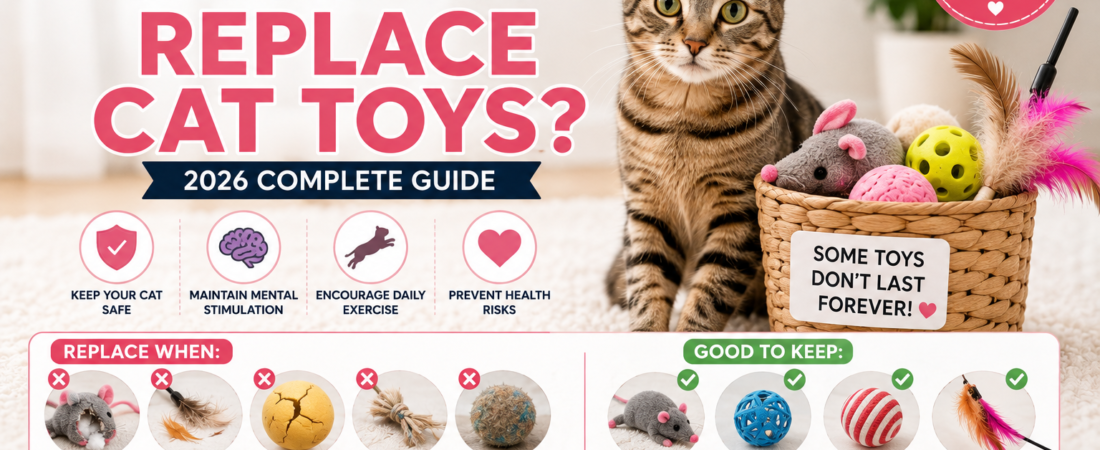
How Often Should You Replace Cat Toys? (2026 Complete Guide)
Cat toys play an important role in keeping cats active, mentally stimulated, and emotionally satisfied. However, even the highest-quality toys won’t last forever. Over time, toys can become damaged, dirty, or unsafe, increasing the risk of injury or illness.
This guide explains when to replace different types of cat toys, warning signs to watch for, and simple tips to extend their lifespan.
Why Replacing Cat Toys Matters
Cats bite, scratch, kick, and chew their toys every day. As toys wear out, they may develop loose parts or sharp edges that can become dangerous.
Replacing worn toys helps:
- Prevent choking hazards
- Reduce the risk of injury
- Keep playtime interesting
- Improve hygiene
- Encourage regular exercise
Signs It’s Time to Replace a Cat Toy
Replace a toy immediately if you notice:
- Torn fabric
- Loose stuffing
- Broken plastic
- Exposed wires or batteries
- Detached feathers
- Frayed strings
- Cracked rubber
- Missing pieces
Any of these issues can create safety risks.
How Long Different Toys Usually Last
Plush Toys
Average lifespan:
3–6 months
Replace sooner if stuffing becomes exposed.
Feather Wand Toys
Average lifespan:
2–4 months
Replace attachments whenever feathers begin falling out.
For safe alternatives, see Best Feather Wand Toys for Cats in 2026: A Complete Guide to Interactive Play.
Ball Toys
Plastic and rubber balls often last:
6–12 months
Replace them if they crack or become heavily scratched.
Learn more in Best Ball Toys for Cats in 2026: Complete Buying Guide.
Puzzle Toys
Quality puzzle toys can last:
1–3 years
Inspect moving parts regularly for damage.
You can explore more options in Best Puzzle Toys for Cats in 2026: Complete Buying Guide.
Electronic Toys
Automatic toys should be checked frequently for:
- Battery damage
- Loose screws
- Motor problems
- Cracked housings
If you use electronic toys, also read Best Automatic Laser Toys for Cats in 2026: Are They Worth It?
How to Make Cat Toys Last Longer
You can extend the lifespan of toys by:
- Rotating toys weekly
- Cleaning toys regularly
- Storing toys after play
- Supervising interactive sessions
- Replacing damaged attachments promptly
Toy rotation also helps prevent boredom.
Should You Wash Cat Toys?
Yes.
Fabric toys should be washed according to the manufacturer’s instructions, while plastic and rubber toys can usually be cleaned with warm water and mild soap.
Always let toys dry completely before giving them back to your cat.
How Many Toys Should a Cat Have?
Most cats enjoy having:
- 8–12 toys available
- Different toy types
- Weekly rotation
A mix of interactive, puzzle, feather, and ball toys provides the best enrichment.
If you’re building a toy collection, start with Best Cat Toys in 2026 | Top Interactive Toys for Indoor Cats.
Frequently Asked Questions
Can old toys make cats sick?
Yes. Dirty or damaged toys can harbor bacteria or become choking hazards.
Is it okay to repair cat toys?
Minor repairs are acceptable, but heavily damaged toys should always be replaced.
How often should I rotate toys?
Every one to two weeks is ideal for keeping playtime exciting.
Final Thoughts
Replacing cat toys at the right time helps keep your cat safe, healthy, and engaged. Regular inspections, proper cleaning, and toy rotation will not only extend the life of your toys but also ensure your cat continues to enjoy stimulating and rewarding play sessions.