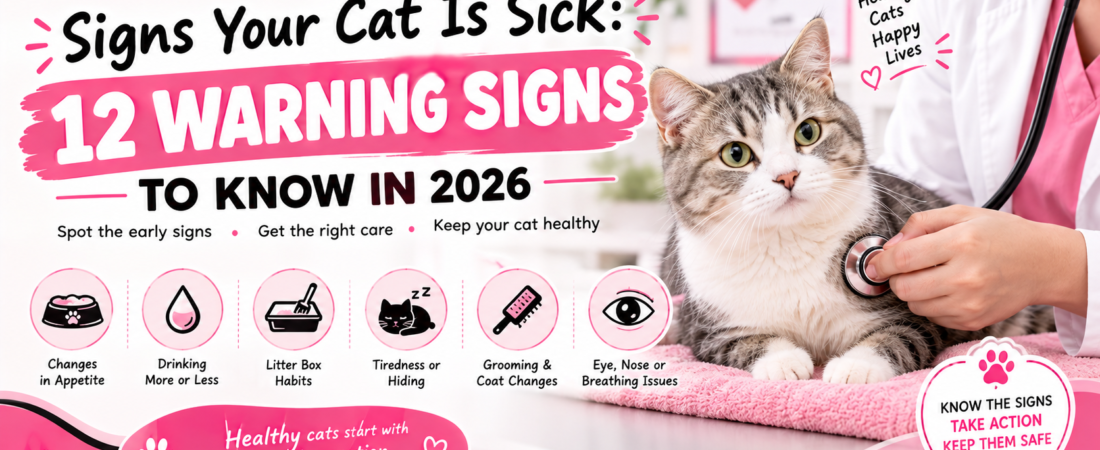
Cats are experts at hiding discomfort. In the wild, hiding signs of weakness can help animals avoid danger, and domestic cats may retain some of this instinct. That means your cat can be unwell even when the symptoms seem subtle.
Recognizing the early signs your cat is sick can help you seek veterinary care before a problem becomes more serious. Changes in eating habits, energy levels, grooming, or litter box behavior may all indicate that something is wrong.
In this guide, CatJoyLife explains 12 warning signs to watch for, symptoms that require urgent veterinary attention, and practical ways to monitor your cat’s health at home.
Important: This article provides general educational information, not a veterinary diagnosis. If your cat appears seriously unwell or you are concerned about a sudden change, contact a veterinarian.
1. Changes in Appetite
A sudden change in appetite is one of the most important signs to monitor.
A sick cat may eat less, refuse food completely, or show interest in food but struggle to chew or swallow. Some medical conditions can also cause an increase in appetite.
Possible reasons include:
- Dental pain or gum disease.
- Digestive problems.
- Stress or changes in the home.
- Kidney disease or other underlying illnesses.
- Nausea or discomfort.
When should you worry?
If your cat refuses food for around 24 hours, contact your veterinarian for advice rather than waiting several more days. Kittens, senior cats, overweight cats, and cats with existing medical conditions may need attention sooner.
Not eating can become dangerous for cats, particularly overweight cats, because prolonged food deprivation can contribute to serious liver problems.
If your cat is also vomiting repeatedly, extremely weak, or unable to keep water down, seek veterinary care promptly.
Related reading: Cat Food — explore feeding and nutrition guidance for your cat.
2. Drinking More or Less Water Than Usual
Changes in drinking habits can provide important clues about your cat’s health.
A cat that suddenly drinks much more water may have a condition such as diabetes, kidney disease, or an overactive thyroid. Drinking less may occur because of nausea, pain, stress, or difficulty accessing water.
Keep an eye on:
- The amount of water disappearing from the bowl.
- Whether your cat visits the water bowl more frequently.
- Changes in urination.
- Signs of dehydration, such as unusual weakness or dry, tacky gums.
Remember that cats eating wet food generally obtain more water from their diet than cats eating dry food. Temperature and activity can also affect drinking habits.
Do not restrict your cat’s access to water to reduce urination. If drinking or urination changes noticeably, arrange a veterinary assessment.
3. Vomiting or Diarrhea
An occasional hairball or isolated episode of vomiting does not always indicate a serious illness. However, repeated vomiting or persistent diarrhea should not be ignored.
Possible causes include dietary changes, intestinal parasites, infections, food intolerance, swallowed foreign objects, or other medical conditions.
Warning signs that need veterinary attention
Contact a veterinarian promptly if your cat has:
- Repeated vomiting or diarrhea.
- Blood in vomit or stool.
- Significant weakness or unusual sleepiness.
- Abdominal pain or swelling.
- Difficulty keeping water down.
- Symptoms that persist or worsen.
Seek emergency veterinary care if your cat repeatedly retches without producing anything, may have swallowed a string or another object, or shows severe pain or collapse.
Do not pull on string visible from your cat’s mouth or anus. It may be attached to an object inside the digestive tract and pulling can cause serious injury.
Avoid giving human anti-diarrhea or anti-nausea medicines unless a veterinarian specifically directs you to do so.
4. Changes in Litter Box Habits
Your cat’s litter box habits can reveal changes in urinary or digestive health.
You might notice that your cat:
- Urinates more frequently.
- Produces unusually large or small amounts of urine.
- Has diarrhea or constipation.
- Urinates outside the litter box.
- Cries or appears uncomfortable while eliminating.
- Visits the litter box repeatedly without producing much urine.
One especially important warning sign is straining to urinate with little or no urine coming out.
A cat that cannot urinate may have a life-threatening urinary blockage. This is particularly common in male cats, but urinary problems can affect cats of any sex. Seek emergency veterinary care immediately if you suspect a blockage. Do not wait until the next day.
Do not assume that urinating outside the box is simply bad behavior. Pain, urinary disease, stress, and litter box problems can all contribute.
For litter box care advice, see How to Clean a Cat Litter Box Properly (2026 Guide) and How Often Should You Change Cat Litter? (Complete Guide).
5. Unusual Tiredness or Hiding
Cats sleep a lot, so sleeping for many hours is not automatically a sign of illness. What matters is a change from your cat’s normal routine.
A cat that usually greets you, plays, or explores but suddenly spends most of the day hiding may be experiencing pain, fever, stress, or another health problem.
Watch for:
- Little interest in favorite toys.
- Reduced interaction with family members.
- Reluctance to jump or climb.
- Unusual weakness.
- Hiding in unfamiliar places.
- Difficulty getting comfortable.
If your cat is difficult to wake, collapses, cannot stand, or has trouble breathing, seek emergency care.
For less severe but persistent behavior changes, arrange a veterinary appointment instead of assuming your cat is simply getting older.
6. Poor Grooming or Changes in Coat Condition
Healthy cats generally groom themselves regularly. A coat that suddenly becomes greasy, tangled, flaky, or unkempt may indicate discomfort or illness.
Reduced grooming can be associated with:
- Arthritis or joint pain.
- Dental disease.
- Obesity that makes grooming difficult.
- Skin conditions.
- General illness or weakness.
Excessive grooming can also be a warning sign. Cats may repeatedly lick an area because of itching, allergies, parasites, pain, or stress.
Check your cat’s skin and coat gently for redness, bald patches, wounds, swelling, or parasites. Avoid applying human skin creams or essential oils without veterinary guidance.
If your cat stops grooming, develops sudden hair loss, or repeatedly damages its skin by licking, arrange a veterinary assessment.
7. Weight Loss or Unexpected Weight Gain
Gradual weight changes can be difficult to notice, especially if you see your cat every day.
Unexpected weight loss may be associated with dental problems, digestive disorders, diabetes, kidney disease, thyroid disease, or other conditions. Weight gain can result from excess calorie intake and reduced activity, but a sudden increase in abdominal size may have a different medical cause.
How to monitor your cat’s weight
- Weigh your cat regularly using a suitable pet scale or another consistent method.
- Record the measurements with the date.
- Watch for changes in appetite, thirst, energy, and body shape.
- Discuss unexplained weight changes with your veterinarian.
Do not start a restrictive weight-loss diet without professional guidance, especially if your cat is already eating poorly.
For feeding and product research, explore Cat Food and choose a diet appropriate for your cat’s age and health needs.
8. Bad Breath, Drooling, or Difficulty Eating
Bad breath is not always just a normal part of having a cat. Persistent unpleasant breath may indicate dental disease or another health issue.
Other warning signs include:
- Red or bleeding gums.
- Dropping food while eating.
- Chewing on one side of the mouth.
- Pawing at the face.
- Excessive drooling.
- Refusing hard food or avoiding meals.
Cats can continue eating despite significant dental pain, so a normal appetite does not rule out an oral problem.
Arrange a veterinary dental examination if these signs appear. Do not force your cat’s mouth open if doing so causes distress or pain.
Sudden heavy drooling, difficulty swallowing, or suspected exposure to a toxic substance requires urgent veterinary advice.
9. Sneezing, Coughing, or Eye and Nose Discharge
Occasional sneezing may happen because of dust or other irritants. Frequent sneezing, persistent coughing, nasal discharge, or watery eyes can indicate respiratory disease or another problem.
Pay attention to:
- Thick or discolored discharge.
- Squinting or keeping one eye closed.
- Redness or swelling around the eyes.
- Reduced appetite accompanying respiratory symptoms.
- Coughing that continues or becomes more frequent.
Eye pain, a cloudy eye, or sudden changes in vision need prompt veterinary attention.
Breathing difficulty is an emergency. If your cat breathes with its mouth open, visibly struggles to breathe, or has pale or blue-tinged gums, seek emergency veterinary care immediately. Keep handling to a minimum and do not delay to try home remedies.
10. Limping or Changes in Movement
Cats may hide pain by moving less rather than crying out. A cat that avoids jumping, walks stiffly, or hesitates before climbing may have an injury, joint disease, or another painful condition.
Look for:
- Limping or favoring one leg.
- Reluctance to jump onto furniture.
- Stiffness after resting.
- Sensitivity when touched.
- Difficulty using stairs.
- Reduced interest in climbing or playing.
Keep your cat in a quiet, safe area if you suspect an injury, and prevent jumping where possible.
Seek urgent care if your cat cannot use a limb, has a visibly deformed leg, has suffered a major fall, or appears to be in severe pain. Never give human painkillers such as acetaminophen or ibuprofen to your cat; these can be highly toxic.
11. Sudden Behavior Changes or Unusual Vocalization
A normally friendly cat may suddenly become irritable, aggressive, or withdrawn when experiencing pain. Other cats may become unusually clingy or vocalize more often.
Potential causes include pain, fear, environmental stress, sensory changes, or illness.
Consider whether anything has changed recently, such as:
- Moving to a new home.
- Introducing another pet.
- Changing feeding routines.
- Renovations or loud noises.
- Changes in litter type or litter box location.
However, do not automatically attribute a sudden behavior change to stress. If it persists, occurs alongside physical symptoms, or seems severe, contact your veterinarian.
12. Changes in Eye Appearance or Gum Color
Your cat’s eyes and gums can sometimes provide clues about its condition, although they cannot establish a diagnosis on their own.
Seek veterinary advice if you notice:
- Yellow discoloration of the eyes or gums.
- Very pale or white gums.
- Blue or gray discoloration.
- Sudden eye cloudiness.
- Swelling or severe redness.
- Unequal pupils or sudden vision problems.
Pale, blue, or gray gums—particularly when accompanied by weakness or breathing problems—can indicate a serious emergency. Yellow discoloration can indicate conditions such as jaundice and also requires prompt assessment.
Do not wait for several symptoms to appear before seeking care.
Emergency Warning Signs: When to See a Vet Immediately
Some symptoms should never be managed by observation alone.
Seek emergency veterinary care if your cat has any of the following:
- Difficulty breathing or open-mouth breathing.
- Straining to urinate with little or no urine.
- Collapse, seizures, or unresponsiveness.
- Suspected poisoning or ingestion of a dangerous substance.
- Severe bleeding or major trauma.
- Sudden paralysis or inability to stand.
- Repeated vomiting with severe weakness or significant pain.
If you suspect poisoning, contact a veterinarian or animal poison service immediately. Do not induce vomiting or give home remedies unless a veterinary professional instructs you to do so.
How to Monitor Your Cat’s Health at Home
You do not need complicated equipment to notice meaningful changes. A simple daily routine can help you recognize problems earlier.
Create a simple health checklist
Check these areas regularly:
- Appetite: Is your cat eating its usual amount?
- Water: Has drinking increased or decreased?
- Litter box: Are urine and stool patterns normal?
- Energy: Does your cat behave as usual?
- Coat and skin: Is grooming normal?
- Movement: Is your cat jumping and walking comfortably?
- Weight: Is there an unexplained change?
- Breathing: Does breathing look comfortable and effortless?
Keep notes about when a symptom began, how often it occurs, and whether it is getting better or worse. Photos or short videos can help your veterinarian understand intermittent symptoms.
Never delay emergency treatment just to collect more information.
How to Help Keep Your Cat Healthy
Although not every illness can be prevented, good everyday care can support your cat’s well-being.
1. Schedule regular veterinary checkups
Routine examinations can identify problems that may not be obvious at home. The appropriate frequency depends on your cat’s age, medical history, and individual needs.
2. Provide a balanced diet
Feed a complete and balanced cat food appropriate for your cat’s life stage and health requirements. Ask your veterinarian before making major dietary changes if your cat has an existing condition.
3. Keep fresh water available
Provide clean drinking water every day. Some cats prefer a wide bowl or a fountain, but individual preferences vary.
4. Maintain a clean litter box
Scoop regularly and monitor changes in urine and stool. A clean litter box also makes it easier to notice changes that might otherwise go undetected.
5. Support activity and enrichment
Provide opportunities for safe play, climbing, scratching, and exploration. Adjust activities to your cat’s age, mobility, and physical abilities.
6. Stay current with preventive care
Discuss vaccinations, parasite prevention, dental care, and screening tests with your veterinarian. Recommendations may vary based on age, lifestyle, and local disease risks.
For more daily-care advice, explore the Cat Health and Cat Food sections on CatJoyLife.
Frequently Asked Questions
What is the first sign that a cat is sick?
There is no single first sign for every illness. Reduced appetite, hiding, low energy, changes in drinking, and unusual litter box habits are common clues. A change from your cat’s normal behavior is often worth investigating.
Can a cat be sick without showing obvious symptoms?
Yes. Cats may hide pain or early signs of disease. Some conditions develop gradually, which is why regular veterinary checkups and attention to small changes are important.
Should I wait a day before taking my cat to the vet?
It depends on the symptom. Mild, brief changes may not always require emergency care, but difficulty breathing, inability to urinate, collapse, seizures, suspected poisoning, and severe pain require immediate attention. Contact your veterinarian promptly if your cat stops eating or has persistent or worsening symptoms.
How can I tell if my cat is in pain?
Possible signs include hiding, reduced activity, unusual aggression, changes in posture, limping, reduced grooming, and reluctance to jump. Cats do not always vocalize when they are in pain.
Do indoor cats still need regular veterinary checkups?
Yes. Indoor cats can still develop dental disease, obesity, urinary problems, diabetes, kidney disease, and other illnesses. Preventive care remains important even when a cat rarely goes outside.
Can I give my cat human medicine if it seems sick?
No—not unless a veterinarian specifically instructs you to use a particular medication and provides the correct dose. Many human medicines are toxic to cats.
Final Thoughts
Learning to recognize the signs your cat is sick can help you make better decisions about its care. Changes in appetite, thirst, litter box habits, grooming, movement, or behavior may be early clues that something is wrong.
Pay attention to what is normal for your cat, record unusual changes, and seek veterinary advice when symptoms persist or concern you. If your cat shows emergency warning signs, do not wait for the problem to resolve on its own.
At CatJoyLife, our goal is to help cat owners create safer, healthier, and happier lives for their feline companions. Careful observation, preventive veterinary care, and a safe home environment are important parts of that commitment.