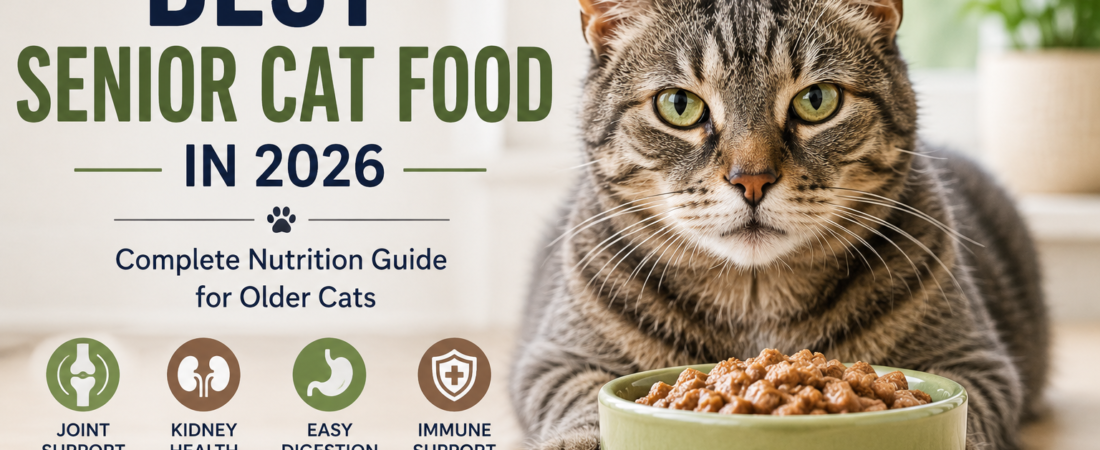
Best Senior Cat Food in 2026: Complete Nutrition Guide for Older Cats
As cats grow older, their nutritional needs begin to change. Choosing the best senior cat food can help support healthy aging, maintain muscle mass, improve digestion, and keep your cat active for years to come.
If you’re unsure how to evaluate different types of cat food, start with our Best Cat Food Guide to understand what makes a high-quality diet for cats at every life stage.
This guide explains what senior cats need, how to choose the right food, and common mistakes to avoid.
When Is a Cat Considered a Senior?
Most cats are considered senior at around 7–10 years of age, although this can vary depending on breed and overall health.
Common signs of aging include:
- Lower activity levels
- Weight changes
- Dental problems
- Stiff joints
- Reduced appetite
- Digestive sensitivity
Why Senior Cats Need Special Food
Senior cats require different nutrition than kittens or healthy adults.
A quality senior diet helps support:
- Healthy weight
- Muscle maintenance
- Joint mobility
- Kidney health
- Digestive function
- Immune system support
What to Look for in the Best Senior Cat Food
High-Quality Animal Protein
Older cats still require plenty of protein to maintain lean muscle mass.
Look for foods with real meat such as:
- Chicken
- Turkey
- Salmon
- Whitefish
Moderate Calories
Senior cats often become less active.
Choosing food with appropriate calorie levels helps prevent obesity while maintaining healthy body condition.
Omega-3 Fatty Acids
Omega-3 fatty acids may help support:
- Joint health
- Brain function
- Healthy skin
- A shiny coat
Digestible Ingredients
Older cats sometimes develop sensitive stomachs.
Choose foods made with highly digestible ingredients and natural fiber to support digestive health.
Taurine and Essential Vitamins
Senior cat food should provide adequate amounts of:
- Taurine
- Vitamin A
- Vitamin E
- Vitamin B Complex
- Zinc
Wet Food vs Dry Food for Senior Cats
Both wet and dry food can work well depending on your cat’s needs.
Wet Food
Benefits include:
- Higher moisture content
- Easier chewing
- Supports hydration
- Helpful for cats with dental issues
If you’re unsure which type is better, read our Wet vs Dry Cat Food guide for a detailed comparison.
Dry Food
Advantages include:
- Convenient storage
- Lower cost
- Easy portion control
Many veterinarians recommend feeding a combination of both.
Foods to Avoid
Avoid foods that contain:
- Excessive fillers
- Artificial colors
- High sugar content
- Low-quality unnamed meat by-products
Common Feeding Mistakes
Overfeeding
Older cats burn fewer calories than younger cats.
Measure meals carefully instead of free-feeding.
Ignoring Weight Changes
Regularly monitor your cat’s body weight.
Sudden weight loss or gain should be discussed with your veterinarian.
Too Many Treats
Healthy treats should make up less than 10% of your cat’s daily calories.
For better snack ideas, check out our Top 7 Healthy Cat Treats That Cats Love in 2026.
Frequently Asked Questions
Should senior cats eat kitten food?
No. Kitten food contains more calories and nutrients designed for growth, which are generally not suitable for healthy senior cats.
Is grain-free food better for senior cats?
Not always. Some senior cats benefit from grain-free diets, while others do well with foods containing wholesome grains. Learn more in our Grain-Free Cat Food Guide.
How many times should a senior cat eat each day?
Most senior cats do well with two or three smaller meals per day, depending on their health and your veterinarian’s recommendations.
Final Thoughts
Choosing the best senior cat food is one of the simplest ways to help your cat stay healthy and comfortable as they age. Focus on high-quality protein, balanced nutrition, and easily digestible ingredients that match your cat’s individual needs.
Combined with regular veterinary checkups and a healthy lifestyle, the right diet can help your senior cat enjoy many happy and active years.