Cat Litter Box Size Guide: How to Choose the Right Size for Your Cat (2026)
Many cat owners spend hours choosing the perfect litter but overlook one equally important factor—the size of the litter box. A litter box that is too small can make your cat uncomfortable, increase litter tracking, and even lead to litter box avoidance.
In this guide, you’ll learn how to choose the right litter box size for kittens, adult cats, and large breeds, along with practical tips to create a comfortable bathroom space for your feline friend.
Why Litter Box Size Matters
Cats need enough space to:
- Turn around comfortably
- Dig and bury waste
- Move without touching the sides
- Feel secure while using the box
A cramped litter box may cause stress and discourage regular use.
If your cat has already started avoiding the litter box, read Cat Avoiding Litter Box? Causes, Solutions & Prevention (2026 Guide).
General Litter Box Size Rule
A simple guideline recommended by many veterinarians is:
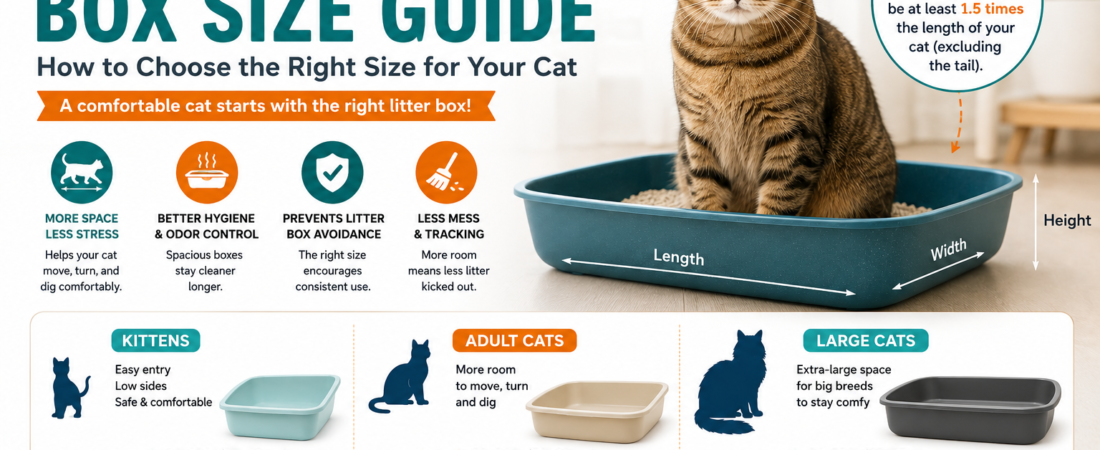
The litter box should be at least 1.5 times the length of your cat (excluding the tail).
This gives your cat enough room to move naturally.
Best Litter Box Size for Kittens
Young kittens need:
- Low entry height
- Easy access
- Enough room to turn around
- Safe, non-slip surfaces
Avoid oversized boxes with very high sides that are difficult for kittens to enter.
Pair the box with Best Cat Litter for Kittens in 2026: Safe & Healthy Choices for the best results.
Best Size for Adult Cats
Most average-sized adult cats are comfortable with litter boxes measuring approximately:
- Length: 20–24 inches (50–60 cm)
- Width: 15–18 inches (38–45 cm)
Larger is almost always better.
Best Size for Large Cats
Breeds like:
- Maine Coon
- Norwegian Forest Cat
- Ragdoll
often require extra-large litter boxes.
Look for boxes measuring:
- 24–30 inches long
- Extra-wide design
- High sides to reduce litter scatter
Covered vs Open Litter Boxes
Open Litter Boxes
Pros
- Better airflow
- Easy to clean
- Preferred by many cats
Cons
- More litter tracking
- Less odor containment
Covered Litter Boxes
Pros
- More privacy
- Better odor control
- Less litter scatter
Cons
- Can feel cramped
- Some cats dislike enclosed spaces
How Much Litter Should You Add?
Most cats prefer:
2–3 inches (5–7 cm) of litter.
Too much litter makes digging difficult, while too little reduces odor control.
For help choosing litter, read Different Types of Cat Litter.
Common Mistakes
Avoid these common mistakes:
- Buying the smallest box available
- Using high sides for tiny kittens
- Placing the box in a noisy location
- Not cleaning the box regularly
A clean, spacious litter box encourages healthy bathroom habits.
For cleaning tips, see How to Clean a Cat Litter Box Properly (2026 Guide).
Frequently Asked Questions
Can a litter box be too big?
No. Most cats prefer larger litter boxes because they offer more space to move comfortably.
Should I buy a covered litter box?
It depends on your cat’s preference. Some cats enjoy the privacy, while others prefer open boxes with better ventilation.
How many litter boxes do I need?
A good rule is:
One litter box per cat, plus one extra.
For households with several cats, check out Best Cat Litter for Multiple Cats in 2026.
Final Thoughts
Choosing the right litter box size is just as important as selecting the right litter. A spacious, clean litter box helps your cat feel comfortable, reduces stress, and encourages consistent litter box habits.
For the best setup, combine the right litter box with Different Types of Cat Litter, Best Dust-Free Cat Litter in 2026: Complete Buying Guide, and Best Cat Litter for Odor Control in 2026: Keep Your Home Fresh Every Day.