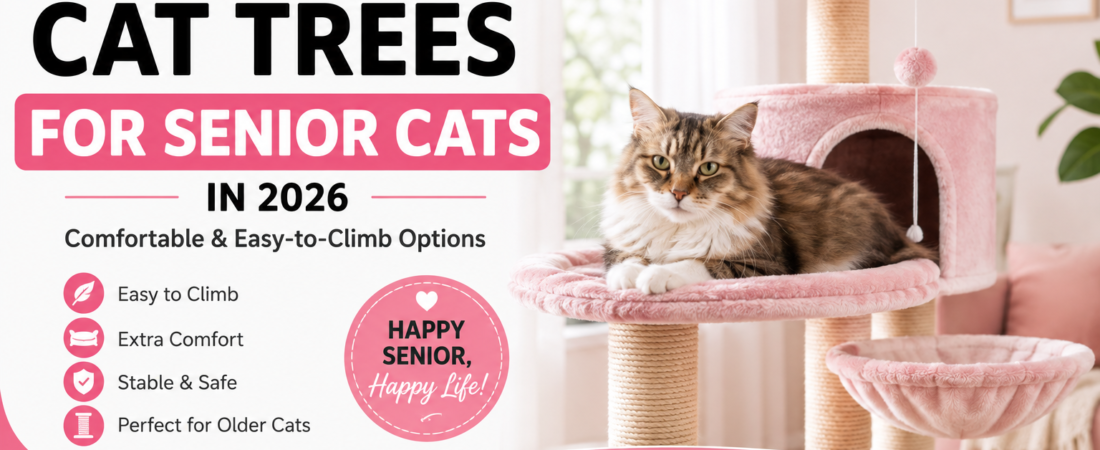
Best Cat Trees for Senior Cats in 2026: Comfortable & Easy-to-Climb Options
As cats get older, their climbing habits often change. Senior cats may still enjoy being up high, scratching, and watching the household, but they may no longer be comfortable jumping between tall platforms or climbing steep structures.
Choosing the best cat trees for senior cats means focusing on accessibility, stability, comfort, and easy movement rather than simply choosing the tallest cat tree available.
In this guide, we’ll explain what to look for in a senior-friendly cat tree and how to create a comfortable climbing and resting space for an older cat.
Do Senior Cats Still Need a Cat Tree?
Yes, many senior cats can still benefit from having a cat tree.
Older cats may become less active, but they still have natural needs for scratching, stretching, resting, and observing their surroundings.
A suitable cat tree can provide:
- A comfortable elevated resting area
- A dedicated scratching surface
- Gentle opportunities for movement
- A quiet place to relax
- A familiar area where your cat feels secure
If you’re wondering about the overall benefits of cat trees, see our guide Do Indoor Cats Really Need a Cat Tree?
The key difference is that senior cats generally need a design that is easier to access.
What Makes a Cat Tree Senior-Friendly?
The best cat tree for an older cat should reduce unnecessary jumping and climbing.
Look for these features:
1. Easy-to-Reach Platforms
Senior cats may have difficulty making large jumps.
Choose a cat tree with platforms positioned relatively close together. A design that allows your cat to gradually move from one level to another can be much easier to use.
You can also compare different height considerations in How Tall Should a Cat Tree Be?
2. Wide Platforms
Wide platforms give older cats more room to turn around, stretch, and lie down comfortably.
Avoid narrow perches that require your cat to maintain balance while resting.
A larger platform can also be especially useful for heavier cats.
3. A Stable Base
Stability becomes even more important when choosing furniture for a senior cat.
A wobbly cat tree may discourage an older cat from using it and can create an unnecessary fall risk.
When comparing different models, review the stability factors discussed in How to Choose the Right Cat Tree.
4. Soft Resting Areas
Senior cats often appreciate comfortable sleeping surfaces.
Look for:
- Cushioned platforms
- Soft beds
- Padded perches
- Enclosed sleeping areas
- Removable and washable covers
A cat tree can serve as both an activity center and a dedicated resting space.
What Height Is Best for Senior Cats?
There is no universal height that works for every senior cat.
In general, accessibility should be prioritized over maximum height.
A shorter or medium-height cat tree may be a better choice if your cat has difficulty jumping.
However, some older cats remain excellent climbers and may still enjoy tall structures.
Observe your cat’s current mobility and choose accordingly.
If you’re deciding how many structures your home needs, read How Many Cat Trees Do You Need?
Best Platform Layout for Older Cats
Platform arrangement is one of the most important design factors.
Ideally, your senior cat should be able to move between levels without making large jumps.
A good layout may include:
- A low starting platform
- A scratching post
- A medium-height resting platform
- A wide upper perch
- A comfortable sleeping area
Avoid designs where the only way to reach the top is through a large vertical jump.
Should You Choose a Cat Tree With Ramps?
Ramps can be particularly useful for senior cats.
A ramp gives an older cat another way to move between levels without relying entirely on jumping.
If your cat has become less confident with climbing, a ramp or staircase-style design may be worth considering.
You can also combine a cat tree with other low-access furniture to create a more comfortable climbing route.
Best Materials for Senior Cat Trees
Material affects both comfort and maintenance.
Carpet
Carpeted surfaces can provide traction and warmth.
They may also make platforms more comfortable for sleeping.
Sisal
Sisal is useful for scratching and stretching.
A senior cat may still benefit from having a sturdy scratching post that allows them to stretch their body.
Wood
Wooden structures can provide excellent structural support.
However, very smooth surfaces may provide less traction, so look for designs with suitable coverings or textured areas.
For a more detailed comparison, see Wooden vs Carpeted Cat Trees.
Where Should You Put a Cat Tree for a Senior Cat?
Location can make a major difference.
An older cat may prefer a quiet location where they can observe the household without being disturbed.
Good locations include:
- Near a window
- In a quiet living room corner
- Near a favorite sleeping area
- Away from heavy foot traffic
- In a room your cat already enjoys
Avoid placing the cat tree somewhere that requires your cat to make a difficult jump to reach it.
For more placement ideas, read Where to Put a Cat Tree?
Cat Trees for Senior Cats in Small Apartments
A senior cat doesn’t necessarily need a huge cat tree.
In a smaller home, consider a compact design with:
- A wide base
- Low platforms
- A comfortable bed
- A scratching post
- Minimal but useful vertical space
The goal is to maximize comfort without taking up unnecessary floor space.
For more ideas, see Modern Cat Trees for Small Apartments.
How to Make an Existing Cat Tree Easier for a Senior Cat
You don’t always need to buy a completely new cat tree.
You can make an existing structure more accessible by adding:
- A small pet step
- A ramp
- A lower resting platform
- Additional padding
- Non-slip surfaces
- A nearby scratching post
You can also remove unnecessary toys or unstable accessories if they make the structure harder to navigate.
Regular inspection and maintenance are important. See How to Clean and Maintain a Cat Tree for practical maintenance tips.
Should Senior Cats Use Tall Cat Trees?
Some senior cats can safely use tall cat trees, while others may prefer lower structures.
Consider your cat’s:
- Mobility
- Confidence
- Jumping ability
- Size
- Activity level
- Preferred sleeping location
If your cat still climbs confidently, there is no automatic reason to remove all vertical space.
Instead, make sure the cat tree provides safe and accessible routes between levels.
What About Large Senior Cats?
Large senior cats require additional attention to stability and platform size.
A cat tree designed for a smaller cat may not provide enough room for a large older cat to rest comfortably.
Look for:
- Reinforced bases
- Wide platforms
- Strong scratching posts
- Large sleeping areas
- Durable materials
If your cat is a large breed, our guide Best Cat Trees for Large Cats can help you understand which features are most important.
Can Senior Cats Use Cat Trees With Other Cats?
Yes, but the setup should allow each cat to have its own space.
In a multi-cat home, older cats may prefer quieter areas away from energetic younger cats.
Providing multiple resting and climbing areas can help reduce competition.
Our guide Best Cat Trees for Multiple Cats covers important considerations for homes with more than one cat.
How to Encourage a Senior Cat to Use a Cat Tree
Some older cats may ignore a new cat tree at first.
Try placing it near a location your cat already likes.
You can also:
- Put a familiar blanket on the platform
- Place favorite toys nearby
- Use treats to encourage exploration
- Spend time playing around the cat tree
- Let your cat explore at its own pace
Don’t force your cat onto the structure.
The goal is to make the cat tree feel familiar and comfortable.
How Often Should You Check a Senior Cat’s Cat Tree?
Inspect the cat tree regularly for signs of wear.
Pay particular attention to:
- Loose screws
- Wobbly platforms
- Torn fabric
- Damaged scratching posts
- Broken toys
- Loose ropes
- Unstable connections
A cat tree that was stable when new may become less secure after months or years of use.
Regular maintenance can help extend its useful life.
Senior Cat Tree vs Standard Cat Tree
The main difference is accessibility.
A standard cat tree may prioritize height, multiple levels, and active play.
A senior-friendly cat tree should prioritize:
| Feature | Senior-Friendly Choice |
|---|---|
| Height | Low to medium or easily accessible |
| Platforms | Wide and stable |
| Steps | Close together |
| Ramps | Helpful |
| Base | Heavy and sturdy |
| Sleeping areas | Soft and spacious |
| Scratching | Easy to reach |
| Materials | Comfortable and durable |
The ideal choice ultimately depends on your individual cat.
Final Thoughts
The best cat trees for senior cats are not necessarily the biggest or tallest models.
For older cats, comfort and accessibility should come first.
Look for a stable base, wide platforms, easy-to-reach levels, comfortable resting areas, and suitable scratching surfaces.
A well-designed cat tree can give a senior cat a safe place to relax while still encouraging gentle movement and natural behaviors.
Before buying, consider your cat’s current mobility, preferred resting locations, size, and activity level. Choosing a cat tree around these needs can make it much more likely that your older cat will actually use and enjoy it.