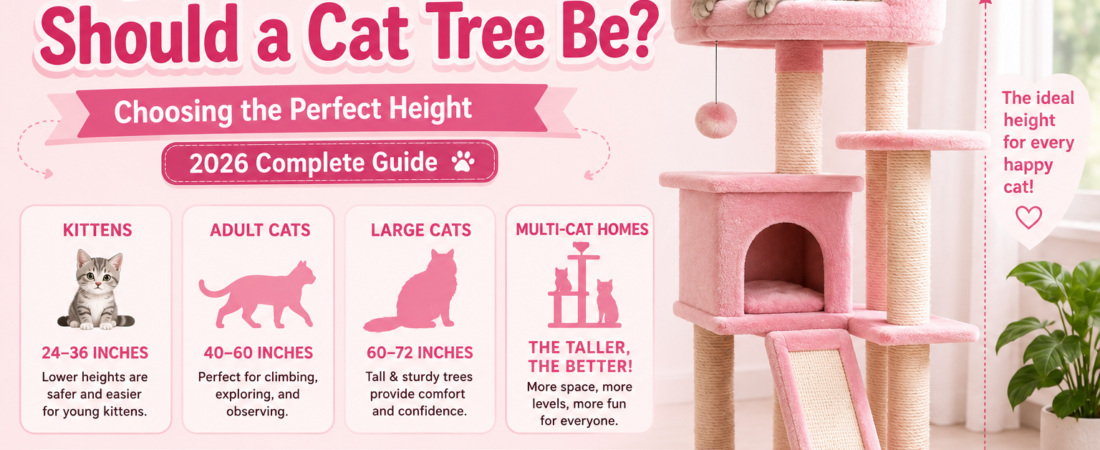
How Tall Should a Cat Tree Be? Choosing the Perfect Height (2026 Guide)
When shopping for a cat tree, many owners focus on the design, material, or number of platforms. However, one of the most important factors is height. A cat tree that’s too short may not satisfy your cat’s climbing instincts, while one that’s too tall may not fit your space or suit every cat.
In this guide, you’ll learn how to choose the ideal cat tree height based on your cat’s age, size, activity level, and home.
Why Cats Love High Places
Cats naturally seek elevated spaces because they provide:
- A better view of their surroundings
- A sense of security
- A quiet place to rest
- Opportunities for climbing and exercise
High perches allow cats to observe their environment while feeling protected from potential threats.
If you’re wondering why climbing is so important, read Do Indoor Cats Really Need a Cat Tree? (2026 Complete Guide).
What Is the Ideal Cat Tree Height?
There isn’t a single perfect height for every cat, but these general guidelines work well.
Small Cats & Kittens
Recommended height:
- 24–36 inches (60–90 cm)
Lower platforms are easier for young kittens to climb safely.
For more kitten-friendly advice, see How to Choose the Right Cat Tree (2026 Guide).
Average Adult Cats
Recommended height:
- 40–60 inches (100–150 cm)
This size provides enough climbing opportunities without taking up excessive space.
Large Cat Breeds
Maine Coons, Ragdolls, and Norwegian Forest Cats need extra-tall, heavy-duty cat trees.
Recommended height:
- 60–72 inches (150–180 cm)
Stability is even more important than height.
Learn more in Best Cat Trees for Large Cats in 2026: Top 8 Sturdy & Stable Picks.
Ceiling-Height Cat Trees
Floor-to-ceiling cat trees are ideal for:
- Active cats
- Multi-cat homes
- Small apartments needing vertical space
These designs maximize climbing opportunities while using very little floor space.
If you’re short on floor space, check out Modern Cat Trees for Small Apartments: Space-Saving Ideas (2026).
Is Taller Always Better?
Not necessarily.
An extremely tall cat tree may not suit:
- Senior cats
- Cats with arthritis
- Nervous kittens
- Less active cats
The best cat tree balances height, stability, and accessibility.
Safety Tips
When choosing a tall cat tree:
- Select a sturdy, wide base.
- Tighten all screws regularly.
- Place it on a flat surface.
- Avoid wobbly designs.
- Position it near a wall for additional stability if needed.
A stable cat tree gives your cat confidence while climbing.
Choosing the Right Height for Your Home
Consider:
Ceiling Height
Measure your room before buying.
Available Floor Space
Leave enough room around the tree for your cat to jump comfortably.
Window Placement
Cats enjoy watching birds and outdoor activity.
For the best placement ideas, read Where to Put a Cat Tree? Best Locations for Happy Indoor Cats (2026).
Frequently Asked Questions
Is a 6-foot cat tree too tall?
No.
Many healthy adult cats love cat trees around 6 feet (180 cm), provided they are stable.
Do older cats need shorter cat trees?
Usually yes.
Senior cats benefit from lower platforms and easier access between levels.
Can kittens use tall cat trees?
Yes, but choose models with closely spaced platforms that make climbing safer.
Final Thoughts
The ideal cat tree height depends on your cat’s age, size, confidence, and activity level. A well-designed tree gives your cat plenty of opportunities to climb, scratch, play, and relax while fitting comfortably into your home.
For more buying advice, explore How to Choose the Right Cat Tree (2026 Guide), Wooden vs Carpeted Cat Trees: Which Is Better? (2026 Guide), and How to Clean and Maintain a Cat Tree (2026 Complete Guide).