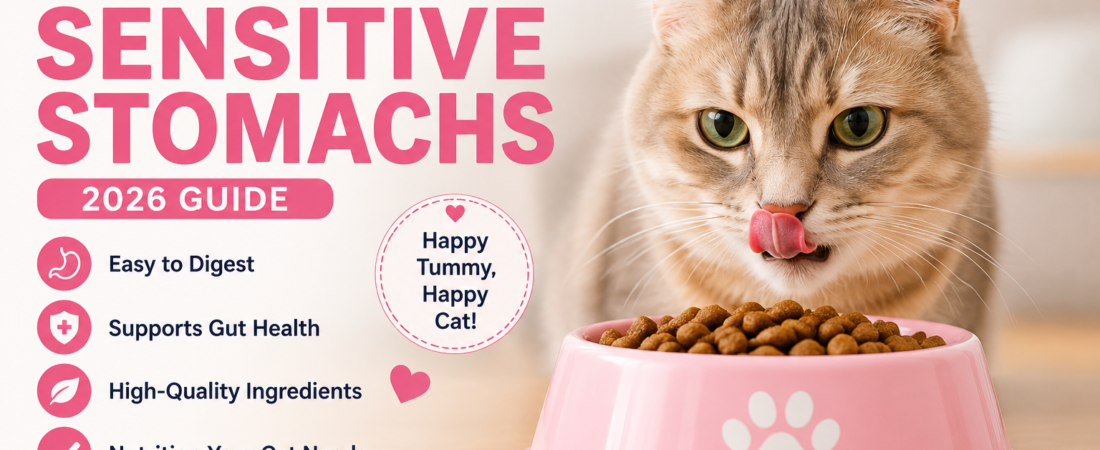
Best Cat Food for Sensitive Stomachs (2026 Guide)
Digestive problems are one of the most common health concerns among cats. If your cat frequently experiences vomiting, diarrhea, excessive gas, or loose stools, it may be time to switch to the best cat food for sensitive stomachs.
Cats with digestive sensitivities need highly digestible ingredients that are gentle on the stomach while still providing complete and balanced nutrition. Fortunately, many high-quality cat foods are specifically formulated to support healthy digestion.
In this guide, you’ll learn what causes sensitive stomachs, which ingredients to choose, what to avoid, and how to help your cat enjoy better digestive health.
What Is a Sensitive Stomach in Cats?
A sensitive stomach isn’t considered a disease. Instead, it refers to digestive discomfort caused by certain foods, ingredients, or underlying health conditions.
Common signs include:
- Frequent vomiting
- Soft stools or diarrhea
- Constipation
- Excessive gas
- Poor appetite
- Weight loss
- Hairballs more often than normal
Occasional digestive upset is usually not serious. However, if symptoms continue for several days or become severe, your cat should be examined by a veterinarian.
Common Causes of Digestive Problems
Understanding the cause is the first step toward choosing the right diet.
Food Intolerance
Some cats struggle to digest specific ingredients without having a true food allergy.
Common triggers include:
- Beef
- Dairy products
- Artificial flavors
- Artificial preservatives
- Low-quality fillers
Switching to foods with simpler ingredient lists often improves digestion.
Best Limited Ingredient Cat Food in 2026: Benefits, Top Picks & Buying Guide
Sudden Diet Changes
Changing your cat’s food too quickly is one of the most common reasons for stomach upset.
A gradual transition allows your cat’s digestive system to adjust naturally.
Food Allergies
Food allergies are less common than food intolerances but can affect both the digestive system and the skin.
Symptoms may include:
- Vomiting
- Chronic diarrhea
- Itchy skin
- Ear infections
- Excessive scratching
If allergies are suspected, consult your veterinarian before changing your cat’s diet.
Hairballs
Hairballs can irritate the stomach and contribute to occasional vomiting.
Regular brushing, proper hydration, and balanced nutrition help reduce hairball formation.
Ingredients to Look For
Choosing the right ingredients makes a significant difference for cats with sensitive stomachs.
Highly Digestible Animal Protein
Cats are obligate carnivores and require animal-based protein.
Good choices include:
- Chicken
- Turkey
- Salmon
- Rabbit
These proteins are generally easier to digest than lower-quality meat by-products.
Best Cat Food Guide (2026): How to Choose the Right Food for Your Cat
Limited Ingredient Recipes
Limited ingredient diets reduce the number of potential digestive triggers.
They typically contain:
- One primary animal protein
- Fewer carbohydrate sources
- Minimal artificial additives
These formulas are especially helpful for cats with food sensitivities.
Prebiotics and Probiotics
Healthy gut bacteria improve digestion and nutrient absorption.
Look for ingredients such as:
- Chicory root
- Inulin
- Lactobacillus
- Bifidobacterium
Omega-3 Fatty Acids
Omega-3 fatty acids help reduce inflammation while supporting:
- Digestive health
- Skin
- Coat
- Immune system
Fish oil is one of the best natural sources.
Ingredients to Avoid
Cats with digestive sensitivities often benefit from avoiding foods high in:
- Artificial colors
- Artificial preservatives
- Excessive corn
- Soy
- Wheat fillers
- Low-quality meat by-products
Choosing simple, high-quality recipes usually produces better long-term results.
Wet Food vs Dry Food
Both wet and dry cat food can be suitable for sensitive stomachs.
Wet Food
Advantages:
- Higher moisture content
- Easier to digest
- Helps support hydration
Disadvantages:
- More expensive
- Spoils quickly after opening
Dry Food
Advantages:
- Convenient
- Affordable
- Longer shelf life
Disadvantages:
- Lower moisture content
Wet Food vs Dry Food for Cats: Which Is Better for Your Cat in 2026?
How to Transition to a New Food
Never switch foods overnight.
Instead, gradually replace the old food over one week.
| Days | Old Food | New Food |
|---|---|---|
| 1–2 | 75% | 25% |
| 3–4 | 50% | 50% |
| 5–6 | 25% | 75% |
| Day 7+ | 0% | 100% |
A slow transition reduces the risk of digestive upset.
Feeding Tips for Cats With Sensitive Stomachs
To keep your cat comfortable:
- Feed smaller meals throughout the day.
- Avoid sudden dietary changes.
- Provide fresh water at all times.
- Limit treats.
- Keep feeding times consistent.
- Monitor your cat’s weight regularly.
Cat Feeding Schedule by Age (2026): Complete Feeding Guide
When Should You See a Veterinarian?
Occasional stomach upset is normal, but seek veterinary care if your cat experiences:
- Persistent vomiting
- Bloody diarrhea
- Weight loss
- Loss of appetite
- Severe lethargy
- Symptoms lasting longer than 48 hours
These signs may indicate a more serious health condition requiring professional treatment.
Frequently Asked Questions
Is grain-free cat food better for sensitive stomachs?
Not necessarily. Grain-free diets only help if grains are the source of your cat’s digestive problems.
Grain-Free Cat Food: Benefits, Risks, and Is It Right for Your Cat? (2026 Guide)
Can kittens have sensitive stomachs?
Yes. Kittens often develop temporary digestive issues while adjusting to new foods.
Best Kitten Food in 2026: Complete Nutrition Guide
Should I give probiotics to my cat?
Many cats benefit from probiotics, but it’s best to consult your veterinarian before adding supplements.
How long does it take for a new food to work?
Most cats show improvement within one to three weeks after switching to an appropriate diet.
Final Thoughts
Finding the best cat food for sensitive stomachs requires patience and careful observation. Focus on highly digestible animal proteins, simple ingredient lists, and gradual food transitions to support healthy digestion.
Every cat is unique, so monitor your cat’s response after changing foods. If digestive problems continue despite dietary improvements, consult your veterinarian to identify any underlying medical conditions.
By choosing a balanced, high-quality diet and maintaining consistent feeding habits, you can help your cat enjoy better digestive health and a happier, more comfortable life.