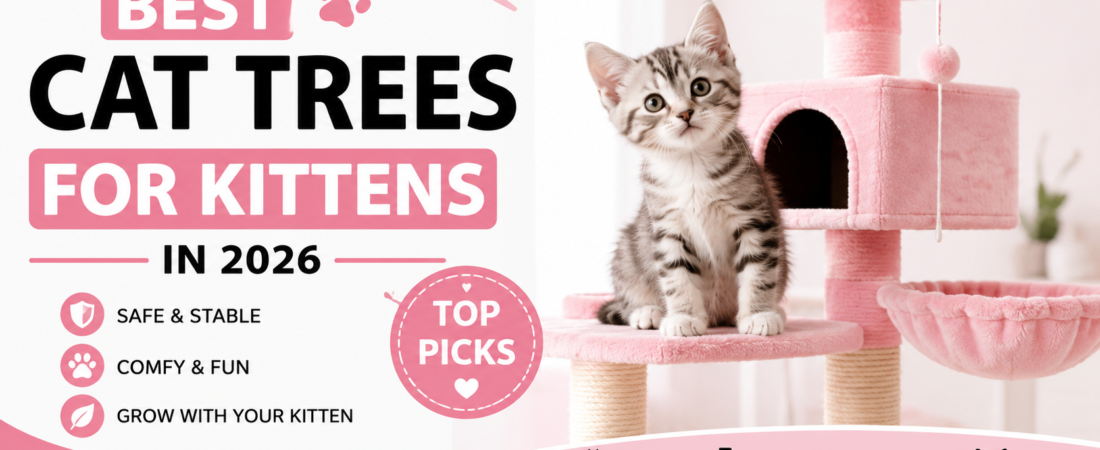
Best Cat Trees for Kittens in 2026: Safe, Stable & Fun Options
Choosing the best cat trees for kittens can make a big difference in how safely and comfortably your kitten explores the home. Kittens naturally love climbing, jumping, scratching, and observing their surroundings from higher positions.
However, not every adult-sized cat tree is ideal for a young kitten. A good kitten cat tree should be stable, appropriately sized, easy to climb, and designed with safety in mind.
In this guide, we’ll explain what to look for when choosing a cat tree for a kitten and the features that matter most in 2026.
Why Do Kittens Need a Cat Tree?
Kittens are naturally curious and active. A cat tree gives them a dedicated place to climb, scratch, play, rest, and observe the room.
A well-designed cat tree can also help keep your kitten entertained and encourage healthy physical activity.
If you’re still wondering whether a cat tree is necessary, our guide Do Indoor Cats Really Need a Cat Tree? explains the benefits in more detail.
For kittens, the biggest advantages include:
- Encouraging climbing and exercise
- Providing a safe place to explore
- Supporting natural scratching behavior
- Creating a comfortable resting area
- Giving kittens a place to observe their surroundings
- Reducing boredom and unwanted climbing on furniture
What Makes a Cat Tree Safe for Kittens?
Safety should be your first priority when choosing a kitten cat tree.
Young kittens are still developing their coordination and balance, so a tall or unstable structure can be difficult for them to navigate.
Look for these features:
1. A Stable Base
The base should be wide and sturdy enough to prevent the cat tree from tipping when your kitten jumps or climbs.
A heavy base is especially important if the structure has multiple levels.
If you’re unsure about stability, our guide How to Choose the Right Cat Tree explains the most important factors to consider before buying.
2. Low-Level Platforms
Kittens don’t necessarily need a very tall cat tree.
A structure with several low platforms allows your kitten to practice climbing without having to make large jumps.
As your kitten becomes more confident, you can introduce taller structures.
For more information about cat tree height, see How Tall Should a Cat Tree Be?
3. Secure Scratching Posts
Scratching is a natural behavior for cats, even at a young age.
Look for scratching posts wrapped in durable sisal or another cat-friendly scratching material.
The scratching post should also be firmly attached to the main structure.
4. Soft and Comfortable Resting Areas
Kittens spend a lot of time sleeping.
A cat tree with a soft bed, platform, or enclosed area can give your kitten a comfortable place to nap.
Choose materials that are easy to clean because kittens can shed fur, track litter, and occasionally have accidents.
For maintenance advice, check out How to Clean and Maintain a Cat Tree.
How Tall Should a Kitten Cat Tree Be?
There isn’t one perfect height for every kitten.
For very young kittens, a shorter cat tree may be safer because it reduces the distance they could fall.
As your kitten grows, you can gradually introduce taller structures.
When choosing the right height, consider:
- Your kitten’s age
- Size and weight
- Climbing ability
- Activity level
- Stability of the cat tree
- Available space in your home
You can also read How Many Cat Trees Do You Need? if you’re deciding whether one structure is enough for your home.
Best Cat Tree Features for Kittens
When shopping for a kitten cat tree, prioritize features that provide both entertainment and safety.
Multiple Levels
Multiple platforms allow kittens to climb and explore at their own pace.
However, platforms should not be positioned so far apart that your kitten struggles to move between them.
Scratching Posts
A scratching post gives your kitten an appropriate place to develop scratching habits.
Cozy Hideaway
A small enclosed area can provide a quiet place for your kitten to sleep or retreat when they feel overwhelmed.
Interactive Toys
Some cat trees include hanging balls or other toys.
These can encourage play, although toys should be securely attached and regularly checked for damage.
Easy-to-Clean Materials
Removable cushions and washable surfaces can make maintenance much easier.
Should You Buy a Small or Large Cat Tree for a Kitten?
This depends on your kitten and your home.
A small cat tree may be easier for a young kitten to use and can be more appropriate for a small apartment.
A larger cat tree can make sense if you want a structure that your kitten can continue using as it grows.
If space is limited, see our guide Modern Cat Trees for Small Apartments for space-saving ideas.
The most important factor is not simply size. Stability and accessibility matter more than height.
Cat Trees for Kittens in Small Homes
If you live in a small apartment, you don’t necessarily need a large floor-standing cat tree.
Consider:
- Compact cat trees
- Narrow vertical designs
- Corner cat trees
- Wall-mounted systems
- Multi-purpose furniture
Wall-mounted options can save valuable floor space, but they must be installed correctly.
Our guide Wall-Mounted Cat Trees: Are They Worth It? covers the advantages, disadvantages, and installation considerations.
How to Introduce a Kitten to a Cat Tree
Some kittens immediately explore a new cat tree, while others may ignore it at first.
You can make the structure more attractive by:
- Placing it in an area where your kitten already spends time.
- Adding a favorite toy nearby.
- Using treats to encourage exploration.
- Playing with your kitten around the structure.
- Allowing your kitten to investigate it without forcing them.
Location can make a major difference. For more tips, read Where to Put a Cat Tree?
Should Kittens Use Tall Cat Trees?
Very young kittens should be supervised when using tall structures.
A kitten may be enthusiastic about climbing but may not yet have the coordination needed for difficult jumps.
If you choose a tall cat tree, make sure:
- The base is very stable.
- Platforms are easy to reach.
- There are no dangerous gaps.
- The structure cannot easily tip over.
- Your kitten can climb down safely.
As your kitten grows, you can reassess whether the existing cat tree still provides enough climbing space.
What Materials Are Best for Kitten Cat Trees?
Common materials include wood, carpet, fabric, and sisal.
Each has advantages.
Sisal: Excellent for scratching and generally durable.
Carpet: Provides a soft surface and can be comfortable for resting.
Wood: Often provides a sturdy structural foundation and can be easier to clean depending on the finish.
The best choice depends on your kitten’s habits and your cleaning preferences.
For a detailed comparison, see Wooden vs Carpeted Cat Trees.
How to Keep a Kitten Cat Tree Safe
A cat tree should be inspected regularly.
Check for:
- Loose screws
- Wobbly platforms
- Damaged scratching posts
- Torn fabric
- Broken toys
- Loose ropes
- Unstable connections
Repair or replace damaged components as soon as possible.
Cleaning is also important because cat trees can collect fur, dust, and debris over time.
When Should You Replace a Kitten Cat Tree?
You don’t necessarily need to replace a kitten cat tree simply because your cat grows.
If the structure is strong, stable, and large enough for your adult cat, it may continue to be useful.
However, replacement may be appropriate if:
- The structure becomes unstable.
- Platforms are too small.
- Scratching posts are heavily damaged.
- The cat tree no longer supports your cat’s weight.
- Your cat has outgrown the sleeping areas.
If you have a large breed, you may want to plan ahead by considering Best Cat Trees for Large Cats.
Do You Need More Than One Cat Tree?
One cat tree may be enough for a single kitten, especially in a small home.
However, multiple climbing areas can be beneficial in larger homes.
You might eventually have:
- One main cat tree
- A smaller climbing structure
- Wall-mounted shelves
- Scratching posts
- Window perches
The goal is to create multiple opportunities for climbing, scratching, playing, and resting.
For multi-cat households, see Best Cat Trees for Multiple Cats.
Final Thoughts
The best cat trees for kittens should prioritize safety, stability, accessibility, and comfort rather than simply being the tallest or largest option.
A good kitten cat tree should provide opportunities for climbing, scratching, playing, and resting while allowing your kitten to explore safely.
When choosing one, pay particular attention to the base, platform spacing, materials, scratching posts, and overall construction.
As your kitten grows, you can reassess the size and features of the cat tree and upgrade when necessary.
With the right setup, a cat tree can become one of the most useful pieces of enrichment furniture in your home.