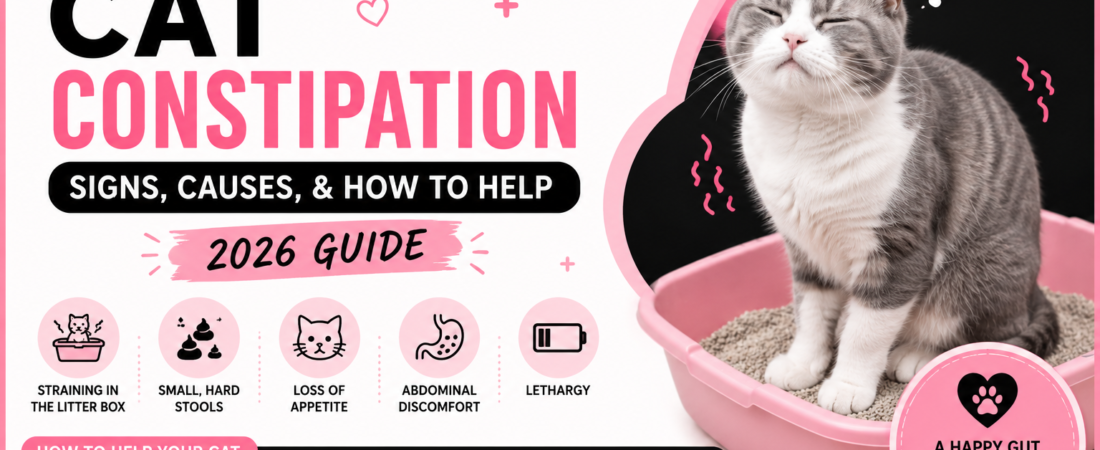
Constipation in Cats: Signs, Causes, and How to Help (2026 Guide)
Cat constipation is a common digestive problem that can affect cats of all ages. While occasional difficulty passing stool may not always be serious, persistent constipation can cause significant discomfort and may indicate an underlying health problem.
If your cat is spending a long time in the litter box, producing small hard stools, or going less frequently than usual, it is important to pay attention.
In this guide, we’ll explain the signs of constipation in cats, common causes, ways to help your cat at home, and when you should contact a veterinarian.
What Is Constipation in Cats?
Constipation occurs when a cat has difficulty passing stool or passes stool less frequently than normal.
Healthy cats generally produce formed stools regularly, although the exact frequency can vary depending on their diet, age, activity level, and individual habits.
Constipated cats may produce stools that are:
- Small
- Hard
- Dry
- Difficult to pass
Some cats may repeatedly enter the litter box without producing much stool.
Signs of Constipation in Cats
Recognizing the early signs can help you address the problem before it becomes more severe.
1. Straining in the Litter Box
One of the most noticeable signs is your cat repeatedly straining while trying to poop.
Your cat may spend more time than usual in the litter box and appear uncomfortable.
2. Small, Hard Stools
Instead of producing a normal bowel movement, a constipated cat may pass only a few small, dry pieces of stool.
Pay attention to changes in the appearance and amount of your cat’s feces.
3. Going to the Litter Box Frequently
A cat with constipation may repeatedly visit the litter box because it feels the urge to defecate but cannot pass stool normally.
However, frequent litter box visits can also occur with urinary problems.
If your cat is repeatedly straining and you are not sure whether it is trying to urinate or defecate, contact a veterinarian promptly.
4. Loss of Appetite
Some cats with significant constipation may eat less than usual.
A sudden change in appetite can have many causes and should not automatically be attributed to constipation.
For more information about recognizing concerning changes in your cat, see How to Tell If Your Cat Is Sick.
5. Vomiting
More severe constipation can sometimes be accompanied by vomiting.
Vomiting combined with repeated straining, severe discomfort, or lack of appetite should be taken seriously.
6. Lethargy
A cat experiencing discomfort may become less active than normal.
If your cat is sleeping much more than usual and also has digestive symptoms, compare the behavior with the warning signs discussed in Why Is My Cat Sleeping So Much?.
7. Abdominal Discomfort
Some cats may become uncomfortable when their abdomen is touched.
They may also hide, become irritable, or avoid normal activities.
Changes in behavior can sometimes be difficult to interpret because cats are very good at hiding discomfort. If you suspect your cat is in pain, read How to Know If Your Cat Is in Pain.
What Causes Constipation in Cats?
There are several possible causes of constipation.
Dehydration
Not drinking enough water can contribute to harder, drier stools.
Cats naturally have a relatively low thirst drive, and some cats do not drink enough water on their own.
Providing fresh water throughout the day is therefore important for digestive health.
For more information, see How Much Water Should a Cat Drink? Signs of Dehydration & Hydration Tips.
Lack of Exercise
Inactive cats may be more prone to digestive problems.
Regular play and movement can support normal activity levels and help keep indoor cats active.
Hairballs
Cats swallow loose hair while grooming themselves.
Most swallowed hair passes through the digestive system, but excessive hair ingestion can sometimes contribute to digestive problems.
Regular grooming can help reduce the amount of loose hair your cat swallows.
Diet
A cat’s diet can influence stool consistency and digestive health.
Sudden changes in food may also cause temporary digestive problems.
When changing your cat’s diet, make the transition gradually unless your veterinarian recommends otherwise.
Obesity
Overweight cats may be less active and can have a higher risk of certain health problems.
Maintaining a healthy body weight is an important part of overall feline health.
If you’re unsure whether your cat is carrying too much weight, see Is My Cat Overweight? Signs, Risks, and How to Help.
Litter Box Problems
Some cats may avoid using a litter box if it is dirty, difficult to access, or located in an uncomfortable area.
Keeping litter boxes clean and providing an environment where your cat feels safe can encourage normal bathroom habits.
Underlying Health Problems
Constipation can sometimes be associated with an underlying medical condition.
Older cats, cats with chronic health problems, and cats with recurring constipation may require a veterinary examination to determine the cause.
How Can You Help a Constipated Cat?
The appropriate treatment depends on the severity and cause of the constipation.
Provide Fresh Water
Make sure your cat has access to clean, fresh water every day.
Some cats prefer running water, while others may drink more when multiple water bowls are available.
Increasing moisture intake can be especially useful for cats that eat primarily dry food.
Encourage Gentle Activity
Interactive play can encourage your cat to move more.
Try short play sessions using safe toys such as feather wands, balls, or other interactive cat toys.
Regular activity can support healthy digestion and overall fitness.
Keep the Litter Box Clean
Scoop the litter box regularly and keep the surrounding area clean.
A clean, quiet, and easily accessible litter box can encourage your cat to use it normally.
Groom Your Cat Regularly
Regular brushing can reduce the amount of loose hair your cat swallows.
This can be particularly helpful for long-haired cats or cats that groom themselves frequently.
Do Not Give Human Laxatives
Never give your cat a human laxative, mineral oil, or another home remedy unless your veterinarian specifically recommends it.
Some products that are safe for humans can be dangerous for cats.
Your veterinarian can recommend an appropriate treatment if medication is necessary.
When Should You Take Your Cat to the Vet?
Mild constipation may sometimes resolve with appropriate care, but persistent or severe symptoms require veterinary attention.
Contact your veterinarian if your cat:
- Has not passed stool normally
- Repeatedly strains in the litter box
- Stops eating
- Vomits
- Becomes very lethargic
- Appears painful
- Has a swollen or uncomfortable abdomen
- Has recurring constipation
If your cat is showing several symptoms at once, don’t wait too long to seek professional advice.
Regular veterinary care is also important for detecting health problems early. See How Often Should You Take Your Cat to the Vet? for more information about routine veterinary visits.
Constipation vs. Urinary Problems
One important point for cat owners is that constipation can sometimes look similar to urinary problems.
A cat may repeatedly enter the litter box, strain, vocalize, or appear uncomfortable.
However, difficulty urinating can be a serious emergency, particularly in male cats.
If your cat is repeatedly straining and you cannot determine whether it is passing urine, contact a veterinarian immediately rather than assuming the problem is constipation.
How to Prevent Constipation in Cats
You may be able to reduce the risk of constipation by supporting your cat’s overall digestive health.
Helpful habits include:
- Providing fresh water every day
- Feeding a balanced diet
- Avoiding sudden food changes
- Encouraging regular exercise
- Maintaining a healthy body weight
- Grooming your cat regularly
- Keeping litter boxes clean
- Monitoring bowel movements
- Scheduling routine veterinary checkups
Hydration is especially important. If your cat does not seem to drink much water, review How Much Water Should a Cat Drink? Signs of Dehydration & Hydration Tips for practical hydration tips.
Final Thoughts
Constipation in cats can range from a mild temporary problem to a sign of a more serious health condition.
Hard stools, repeated straining, frequent litter box visits, reduced appetite, vomiting, and lethargy are important symptoms to monitor.
Providing fresh water, encouraging activity, maintaining a healthy weight, grooming regularly, and keeping the litter box clean can support healthy digestion.
However, persistent constipation or severe symptoms should always be evaluated by a veterinarian.
If your cat is repeatedly straining in the litter box and you are unsure whether it is trying to poop or urinate, seek veterinary advice promptly.
For broader information about feline health and warning signs, visit our Cat Health Guide: Everything Every Cat Owner Should Know.