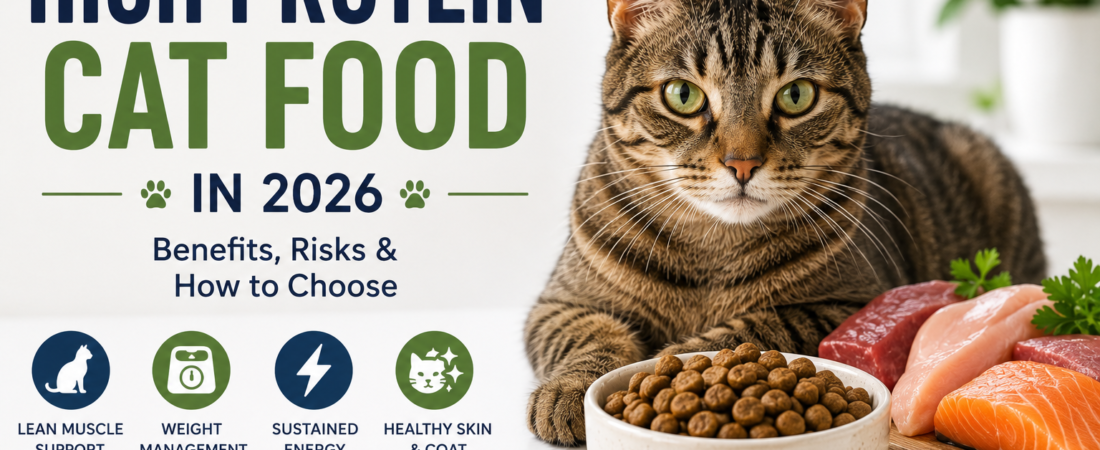
High Protein Cat Food in 2026: Benefits, Risks & How to Choose
Cats are obligate carnivores, meaning they naturally require a diet rich in animal protein. Choosing the right high protein cat food can help support lean muscle, healthy weight, energy levels, and overall well-being.
If you’re new to feline nutrition, start with our Best Cat Food Guide to learn how to identify quality ingredients before choosing a specific formula.
In this guide, you’ll learn the benefits of high-protein diets, which cats need them most, and how to choose the best food for your feline friend.
What Is High Protein Cat Food?
High protein cat food contains a greater percentage of animal-based protein than standard cat food. Quality formulas use ingredients such as:
- Chicken
- Turkey
- Salmon
- Beef
- Duck
Animal protein provides essential amino acids, including taurine, that cats need for healthy body functions.
Benefits of High Protein Cat Food
Supports Lean Muscle
Protein helps build and maintain muscle mass throughout your cat’s life.
This is especially important for:
- Growing kittens
- Active adult cats
- Senior cats experiencing muscle loss
If you’re feeding a kitten, read our Best Kitten Food guide to understand their unique nutritional needs.
Helps Maintain a Healthy Weight
Protein helps cats feel full longer, making portion control easier while supporting healthy body composition.
For less active pets, our Best Indoor Cat Food guide explains how to balance protein with calorie intake.
Provides Natural Energy
Cats rely on protein as a major source of nutrition.
A protein-rich diet supports:
- Daily activity
- Healthy metabolism
- Overall vitality
Supports Healthy Skin and Coat
Animal protein contains amino acids needed for healthy skin and a shiny coat.
Combined with omega-3 and omega-6 fatty acids, protein contributes to better coat quality.
Which Cats Benefit Most?
High-protein diets are often suitable for:
- Kittens
- Active adult cats
- Pregnant or nursing cats
- Many senior cats (depending on health status)
Older cats with kidney disease should only follow a specialized diet recommended by a veterinarian.
Wet vs Dry High Protein Cat Food
Both wet and dry foods can be high in protein.
Wet Food
Benefits include:
- Higher moisture
- Easier chewing
- Excellent for hydration
Read our Wet vs Dry Cat Food guide for a detailed comparison.
Dry Food
Advantages include:
- Convenient storage
- Cost-effective
- Easy portion control
Many owners combine both for variety and balanced feeding.
How to Read the Ingredient List
Look for:
- Real meat as the first ingredient
- Clearly named protein sources
- Complete and balanced nutrition
- AAFCO nutritional adequacy statement (if applicable in your market)
Avoid foods that rely heavily on fillers or unnamed meat by-products.
Common Feeding Mistakes
Choosing Protein Percentage Alone
A higher protein percentage doesn’t always mean better quality.
The protein source matters just as much.
Overfeeding
Even healthy food can lead to weight gain if portions are too large.
Ignoring Treat Calories
Treats should account for less than 10% of daily calorie intake.
For healthier options, see our Top 7 Healthy Cat Treats That Cats Love in 2026.
Frequently Asked Questions
Can all cats eat high protein food?
Most healthy cats thrive on protein-rich diets, but cats with certain medical conditions may require special nutrition recommended by a veterinarian.
Is grain-free the same as high protein?
No. Grain-free and high-protein are different concepts. Learn more in our Grain-Free Cat Food Guide.
Is wet or dry high protein food better?
Both can be excellent choices if they provide complete and balanced nutrition. Your cat’s age, health, and preferences should guide the decision.
Final Thoughts
High protein cat food can provide excellent nutrition when made with quality animal ingredients and fed in appropriate portions. Focus on complete, balanced diets that match your cat’s life stage and health needs rather than choosing products based only on protein percentage.
Combined with regular exercise, fresh water, and routine veterinary care, a high-protein diet can help support a long, healthy, and active life for your cat.