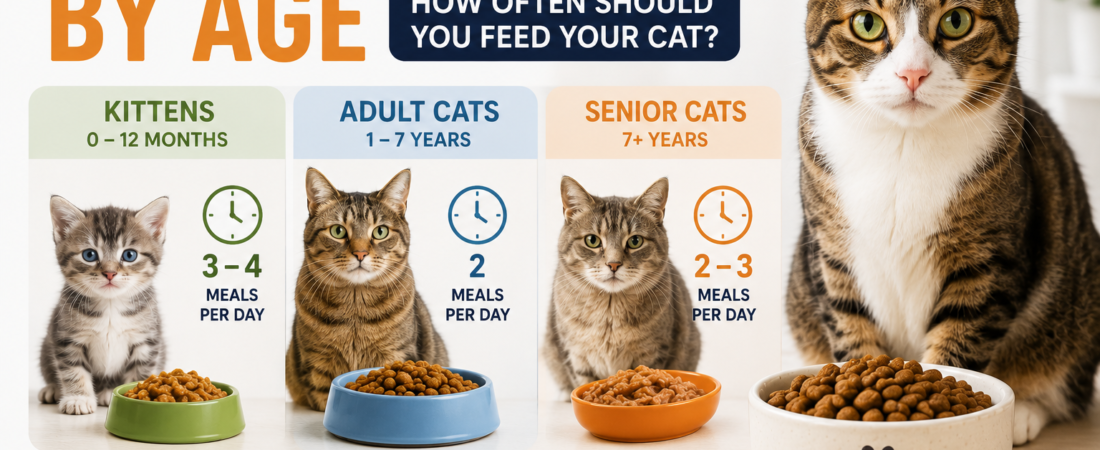
Cat Feeding Schedule by Age (2026): How Often Should You Feed Your Cat?
Feeding your cat at the right times is just as important as choosing high-quality food. A proper cat feeding schedule helps maintain a healthy weight, supports digestion, and provides consistent energy throughout the day.
If you’re still choosing the right diet, start with our Best Cat Food Guide to learn how to select nutritious food for every stage of your cat’s life.
In this guide, you’ll learn how often to feed kittens, adult cats, and senior cats, along with practical tips for building a healthy daily routine.
Why a Feeding Schedule Matters
Cats thrive on routine. Feeding meals at consistent times can help:
- Maintain a healthy weight
- Prevent overeating
- Support digestion
- Reduce food-related stress
- Make it easier to monitor appetite
Feeding Schedule for Kittens (0–12 Months)
Growing kittens require more calories and nutrients than adult cats.
0–3 Months
- 4 small meals per day
- Feed specially formulated kitten food
- Fresh water available at all times
For detailed nutrition advice, read our Best Kitten Food guide.
3–6 Months
- 3 meals per day
- Gradually increase portion sizes
- Monitor healthy weight gain
6–12 Months
- 2–3 meals per day
- Continue feeding kitten food until around 12 months unless advised otherwise by your veterinarian.
Feeding Schedule for Adult Cats (1–7 Years)
Most healthy adult cats do well with:
- 2 meals per day
- Measured portions
- Fresh water available throughout the day
Indoor cats may benefit from calorie-controlled diets. Learn more in our Best Indoor Cat Food guide.
Feeding Schedule for Senior Cats (7+ Years)
Older cats often prefer:
- 2–3 smaller meals each day
- Easily digestible food
- Regular weight monitoring
Read our Best Senior Cat Food guide to understand the nutritional needs of aging cats.
Wet Food vs Dry Food Feeding Schedule
Both wet and dry food can fit into a healthy routine.
Wet Food
- Often served once or twice daily
- Supports hydration
- Best served fresh
Dry Food
- Easy to measure
- Convenient for scheduled meals
- Can be combined with wet food
Need help deciding? Read our Wet vs Dry Cat Food guide.
Common Feeding Mistakes
Free Feeding Without Measuring
Leaving food available all day can lead to overeating and obesity.
Giving Too Many Treats
Treats should make up less than 10% of your cat’s daily calories.
For healthier snack ideas, see our Top 7 Healthy Cat Treats That Cats Love in 2026.
Changing Foods Too Quickly
Introduce new food gradually over 7–10 days to reduce digestive upset.
Frequently Asked Questions
Should cats eat at the same time every day?
Yes. A consistent schedule helps support digestion and encourages healthy eating habits.
How many meals should an indoor cat eat?
Most indoor cats do well with two measured meals per day, although individual needs may vary.
Is a grain-free diet necessary?
Not always. Learn more in our Grain-Free Cat Food Guide to determine whether grain-free food is appropriate for your cat.
Final Thoughts
A consistent cat feeding schedule helps support healthy digestion, weight management, and overall well-being. Whether you have a playful kitten, an active adult, or a senior companion, feeding the right amount at regular times can make a significant difference in long-term health.
Pair a balanced feeding routine with high-quality nutrition, fresh water, and regular veterinary care to help your cat thrive throughout every stage of life.