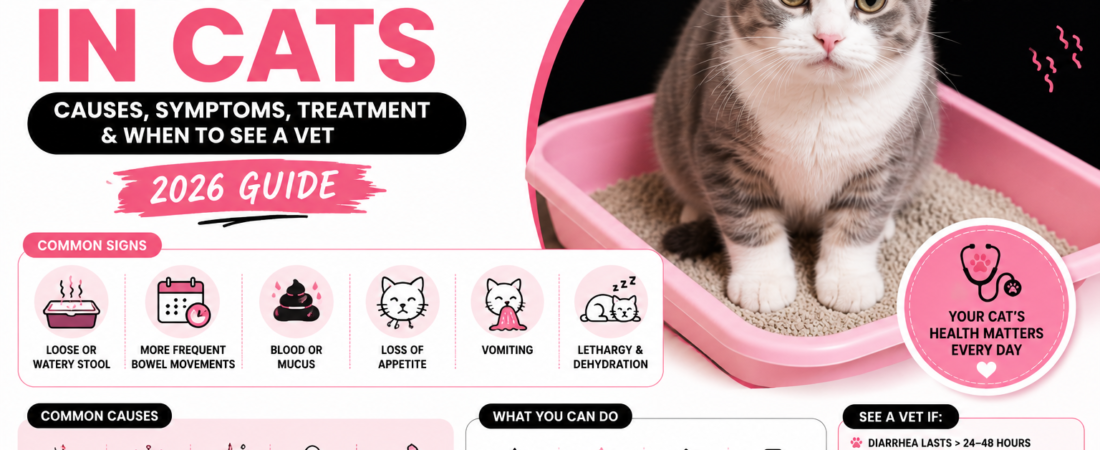
Diarrhea in Cats: Causes, Symptoms, Treatment & When to See a Vet (2026 Guide)
Diarrhea is a common digestive problem in cats. A temporary change in stool may happen after a dietary change or stressful event, but persistent or severe diarrhea can sometimes indicate an underlying health problem.
If your cat suddenly has loose or watery stool, it is important to monitor not only the litter box but also appetite, water intake, energy level, and overall behavior.
In this guide, we’ll explain the causes of diarrhea in cats, warning signs to watch for, what you can do at home, and when your cat needs veterinary care.
What Is Diarrhea in Cats?
Diarrhea occurs when a cat produces unusually loose, soft, or watery stool.
A healthy cat normally produces formed stool that is relatively easy to pass. Changes in stool consistency can happen for many reasons.
Diarrhea may occur once or continue for several days.
The severity can range from mild loose stool to frequent watery bowel movements accompanied by vomiting, dehydration, loss of appetite, or lethargy.
Common Signs of Diarrhea in Cats
The most obvious sign is loose or watery stool, but other symptoms may appear at the same time.
1. Loose or Watery Stool
Your cat may produce stool that is softer than usual or completely watery.
You may notice the difference when cleaning the litter box.
Pay attention to whether the change happens once or continues over multiple bowel movements.
2. More Frequent Bowel Movements
A cat with diarrhea may visit the litter box more frequently than normal.
If your cat’s normal bathroom routine suddenly changes, monitoring the frequency can help you determine whether the problem is improving or getting worse.
For comparison, see How Often Should a Cat Poop? Normal Frequency, Warning Signs & Tips.
3. Blood or Mucus in the Stool
Mucus can sometimes appear with intestinal irritation.
Blood in the stool should be taken seriously, particularly if there is a large amount of blood or your cat also appears sick.
Contact your veterinarian if you notice significant or persistent blood.
4. Loss of Appetite
Some cats with digestive problems may temporarily eat less.
However, cats that stop eating should be monitored carefully.
A significant reduction in food intake combined with diarrhea, vomiting, or weakness warrants veterinary advice.
For a broader overview of concerning symptoms, see How to Tell If Your Cat Is Sick: 12 Warning Signs You Should Never Ignore.
5. Vomiting
Diarrhea and vomiting can occur together.
A single mild episode may not always indicate a serious problem, but repeated vomiting combined with diarrhea can increase the risk of dehydration.
6. Lethargy
Your cat may become less active, hide more often, or sleep more than usual.
If you notice a significant change in sleeping patterns together with digestive symptoms, see Why Is My Cat Sleeping So Much? for additional information.
7. Signs of Dehydration
Diarrhea can cause fluid loss.
Watch for:
- Reduced drinking
- Dry or sticky gums
- Weakness
- Reduced activity
- Sunken-looking eyes
- Significant changes in normal behavior
For more information about hydration, read How Much Water Should a Cat Drink? Signs of Dehydration & Hydration Tips.
What Causes Diarrhea in Cats?
There are many possible causes of diarrhea, ranging from mild dietary problems to more serious medical conditions.
Sudden Food Changes
Changing your cat’s food too quickly can upset the digestive system.
Whenever possible, introduce a new diet gradually.
This gives your cat’s digestive system time to adjust.
Food Intolerance
Some cats may have difficulty tolerating certain ingredients.
If diarrhea repeatedly occurs after eating a particular food, discuss the pattern with your veterinarian.
Food allergies can also cause digestive or skin-related symptoms. If your cat has recurring itching, hair loss, or skin irritation as well, read Can Cats Have Allergies? Signs, Causes, and Treatment Options.
Parasites
Intestinal parasites can cause diarrhea, particularly in kittens and cats with outdoor exposure.
A veterinarian may recommend stool testing if parasites are suspected.
Infections
Certain viral, bacterial, or other infections can cause gastrointestinal symptoms.
The risk can depend on your cat’s age, vaccination status, environment, and exposure to other animals.
Keeping vaccinations up to date is one part of preventive care. See Indoor Cat Vaccination Schedule for more information.
Stress
Stress can affect the digestive system of some cats.
Possible triggers include:
- Moving to a new home
- Introducing another pet
- Changes in household routines
- Loud noises
- Travel
- Changes in the environment
If stress appears to be contributing to your cat’s symptoms, see How to Reduce Stress in Cats.
Medications
Some medications can affect digestion and cause loose stool.
If diarrhea begins after your cat starts a new medication, contact your veterinarian before making any changes to the treatment.
Underlying Health Problems
Persistent diarrhea can sometimes be associated with an underlying health condition.
Cats with recurring digestive problems may require a veterinary examination and diagnostic testing to determine the cause.
What Should You Do If Your Cat Has Diarrhea?
If your cat has a mild episode of diarrhea but is otherwise behaving normally, monitor the situation closely.
Provide Fresh Water
Make sure fresh water is available at all times.
Fluid loss from diarrhea can increase the risk of dehydration.
Encouraging appropriate water intake can help support your cat’s overall health.
Keep Food Consistent
Avoid suddenly introducing new foods, treats, or table scraps while your cat’s digestive system is upset.
If you believe food may be causing the problem, talk to your veterinarian about an appropriate diet.
Keep the Litter Box Clean
A clean litter box makes it easier to monitor your cat’s stool.
Scoop frequently and observe changes in frequency, consistency, and appearance.
Monitor Your Cat’s Behavior
Don’t focus only on the stool.
Also monitor:
- Appetite
- Water intake
- Energy level
- Vomiting
- Weight
- Urination
- Behavior
A cat with diarrhea that remains active and continues eating is generally less concerning than a cat with diarrhea that becomes weak, stops eating, or develops additional symptoms.
Should You Give Your Cat Human Anti-Diarrhea Medicine?
No. Do not give your cat human medication unless a veterinarian specifically tells you to do so.
Some human medications can be unsafe for cats.
The appropriate treatment depends on the cause of the diarrhea, so treating the symptom without identifying the underlying problem can sometimes make the situation worse.
When Should You Take Your Cat to the Vet?
Contact your veterinarian if diarrhea is persistent, severe, or accompanied by other concerning symptoms.
Seek veterinary advice if your cat:
- Has repeated watery diarrhea
- Has blood in the stool
- Vomits repeatedly
- Refuses food
- Becomes unusually weak or lethargic
- Shows signs of dehydration
- Appears to be in pain
- Has significant weight loss
- Is a very young kitten or elderly cat
- Has recurring episodes of diarrhea
If you are unsure whether your cat’s symptoms require professional attention, How Often Should You Take Your Cat to the Vet? provides useful guidance about routine and additional veterinary visits.
Diarrhea in Kittens
Kittens require special attention because they can become dehydrated more quickly than healthy adult cats.
Diarrhea in a kitten should therefore be monitored carefully.
Contact a veterinarian if a kitten has persistent diarrhea, vomiting, poor appetite, weakness, or other concerning symptoms.
Young cats may also be more vulnerable to certain infections and parasites.
How to Help Prevent Diarrhea
You cannot prevent every case of diarrhea, but several habits can support healthy digestion.
Make Food Changes Gradually
Avoid suddenly switching between different foods.
Gradual transitions can make dietary changes easier for your cat’s digestive system.
Provide a Balanced Diet
Feed a complete and balanced diet appropriate for your cat’s life stage.
Avoid excessive treats and sudden changes in food.
Keep Fresh Water Available
Good hydration supports overall health and normal digestive function.
Keep Food and Water Bowls Clean
Wash bowls regularly to help maintain good hygiene.
Reduce Stress
A predictable environment can help sensitive cats feel more comfortable.
Provide safe resting areas and maintain a consistent daily routine.
Keep Up With Preventive Veterinary Care
Regular veterinary checkups can help identify potential health problems early.
Routine care is especially important for kittens, senior cats, and cats with chronic or recurring digestive problems.
Diarrhea vs. Constipation
It may seem strange, but cats can sometimes experience both diarrhea and constipation-related symptoms at different times.
A cat with constipation may strain repeatedly and produce only small amounts of stool.
A cat with diarrhea usually produces loose or watery stool more frequently.
If your cat is straining in the litter box but you cannot determine whether it is trying to poop or urinate, contact a veterinarian.
For more information about hard or difficult-to-pass stool, see Cat Constipation: Signs, Causes, and How to Help.
Final Thoughts
Diarrhea in cats can have many possible causes, including dietary changes, food intolerance, parasites, infections, stress, medications, and underlying health problems.
A single mild episode may resolve, but persistent or severe diarrhea should not be ignored.
Monitor your cat’s stool, appetite, water intake, energy level, and overall behavior.
Fresh water, a consistent diet, good hygiene, stress reduction, and routine veterinary care can all support digestive health.
If diarrhea is accompanied by repeated vomiting, blood, dehydration, severe lethargy, loss of appetite, or obvious pain, contact your veterinarian promptly.
For a broader overview of feline health, visit Cat Health Guide: Everything Every Cat Owner Should Know.