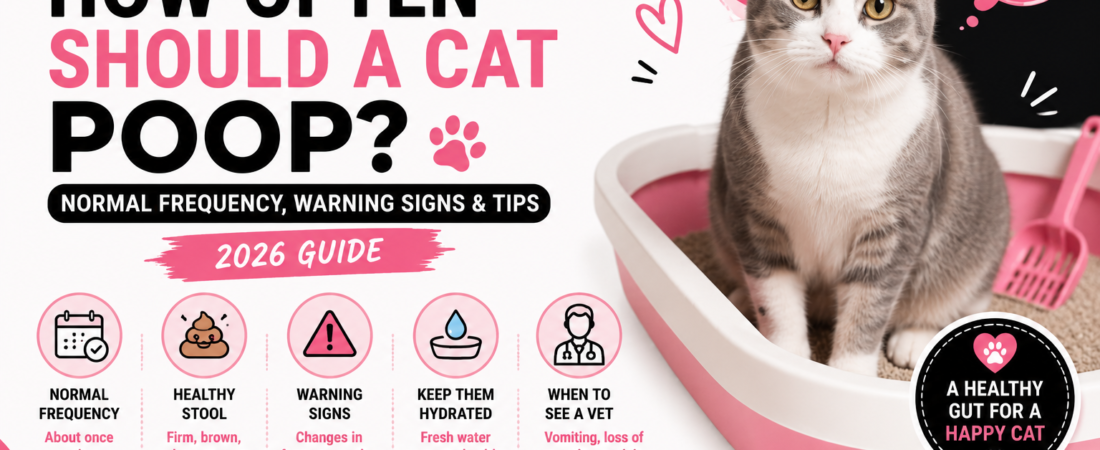
How Often Should a Cat Poop? Normal Frequency, Warning Signs & Tips (2026 Guide)
Wondering how often cats should poop? Your cat’s litter box habits can provide useful clues about its overall health.
Most cats have a fairly predictable bathroom routine, but there is no single number that is considered normal for every cat. Age, diet, hydration, activity level, and individual health can all affect how often a cat poops.
In this guide, we’ll explain what normal cat poop frequency looks like, what changes you should watch for, and when your cat may need veterinary care.
How Often Should a Cat Poop?
Most healthy adult cats poop approximately once a day, although some cats may go more or less frequently.
A cat’s normal bowel movement pattern can depend on:
- Age
- Diet
- Food quality
- Water intake
- Activity level
- Health conditions
- Individual digestive habits
The most important thing is often not the exact number of bowel movements, but whether your cat’s routine has suddenly changed.
For example, if your cat normally poops once every day and suddenly goes several days without producing stool, that change deserves attention.
How Often Do Kittens Poop?
Kittens may have different bathroom habits from adult cats.
Very young kittens can require assistance with elimination during the first weeks of life. Older kittens that are eating solid food generally develop more predictable bowel movements.
Because kittens are small and can become dehydrated more quickly, significant changes in appetite, stool, or behavior should be discussed with a veterinarian.
If your kitten is not eating, drinking, or behaving normally, review How to Tell If Your Cat Is Sick for additional warning signs.
What Does Healthy Cat Poop Look Like?
Normal cat stool is generally:
- Brown to dark brown
- Formed
- Firm but not extremely hard
- Easy to pass
- Consistent in appearance
Small variations can occur depending on your cat’s diet.
You should pay attention to sudden changes in color, consistency, smell, or frequency.
When Is Cat Poop Too Hard?
Hard, dry stool can be a sign that your cat is having difficulty passing bowel movements.
A constipated cat may:
- Strain in the litter box
- Visit the litter box repeatedly
- Produce small pieces of stool
- Have dry or hard feces
- Become less active
- Eat less than usual
If your cat is showing these signs, read our guide on Cat Constipation: Signs, Causes, and How to Help.
When Is Cat Poop Too Soft?
Soft or loose stool can happen occasionally, especially after a dietary change.
However, repeated diarrhea or persistently loose stool can have many possible causes.
Potential causes include:
- Sudden food changes
- Food intolerance
- Parasites
- Infections
- Stress
- Certain medications
- Underlying health problems
If diarrhea continues or is accompanied by vomiting, weakness, dehydration, or loss of appetite, contact your veterinarian.
How Does Diet Affect Cat Poop?
Diet has a major influence on your cat’s digestive system.
A sudden change in food can temporarily alter stool frequency or consistency.
When changing your cat’s food, a gradual transition is generally preferable to an abrupt switch unless your veterinarian tells you otherwise.
Cats also have different nutritional needs depending on their age, lifestyle, and health.
A consistent, nutritionally complete diet can help support healthy digestion.
Does Wet Food Make Cats Poop More?
Wet food contains significantly more moisture than dry food, which can increase overall water intake.
However, it does not necessarily mean that every cat eating wet food will poop more frequently.
The effect can vary depending on the food’s ingredients, calories, fiber content, portion size, and your individual cat.
Hydration is still important for healthy digestion.
For more information about your cat’s water needs, see How Much Water Should a Cat Drink? Signs of Dehydration & Hydration Tips.
Can Dehydration Affect Cat Poop?
Yes. Insufficient fluid intake can contribute to harder and drier stool.
Some cats naturally drink relatively little water, particularly when they receive moisture from their food.
To encourage healthy hydration:
- Provide fresh water every day
- Place water bowls in quiet areas
- Consider multiple water stations
- Keep water bowls clean
- Ask your veterinarian whether wet food may be appropriate
If you notice signs of dehydration, contact your veterinarian for advice.
Can Stress Change a Cat’s Bathroom Habits?
Stress can affect a cat’s eating, activity, grooming, and bathroom habits.
Changes such as moving house, introducing another pet, changing routines, loud noises, or alterations to the environment may cause some cats to become stressed.
Providing a quiet and predictable environment can help.
If your cat has recently experienced an environmental change, see How to Reduce Stress in Cats for practical ways to create a more comfortable home.
How to Monitor Your Cat’s Poop
Monitoring your cat’s litter box habits is a simple way to notice potential health changes.
Pay attention to:
Frequency
Know roughly how often your cat normally poops.
Consistency
Watch for unusually hard, dry, soft, or watery stool.
Color
Sudden changes in stool color can sometimes indicate a health problem.
Blood or Mucus
Blood or significant mucus should not be ignored, especially if it keeps occurring.
Straining
Repeated straining can indicate constipation or another problem.
Behavior
Notice whether your cat is eating, drinking, playing, grooming, and behaving normally.
Changes in several areas at once can be more concerning than an isolated change.
For a broader overview of warning signs, see Cat Health Guide: Everything Every Cat Owner Should Know.
How Long Can a Cat Go Without Pooping?
There is no single number of hours that is safe for every cat.
If your cat has missed a bowel movement but is otherwise acting completely normally, monitoring may be reasonable.
However, if your cat has gone unusually long without pooping or is repeatedly straining, uncomfortable, vomiting, refusing food, or becoming lethargic, contact a veterinarian.
Do not assume that repeated litter box straining is simply constipation.
Cats can also strain because of urinary problems, and difficulty urinating can be an emergency.
When Should You Call the Vet?
Contact your veterinarian if your cat has a persistent or significant change in bowel movements.
You should be especially concerned if your cat:
- Repeatedly strains in the litter box
- Has not pooped for an unusually long period
- Produces very hard or dry stool
- Has persistent diarrhea
- Has blood in the stool
- Vomits repeatedly
- Stops eating
- Becomes unusually weak or lethargic
- Appears to be in pain
- Has a swollen or uncomfortable abdomen
If you’re unsure whether a symptom requires professional attention, How Often Should You Take Your Cat to the Vet? can help you understand the importance of routine and additional veterinary visits.
How to Support Healthy Digestion
You can support your cat’s digestive health with a few simple habits.
Provide Adequate Water
Fresh water should always be available.
Good hydration can help support normal digestion and overall health.
Feed a Consistent Diet
Avoid making sudden changes to your cat’s food.
If a dietary change is necessary, transition gradually when appropriate.
Encourage Daily Activity
Play and movement can help your cat maintain a healthy lifestyle.
Indoor cats may benefit from regular interactive play sessions.
Maintain a Healthy Weight
Being overweight can affect your cat’s mobility and overall health.
If you’re unsure whether your cat is overweight, read Is My Cat Overweight? Signs, Risks, and How to Help.
Keep the Litter Box Clean
Cats can be particular about their litter boxes.
Scoop regularly and provide a clean, quiet, accessible place for your cat to eliminate.
Schedule Regular Veterinary Visits
Routine checkups can help identify health problems before they become more serious.
Regular veterinary care is particularly important for senior cats and cats with recurring digestive problems.
Final Thoughts
So, how often should a cat poop?
For many healthy adult cats, pooping approximately once a day is common, but normal frequency can vary between individual cats.
The most important thing is to understand your cat’s usual routine and watch for meaningful changes.
Hard stool, persistent diarrhea, repeated straining, blood, vomiting, loss of appetite, or unusual lethargy should not be ignored.
By providing adequate hydration, a consistent diet, regular activity, a clean litter box, and appropriate veterinary care, you can help support your cat’s digestive health.
If your cat’s bathroom habits suddenly change, pay attention early. Small changes can sometimes be an important clue that something is wrong.