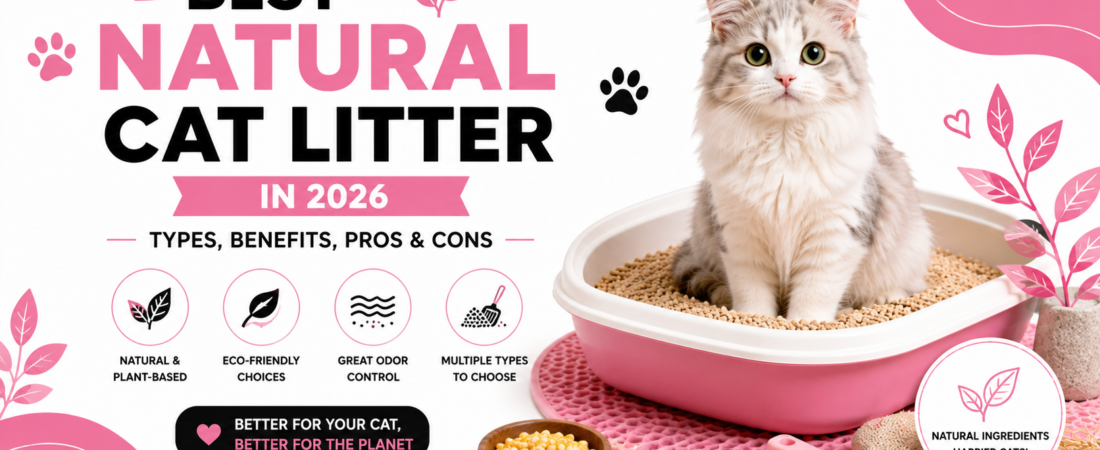
Best Natural Cat Litter in 2026: Types, Benefits, Pros & Cons
Choosing the right cat litter can make a big difference in your cat’s comfort and your home’s cleanliness. While traditional clay litter remains popular, many cat owners are now looking for natural cat litter made from materials such as wood, corn, wheat, paper, and grass.
Natural cat litter can offer several benefits, including lighter weight, different texture options, and plant-based ingredients. However, not every natural litter works equally well for every cat.
In this 2026 guide, we’ll explain the most common types of natural cat litter, their pros and cons, how to choose the right option, and what to consider before switching your cat to a new litter.
What Is Natural Cat Litter?
Natural cat litter is generally made from materials that come from plants, wood, paper, or other naturally derived sources rather than traditional mineral-based clay.
Common materials include:
- Corn
- Wheat
- Pine
- Wood
- Paper
- Grass
- Walnut shells
- Tofu or plant fibers
Some natural litters are clumping, while others are non-clumping.
Because every formula is different, it’s important to check the ingredient list and product instructions rather than assuming that every product labeled “natural” has the same characteristics.
If you’re still deciding between different litter materials, our Different Types of Cat Litter Explained guide can help you compare the major options.
Why Are More Cat Owners Choosing Natural Cat Litter?
Natural cat litter has become increasingly popular because owners want alternatives to conventional litter materials.
There are several reasons you might consider making the switch.
Plant-Based Ingredients
Many natural litters are made primarily from renewable plant materials.
Corn, wheat, grass, wood, and paper are examples of materials used in different litter formulas.
Lightweight Options
Some natural litters weigh considerably less than traditional clay litter.
This can make carrying and pouring the litter easier, particularly if you regularly purchase large bags.
Different Texture Choices
Natural litter comes in many forms.
You can find:
- Fine-grain litter
- Soft granules
- Wood pellets
- Paper pellets
- Larger particles
This variety makes it possible to find a texture that works well for your cat.
Some Options Produce Less Dust
Certain natural litter formulas are designed to produce little dust.
However, natural does not automatically mean dust-free.
If dust is your main concern, compare the specific product rather than relying only on the material.
For more information, read our Best Dust-Free Cat Litter in 2026 guide.
Best Types of Natural Cat Litter
There are several major categories of natural cat litter.
Let’s look at how they compare.
1. Corn Cat Litter
Corn-based litter is one of the most popular plant-based alternatives.
It is often available in clumping formulas and can provide good moisture absorption.
Pros
- Plant-based material
- Lightweight
- Clumping options available
- Often good odor control
- Many cats accept the texture easily
Cons
- Some formulas can track
- Quality varies between brands
- Some cats may dislike the smell or texture
- Can cost more than basic clay litter
Corn litter can be a good starting point for owners who want a natural option without making a dramatic change in texture.
2. Pine and Wood Cat Litter
Wood-based litter is another common natural option.
Pine pellets are especially popular because the larger particles can help reduce tracking compared with some fine-grain litters.
Pros
- Natural wood material
- Often low dust
- Pellet options can reduce tracking
- Lightweight
- Pleasant natural smell for some owners
Cons
- Pellet texture may take time to adjust to
- Some formulas don’t clump
- Odor control varies
- Some cats prefer finer litter
If tracking is your biggest concern, see our Best Cat Litter for Tracking in 2026 guide.
3. Paper Cat Litter
Paper litter is typically made from recycled paper and is commonly sold as pellets.
Its soft and lightweight texture makes it an interesting option for cats that don’t tolerate certain traditional litter types.
Pros
- Very lightweight
- Often low dust
- Soft texture
- Pellet options available
- Can be useful for some sensitive cats
Cons
- Odor control varies
- Usually doesn’t clump like clay
- Wet areas can become difficult to manage
- Some cats dislike pellet textures
Paper litter may be particularly useful when your main priorities are softness and low dust.
4. Wheat Cat Litter
Wheat-based litter uses processed wheat as its primary material.
Many wheat formulas are designed to clump when they come into contact with moisture.
Pros
- Plant-based
- Lightweight
- Clumping options available
- Can provide good odor control
- Natural-looking material
Cons
- Some cats may not like the texture
- Tracking can vary
- Performance differs between products
- May not be suitable for households concerned about specific ingredient sensitivities
Always check the ingredients before choosing a new litter.
5. Grass Cat Litter
Grass-based cat litter is another plant-based option.
It often has a relatively soft texture and can be available in clumping formulas.
Pros
- Plant-based
- Lightweight
- Soft texture
- Clumping options
- Often produces less visible dust than some traditional litters
Cons
- Can be more expensive
- Availability varies
- Tracking depends on particle size
- Not every cat prefers the texture
6. Walnut Shell Cat Litter
Walnut shell litter is made using processed walnut shells.
It can offer good odor control and comes in different particle sizes.
Pros
- Plant-based material
- Good absorption
- Natural alternative to clay
- Available in different textures
Cons
- Some cats may dislike the texture
- Darker particles can make waste harder to see
- Tracking varies
- Not suitable for cats with certain sensitivities
Always review the manufacturer’s ingredient and safety information before making a switch.
Natural vs Clay Cat Litter
One of the biggest questions cat owners have is whether natural litter is better than clay.
The answer depends on your cat and your priorities.
| Feature | Natural Cat Litter | Clay Cat Litter |
|---|---|---|
| Materials | Plant, wood, paper, etc. | Mineral clay |
| Clumping | Depends on formula | Common |
| Weight | Often lighter | Usually heavier |
| Texture | Varies widely | Usually fine granules |
| Dust | Varies | Varies |
| Tracking | Varies | Varies |
| Odor control | Depends on formula | Often strong |
| Availability | Increasing | Very widely available |
There isn’t a universally best option.
Some cats prefer natural litter, while others strongly prefer the texture of clay.
For a detailed comparison, see Crystal vs Clay Cat Litter.
Is Natural Cat Litter Better for Cats?
Natural does not automatically mean better.
The most important consideration is whether your cat comfortably and consistently uses the litter box.
A good litter should provide:
- Comfortable texture
- Acceptable odor
- Easy access
- Good moisture management
- Minimal irritation
- Reliable performance
Your cat’s individual preference matters more than the marketing label on the bag.
If your cat suddenly avoids the litter box, read Cat Avoiding Litter Box? Causes, Solutions & Prevention rather than assuming the litter itself is the only problem.
Is Natural Cat Litter Safe?
Many natural cat litters are designed specifically for cats and can be safe when used according to the manufacturer’s instructions.
However, “natural” is not a guarantee of safety.
Before purchasing, check:
- Ingredients
- Age recommendations
- Dust level
- Fragrance
- Clumping behavior
- Manufacturer instructions
Avoid choosing a product simply because it says “natural” on the front of the package.
If your cat has unusual symptoms after changing litter, stop using the new product and contact your veterinarian for appropriate advice.
Unscented vs Scented Natural Cat Litter
Some natural litters contain added fragrances, while others are completely unscented.
For many cats, unscented litter is a practical choice.
Cats have a much stronger sense of smell than humans, and a strong fragrance may make a litter box less appealing.
If odor is your main concern, remember that fragrance is not the same as odor control.
Regular scooping and proper litter-box maintenance are often more important.
For odor-control strategies, see Best Cat Litter for Odor Control in 2026.
How to Choose the Best Natural Cat Litter
Choosing a natural litter becomes easier when you focus on your cat’s needs.
Consider Your Cat’s Current Litter
If your cat currently uses fine-grain clay, switching immediately to large wood pellets can be a major texture change.
A gradual transition may be easier.
Consider Tracking
If litter is constantly appearing throughout your home, look for larger particles or pellet-style formulas.
You can also use a large litter mat outside the box.
Consider Dust
If dust is a major concern, look for products specifically designed to minimize dust.
Remember that no litter should automatically be considered dust-free simply because it is natural.
Consider Odor Control
Natural litter can provide good odor control, but performance varies significantly.
Look for a formula designed to absorb moisture and control odors rather than relying heavily on fragrance.
Consider Clumping
If you prefer easy daily scooping, choose a natural litter that forms firm clumps.
If clumping isn’t important to you, pellet or paper litter may also be worth considering.
For more information, read Clumping vs Non-Clumping Cat Litter.
How to Switch Your Cat to Natural Litter
Cats can be sensitive to changes in litter texture and smell.
A gradual transition is usually a better approach than completely replacing the old litter overnight.
Days 1–3
Mix a small amount of the new natural litter with your cat’s existing litter.
Days 4–6
Increase the amount of new litter while reducing the old litter.
Days 7–10
Continue increasing the new litter until your cat is using it comfortably.
Some cats may need more time.
If your cat refuses the new litter, slow down the transition instead of forcing the change.
How Much Natural Cat Litter Should You Use?
The ideal depth depends on the litter type and your cat’s preferences.
Too little litter may make digging and burying uncomfortable.
Too much litter can increase tracking and waste.
Start with the manufacturer’s recommended amount and observe your cat’s behavior.
For a detailed explanation of litter depth, read How Deep Should Cat Litter Be?.
How Often Should You Change Natural Cat Litter?
The answer depends on the type of litter, number of cats, litter-box size, and how frequently you scoop.
Clumping litter usually requires regular removal of urine clumps and feces.
Non-clumping litter may require more frequent full replacement.
If you have multiple cats, you may need to clean and replace litter more frequently.
See How Often Should You Change Cat Litter? for a more detailed maintenance schedule.
Pros and Cons of Natural Cat Litter
Pros
- Many plant-based options
- Lightweight formulas available
- Different textures to choose from
- Pellet options can reduce tracking
- Some formulas produce little dust
- Many clumping options available
Cons
- Performance varies considerably
- Some products cost more
- Texture may not appeal to every cat
- Odor control depends on the formula
- Some options can still track
- Switching may require patience
Final Thoughts
The best natural cat litter in 2026 isn’t necessarily the most expensive or the one with the longest list of natural ingredients.
The right choice is the litter that your cat accepts, uses consistently, and that works well for your household.
Corn, wheat, wood, paper, grass, and walnut-based litters all offer different advantages.
Before switching, consider texture, dust, odor control, tracking, clumping, ingredients, and your cat’s individual preferences.
If your cat accepts the new litter and your home stays cleaner and fresher, you’ve likely found a good option.
The goal isn’t simply to choose the most natural product. It’s to create a litter-box environment that is comfortable for your cat and practical for you.
Frequently Asked Questions
What is the best natural cat litter in 2026?
There is no single best natural litter for every cat. Corn, wood, wheat, paper, grass, and walnut-based formulas can all be suitable depending on your cat’s preferences and your cleaning requirements.
Is natural cat litter better than clay?
Not necessarily. Natural litter offers alternative materials and textures, but clay can provide excellent clumping and odor control. The best choice depends on your cat and your household.
What natural cat litter has the least tracking?
Pellet-style wood and paper litters can produce less tracking because their larger particles are less likely to stick to paws. However, tracking varies between products.
Is natural cat litter good for odor control?
Some natural litters provide excellent odor control, while others are less effective. Look for products designed specifically for moisture and odor management.
Should I choose unscented natural cat litter?
Unscented litter is often a good choice because some cats may dislike strong fragrances. If odor is a problem, focus on absorption and regular cleaning rather than fragrance alone.
How do I get my cat to use natural litter?
Introduce the new litter gradually by mixing it with the old litter over several days. Give your cat time to adjust to the new texture and smell.
Related Cat Litter Guides
- The Ultimate Guide to Choosing the Best Cat Litter (2026)
- Different Types of Cat Litter Explained (2026)
- Best Dust-Free Cat Litter in 2026
- Best Cat Litter for Tracking in 2026
- Clumping vs Non-Clumping Cat Litter
- Crystal vs Clay Cat Litter
- Best Cat Litter for Multiple Cats in 2026
- Best Cat Litter for Odor Control in 2026