How to Read Cat Food Labels (2026 Guide)
Walking through the pet food aisle can be overwhelming. Bags and cans are covered with phrases like “natural,” “grain-free,” “high protein,” and “complete and balanced.” But what do these labels actually mean?
Learning how to read cat food labels helps you make informed decisions and choose food that truly supports your cat’s health. Instead of relying on marketing claims, you’ll understand what matters most—ingredients, nutrient levels, and nutritional standards.
In this guide, we’ll explain every part of a cat food label so you can shop with confidence.
Why Reading Cat Food Labels Matters
Not all cat foods are created equal.
Two products may look similar on the shelf but contain very different ingredients and nutritional value.
Understanding food labels helps you:
- Choose higher-quality ingredients.
- Avoid unnecessary fillers.
- Support healthy digestion.
- Maintain a healthy weight.
- Meet your cat’s life-stage needs.
Best Cat Food Guide (2026): How to Choose the Right Food for Your Cat
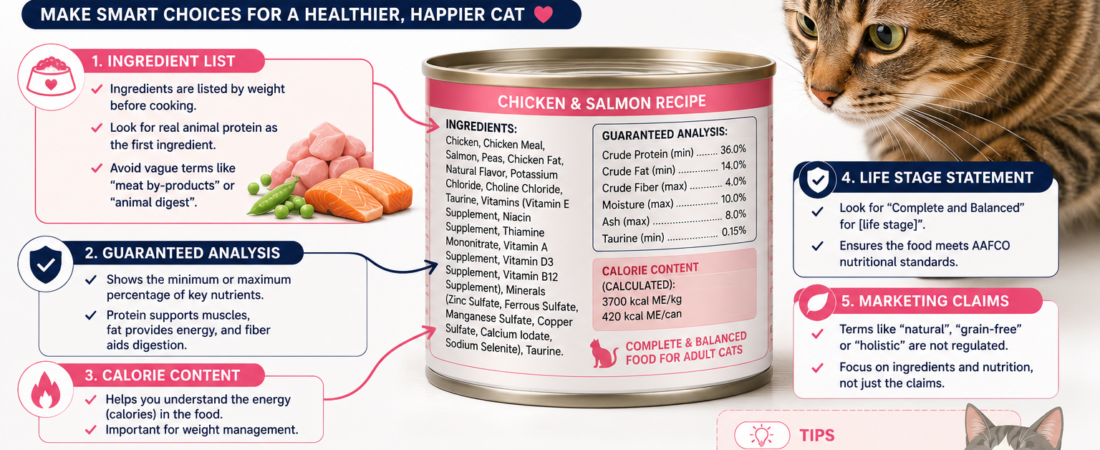
Start With the Ingredient List
Ingredients are listed by weight before cooking.
The first five ingredients usually make up most of the recipe.
Look for named animal proteins such as:
- Chicken
- Turkey
- Salmon
- Duck
- Rabbit
These provide high-quality protein that cats naturally require.
Watch Out for Generic Meat Ingredients
Some lower-quality foods use vague ingredient names like:
- Meat meal
- Animal fat
- Poultry by-products
Named ingredients such as “chicken meal” are generally more transparent than generic descriptions.
Understanding Guaranteed Analysis
Every cat food label includes a Guaranteed Analysis section.
This typically lists:
- Crude Protein
- Crude Fat
- Crude Fiber
- Moisture
Higher protein levels usually support lean muscle, while moderate fat and fiber contribute to overall health.
High Protein Cat Food in 2026: Benefits, Risks & How to Choose
What Does “Complete and Balanced” Mean?
Look for a statement indicating the food is complete and balanced for your cat’s life stage.
This means the food is formulated to provide essential nutrients for:
- Growth
- Maintenance
- Reproduction
A complete diet can be fed as your cat’s primary food without additional supplementation unless advised by your veterinarian.
Life Stage Matters
Cats have different nutritional needs throughout their lives.
Choose food designed for your cat’s age:
- Kitten
- Adult
- Senior
Best Kitten Food in 2026: Complete Nutrition Guide
Best Senior Cat Food in 2026: Complete Nutrition Guide
Understanding Common Marketing Claims
Pet food packaging often includes attractive claims.
Here’s what they generally mean.
Natural
Usually indicates ingredients come from natural sources, although vitamins and minerals may be added.
Grain-Free
Grain-free doesn’t automatically mean healthier.
Some cats benefit, while many digest grains without problems.
Grain-Free Cat Food: Benefits, Risks, and Is It Right for Your Cat? (2026 Guide)
Indoor Formula
These foods are often lower in calories and may include extra fiber to help indoor cats maintain a healthy weight.
Best Indoor Cat Food in 2026: Complete Nutrition Guide
Limited Ingredient
Designed for cats with food sensitivities or allergies.
Best Limited Ingredient Cat Food in 2026: Benefits, Top Picks & Buying Guide
Should You Choose Wet or Dry Food?
Both wet and dry foods can provide complete nutrition when formulated properly.
The best choice depends on your cat’s age, health, hydration needs, and preferences.
Wet Food vs Dry Food for Cats: Which Is Better for Your Cat in 2026?
Common Label Mistakes Cat Owners Make
Avoid these common misconceptions:
- Assuming expensive food is always better.
- Choosing food based only on the front label.
- Ignoring ingredient quality.
- Overlooking calorie content.
- Buying food designed for the wrong life stage.
Always read the full label before making a decision.
Frequently Asked Questions
Is the first ingredient the most important?
Yes. Since ingredients are listed by weight, the first ingredient usually contributes the largest portion before cooking.
Are by-products always bad?
Not necessarily. Some by-products can be nutritious, but clearly identified animal ingredients are generally preferred.
Is grain-free healthier?
Only for cats that benefit from it due to specific dietary needs.
Should indoor cats eat different food?
Many indoor cats benefit from lower-calorie diets formulated for reduced activity levels.
Final Thoughts
Knowing how to read cat food labels gives you the confidence to choose foods based on nutrition rather than marketing. By paying attention to ingredient quality, guaranteed analysis, life-stage suitability, and nutritional claims, you can make better decisions for your cat’s long-term health.
Every cat is unique, so the best food is one that matches your cat’s age, lifestyle, activity level, and individual health needs. Learning to read labels carefully is one of the simplest ways to provide a healthier, happier life for your feline companion.