How to Transition Your Cat to a New Food Safely (2026 Guide)
Changing your cat’s food may seem simple, but switching too quickly can lead to digestive problems such as vomiting, diarrhea, loss of appetite, and stomach discomfort. Whether you’re introducing a healthier diet, changing life stages, or addressing a medical condition, knowing how to transition your cat to a new food is essential for keeping your feline friend healthy and comfortable.
In this guide, you’ll learn why gradual transitions matter, the safest schedule to follow, common mistakes to avoid, and tips to help even picky eaters accept a new diet.
Why You Should Never Change Cat Food Overnight
Cats have sensitive digestive systems. A sudden change in diet can upset the balance of bacteria in the gut, leading to temporary digestive issues.
Common problems caused by switching food too quickly include:
- Vomiting
- Diarrhea
- Soft stools
- Gas
- Reduced appetite
- Food refusal
A slow transition gives your cat’s digestive system time to adjust while minimizing stress.
When Should You Switch Your Cat’s Food?
There are several reasons why your veterinarian or personal preference may lead you to change your cat’s diet.
Your Cat Is Growing
Kittens require different nutrients than adult cats.
Best Kitten Food in 2026: Complete Nutrition Guide
Your Cat Has Become a Senior
Older cats often benefit from diets designed to support joints, kidneys, and healthy aging.
Best Senior Cat Food in 2026: Complete Nutrition Guide
Weight Management
Indoor or overweight cats may need calorie-controlled diets.
Best Indoor Cat Food in 2026: Complete Nutrition Guide
Food Allergies or Sensitive Stomachs
Some cats require specialized diets with limited ingredients or highly digestible proteins.
Best Limited Ingredient Cat Food in 2026: Benefits, Top Picks & Buying Guide
Best Cat Food for Sensitive Stomachs (2026 Guide): How to Choose the Right Diet
The 7-Day Food Transition Schedule
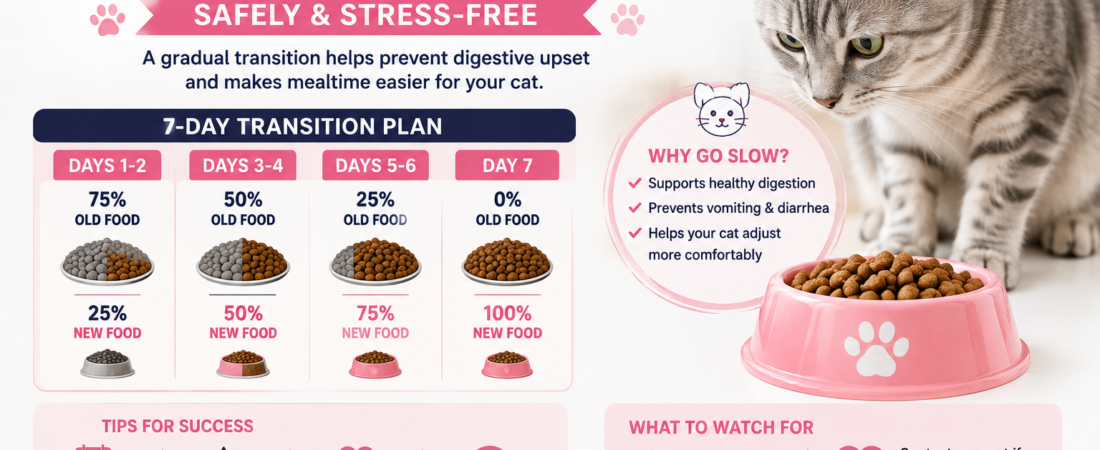
Veterinarians generally recommend introducing new food gradually over one week.
| Day | Old Food | New Food |
|---|---|---|
| 1–2 | 75% | 25% |
| 3–4 | 50% | 50% |
| 5–6 | 25% | 75% |
| 7 | 0% | 100% |
If your cat has a very sensitive stomach, extend the transition to 10–14 days.
Monitor Your Cat During the Transition
Watch for signs that your cat is adjusting well.
Healthy signs include:
- Normal appetite
- Firm stools
- Normal energy levels
- No vomiting
Contact your veterinarian if your cat experiences:
- Repeated vomiting
- Bloody diarrhea
- Complete refusal to eat for more than 24 hours
- Severe lethargy
Tips for Picky Cats
Some cats are reluctant to try unfamiliar foods.
You can encourage them by:
- Mixing a small amount of the new food with the old food.
- Warming wet food slightly to enhance its aroma.
- Feeding meals at consistent times.
- Avoiding frequent treats during the transition.
- Remaining patient and avoiding sudden changes.
Never force your cat to eat unfamiliar food.
Wet Food or Dry Food?
Some cats adapt more easily when switching between foods of the same texture.
If you’re changing from dry food to wet food—or vice versa—you may need a slower transition.
Wet Food vs Dry Food for Cats: Which Is Better for Your Cat in 2026?
How Much Should You Feed During the Transition?
The total amount of food should remain appropriate for your cat’s age, weight, and activity level.
Only the proportion of old and new food changes during the transition.
Cat Feeding Schedule by Age (2026): Complete Feeding Guide
Common Mistakes to Avoid
Avoid these common errors:
- Switching foods overnight.
- Changing multiple foods at the same time.
- Feeding too many treats.
- Ignoring digestive symptoms.
- Giving human food to encourage eating.
Consistency is key to a successful transition.
Frequently Asked Questions
Can I switch cat food immediately?
No. Most cats benefit from a gradual transition over at least seven days.
What if my cat refuses the new food?
Slow down the transition and try mixing a smaller amount of the new food with the old food. If refusal continues, consult your veterinarian.
How long does it take for a cat to adjust to new food?
Most healthy cats adapt within one week. Cats with digestive sensitivities may need up to two weeks.
Can changing food cause diarrhea?
Yes. Sudden dietary changes are one of the most common causes of temporary diarrhea in cats.
Final Thoughts
Learning how to transition your cat to a new food is one of the easiest ways to protect your cat’s digestive health. By introducing new food gradually, monitoring your cat’s response, and choosing a diet that meets their nutritional needs, you can help ensure a smooth and stress-free change.
Whether you’re moving to a diet for kittens, seniors, indoor cats, or cats with sensitive stomachs, patience is the key to long-term success. A careful transition not only reduces digestive upset but also helps your cat enjoy a healthier and happier life.