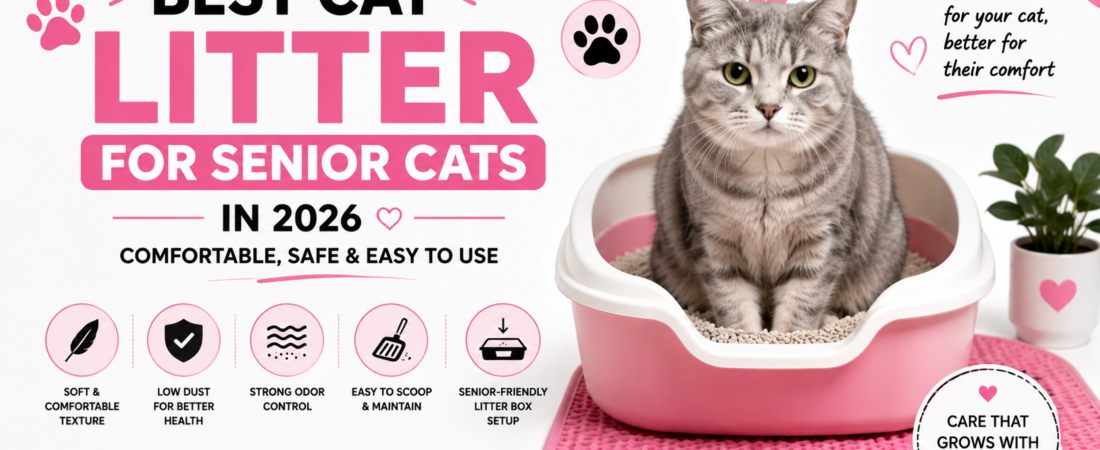
Best Cat Litter for Senior Cats in 2026: Comfortable, Safe & Easy to Use
As cats get older, their litter-box needs can change. A senior cat may have less mobility, become more sensitive to textures, or find it harder to step into a litter box with high sides.
Choosing the best cat litter for senior cats is therefore about more than odor control. The right litter should be comfortable, easy to walk on, easy to dig, and suitable for your cat’s individual needs.
In this 2026 guide, we’ll explain which types of cat litter may work well for older cats, what features to look for, and how to create a more comfortable litter-box setup.
Why Do Senior Cats Need Different Cat Litter?
Senior cats may become less active and may have difficulty moving around as easily as younger cats.
Some older cats may also become more particular about their litter-box environment.
A senior-friendly setup should make it easy for your cat to:
- Enter the litter box
- Turn around comfortably
- Dig without difficulty
- Find the box quickly
- Step onto the litter comfortably
- Leave the box safely
The litter itself is only one part of the equation.
The size, location, height, and cleanliness of the litter box are equally important.
For help choosing the correct box size, see our Cat Litter Box Size Guide.
What Is the Best Cat Litter for Senior Cats?
There isn’t one litter that is perfect for every senior cat.
However, many older cats may do well with litter that has a soft, comfortable texture, low dust, good absorption, and minimal fragrance.
Fine-grain litter can feel comfortable under a cat’s paws, while some pellet-style litters may be harder for certain cats to walk on.
The best choice depends on what your cat already prefers.
If your senior cat has used the same litter for years without problems, there may be no reason to change it simply because they are getting older.
1. Soft Clumping Cat Litter
Soft clumping litter can be a practical choice for many senior cats.
The smaller particles may feel more natural under the paws, especially for cats accustomed to traditional litter.
Pros
- Comfortable texture
- Easy daily scooping
- Widely available
- Strong clumping options
- Many unscented formulas
Cons
- Some formulas can create dust
- Fine particles may track
- Heavy bags can be difficult for owners to carry
If you prefer clumping litter, compare the advantages and disadvantages in our Clumping vs Non-Clumping Cat Litter guide.
2. Low-Dust Cat Litter
Senior cats may spend more time resting near their litter area, making a low-dust formula a useful consideration.
Low-dust litter can also help keep the surrounding area cleaner.
When choosing one, don’t rely only on the words “low dust” on the packaging. Look at the product’s ingredients, particle size, and user feedback.
For a detailed comparison, see Best Dust-Free Cat Litter in 2026.
3. Unscented Cat Litter
Unscented litter is often a sensible option for senior cats.
Strong fragrances can be unpleasant for some cats, especially if they have become more sensitive to smells as they age.
Instead of using fragrance to cover odors, focus on:
- Regular scooping
- Good absorption
- Proper litter depth
- Adequate ventilation
- Regular box cleaning
For more odor-control strategies, see Best Cat Litter for Odor Control in 2026.
4. Natural Cat Litter
Natural litter can also be an option for older cats.
Corn, wheat, wood, paper, and other plant-based materials are available in different textures.
However, natural does not automatically mean better for every senior cat.
The texture should be comfortable, and your cat should willingly use the litter box.
Our Best Natural Cat Litter in 2026 guide explains the major natural litter types in more detail.
5. Paper Cat Litter
Paper litter is often available as soft pellets.
It can be useful for cats that prefer a lightweight litter with relatively low dust.
However, some senior cats may find large pellets uncomfortable to walk on.
If your cat has always used fine litter, switching to paper pellets may require a gradual transition.
What Features Should You Look for in Senior Cat Litter?
When shopping for litter for an older cat, focus on the following characteristics.
Soft Texture
Older cats may have more sensitive paws than younger cats.
A soft, fine texture can be easier to walk through than hard or large pellets.
Low Dust
A low-dust formula can help keep the litter area cleaner and reduce airborne particles.
Unscented Formula
Choose unscented litter if your cat dislikes strong fragrances.
Good Clumping
If you prefer clumping litter, firm clumps make daily cleaning easier.
Good Odor Control
Senior cats may spend more time indoors, so keeping the litter box clean and fresh is important.
Easy to Step Into
This is especially important for senior cats.
Even excellent litter won’t help if the box has a high entrance that your cat struggles to reach.
The Litter Box Is Just as Important as the Litter
One of the biggest mistakes owners make is focusing entirely on the litter.
For senior cats, the litter box itself can be even more important.
A senior-friendly litter box should ideally have:
- A low entrance
- Enough interior space
- Stable footing
- Easy access
- A quiet location
- Easy cleaning
Avoid placing the box somewhere your older cat must climb stairs or travel a long distance to reach.
If your cat has mobility difficulties, consider placing a litter box on each level of the home.
How Deep Should Litter Be for a Senior Cat?
There is no universal depth that works for every senior cat.
Many cats like enough litter to dig and bury their waste, but an older cat may prefer a slightly different setup.
Start with an appropriate depth and watch your cat.
If your cat struggles to walk through deep litter or seems uncomfortable digging, adjusting the depth may help.
For a detailed explanation, read How Deep Should Cat Litter Be?
Where Should You Put a Litter Box for a Senior Cat?
Location matters significantly for older cats.
Place the litter box somewhere your cat can reach easily.
Good locations are:
- Quiet
- Easy to access
- Away from loud appliances
- Away from food and water
- On the same floor where your cat spends most of its time
Avoid forcing your senior cat to walk across the entire house whenever they need to use the litter box.
Should Senior Cats Use a Covered Litter Box?
Not necessarily.
A covered litter box can contain litter and odors, but some senior cats may prefer an open box with easier access.
An open box also allows you to monitor your cat’s litter-box habits more easily.
If your cat suddenly stops using a covered box, consider whether the entrance or enclosed design is making access uncomfortable.
How to Transition a Senior Cat to New Litter
Senior cats can be particularly resistant to sudden changes.
If you want to introduce a new litter, make the transition gradually.
Days 1–3
Mix a small amount of the new litter with the existing litter.
Days 4–6
Increase the amount of new litter.
Days 7–10
Continue increasing the new litter while reducing the old litter.
If your cat refuses to use the box, return to the previous ratio and transition more slowly.
Never assume your cat will automatically accept a completely different texture.
Should You Change Litter if Your Senior Cat Is Still Happy With It?
Usually, no.
If your older cat consistently uses the litter box and appears comfortable, changing the litter may create unnecessary stress.
Instead, focus on maintaining a clean box and making the surrounding area easy to access.
A familiar litter can be especially valuable for cats that dislike environmental changes.
How Often Should You Clean a Senior Cat’s Litter Box?
Regular cleaning is important for every cat, including seniors.
Remove feces and urine clumps regularly and keep the box clean according to the litter manufacturer’s recommendations.
A dirty box may discourage your cat from using it.
For a complete cleaning routine, read How to Clean a Cat Litter Box Properly.
You can also learn about replacement schedules in How Often Should You Change Cat Litter?
What If a Senior Cat Suddenly Avoids the Litter Box?
A sudden change in litter-box behavior should not automatically be blamed on the litter.
Older cats can develop health or mobility problems that affect their bathroom habits.
If your senior cat suddenly:
- Stops using the litter box
- Urinates outside the box
- Strains to urinate
- Frequently enters and leaves the box
- Suddenly changes bathroom habits
contact your veterinarian for appropriate advice.
For general information about litter-box avoidance, see Cat Avoiding Litter Box? Causes, Solutions & Prevention.
How Many Litter Boxes Should a Senior Cat Have?
More than one litter box can make life easier for an older cat.
A commonly recommended approach is to provide multiple boxes in different accessible locations, particularly in larger homes or multi-level houses.
This reduces the distance your cat needs to travel.
If you have several cats, see our Best Cat Litter for Multiple Cats in 2026 guide for additional litter-management tips.
Senior Cat Litter Setup Checklist
A comfortable senior-cat litter area can include:
- A low-entry litter box
- Soft, comfortable litter
- Low-dust formula
- Unscented litter
- Easy access
- A quiet location
- A litter mat
- Regular scooping
- Regular box cleaning
- Multiple boxes when appropriate
The goal is to make the entire bathroom routine as easy as possible.
Natural vs Clay Litter for Senior Cats
Both natural and clay litter can work for senior cats.
The most important factor is usually comfort and acceptance, rather than whether the litter is natural or clay.
Clay litter often provides many fine-grain and clumping options.
Natural litter provides alternatives such as corn, wheat, wood, and paper.
If you’re considering a natural option, read Best Natural Cat Litter in 2026.
What About Crystal Litter?
Crystal litter can provide excellent moisture absorption and odor control.
However, the larger crystal texture may not be comfortable for every senior cat.
If your older cat prefers soft, fine-grain litter, switching to crystals may make the litter box less appealing.
Read Crystal vs Clay Cat Litter before making a major change.
Final Thoughts
The best cat litter for senior cats in 2026 is the one that provides comfort, easy access, and reliable litter-box performance for your individual cat.
Soft textures, low dust, good odor control, and unscented formulas can be useful features to consider.
But don’t overlook the litter box itself.
A low-entry box in a quiet, easily accessible location can make a major difference for an older cat.
Most importantly, don’t change a familiar litter without a good reason. If your senior cat is comfortable with the current litter, maintaining a familiar routine may be the best choice.
If your cat suddenly changes litter-box habits, consult a veterinarian rather than assuming the problem is simply the litter.
Frequently Asked Questions
What is the best litter for older cats?
A soft, low-dust, unscented litter can be a good choice for many senior cats. However, individual preferences matter, so the best litter is one your cat comfortably accepts.
Is clumping litter good for senior cats?
Yes. Clumping litter can be a convenient option because it makes daily waste removal easier. Choose a comfortable, low-dust formula if your cat prefers fine-grain litter.
Should senior cats use low-sided litter boxes?
A low-entry box can make it easier for older cats to enter and exit, particularly if they have reduced mobility.
Is unscented litter better for senior cats?
Unscented litter can be a good choice for cats that dislike strong fragrances. It also allows you to focus on actual odor control rather than masking smells.
How often should I clean a senior cat’s litter box?
Scoop regularly and maintain the box according to the litter manufacturer’s instructions. Keeping the box clean can encourage consistent litter-box use.
Should I change my senior cat’s litter?
Not necessarily. If your cat is comfortable with its current litter, there may be no reason to change it. If you do switch, make the transition gradually.
Why is my senior cat suddenly avoiding the litter box?
A sudden change may have many possible causes, including environmental, behavioral, or health-related issues. Because senior cats can develop age-related health problems, consult your veterinarian if the behavior is sudden or persistent.
Related Cat Litter Guides
- Best Cat Litter for Kittens in 2026
- Best Natural Cat Litter in 2026
- Best Dust-Free Cat Litter in 2026
- Best Cat Litter for Multiple Cats in 2026
- Best Cat Litter for Tracking in 2026
- How Deep Should Cat Litter Be?
- Cat Litter Box Size Guide
- How to Clean a Cat Litter Box Properly
- How Often Should You Change Cat Litter?